
Restore White Tennis Shoes Safely: Baking Soda & 3% Peroxide
Skip chlorine bleach and skip sun-drying; both cause yellowing you cannot undo. Surface dirt and light staining respond well to this. Deep, ingrained yellowing in the midsole is often oxidation, and that may never fully reverse.
TL;DR:
- Surface dirt and light stains respond well to baking soda and hydrogen peroxide, but deeply ingrained oxidation in the midsole is usually irreversible.
- Use gentle, material-specific cleaning methods: baking soda and peroxide for fabric, a damp cloth for leather, and melamine sponges for rubber soles.
- Machine washing is safe for canvas and mesh sneakers on a delicate cycle with proper precautions, but avoid doing so with leather or glued trims.
- Avoid using bleach, sun-drying, hot water, or wire brushes, as these can cause permanent yellowing and damage to the shoes.
- Regular prevention, such as applying protector sprays and quick dirt removal, extends the whiteness and overall condition of the shoes.
Table of Contents
- What you need before you start whitening your shoes
- How do you whiten canvas, leather and rubber shoes?
- Can you put white tennis shoes in the washing machine?
- What are the best DIY recipes for stains and scuffs?
- What should you never do to clean white sneakers?
- How do you keep white shoes looking new for longer?
- Where can you find more shoe care guidance from Ydauk?
- When is it time to stop cleaning and start replacing?
- What if your white sneakers are past saving?
- Sources
- FAQ
What you need before you start whitening your shoes
Gather everything first so you are not scrubbing with wet hands while hunting for a spare cloth.
- Baking soda and 3% hydrogen peroxide (the paste that does most of the heavy lifting)
- A mild liquid detergent and, if the label allows it, an oxygen-based cleaner such as OxiClean
- White vinegar for spot treatments
- A soft-bristled brush or an old toothbrush, plus a melamine sponge for rubber soles
- A mesh laundry bag and a few clean cloths
Pull out the laces and insoles before you touch the uppers, and brush off any loose dirt while the shoes are dry; wet mud just smears. Check the care label, since some canvas blends and most leather trims react badly to certain solutions. Cleaning experts recommend starting with the mildest option and only escalating if it fails, so always test any paste or spray on a hidden patch first. A typical clean takes some time plus drying time, and the ingredients above cost very little if you don’t already have them at home.
How do you whiten canvas, leather and rubber shoes?
Different materials need different treatment, and using the wrong one is how good sneakers get ruined.
- Canvas and mesh uppers: Mix roughly two parts baking soda to one part hydrogen peroxide with a splash of water until it forms a spreadable paste. This ratio lifts everyday grime from fabric uppers effectively when worked in with a toothbrush using small circular strokes. Leave it to dry for around 30 minutes, then rinse with a damp cloth and repeat on stubborn patches.
- Leather panels and trims: Dampen a cloth with water and a drop of mild soap, then wipe rather than soak. Leather absorbs moisture and peroxide will dry it out and crack the surface over time, so avoid both. Follow with a light leather conditioner once the panel is dry.
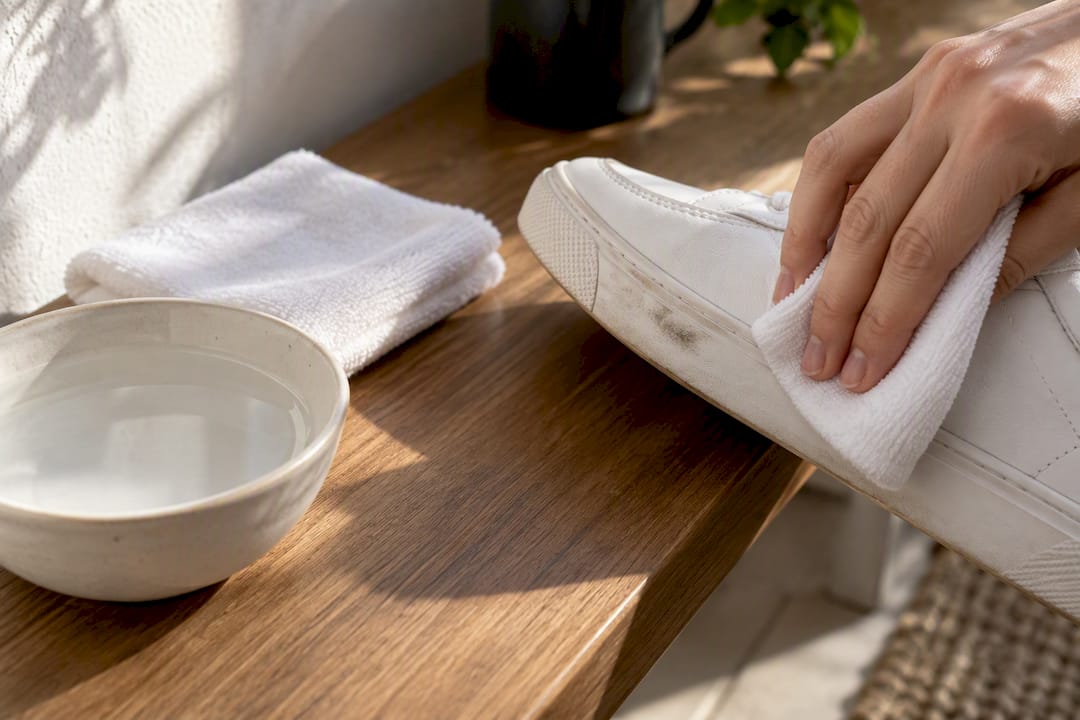
- Rubber soles and toe caps: A melamine sponge, dampened slightly, removes scuffs and general yellowing with light pressure and almost no chemicals. Melamine sponges work through microscopic abrasion, which is exactly why they belong on rubber only, never on fabric, where the same abrasiveness causes fuzzing.
Yellowing that sits deep in the midsole foam, rather than on the surface, is usually oxidation rather than dirt. A short peroxide treatment under plastic wrap in indirect light can shift some surface discolouration, but heavy, years-old yellowing often needs a specialist restoration service to fully correct.
Pro Tip: Work on one small section at a time and rinse as you go. Letting the paste dry across the whole shoe at once makes it harder to control and can leave uneven patches.
Can you put white tennis shoes in the washing machine?
Yes, for most fabric sneakers, provided you take a few precautions.
- Safe materials: canvas, cotton, polyester and mesh uppers
- Not safe: leather, suede and anything with glued-on decorative trims
- Setup: place shoes in a mesh laundry bag, add two or three old towels as ballast, and run a cold, delicate cycle with low or no spin
- Use a liquid detergent rather than powder, and add an oxygen-based cleaner if the shoes are heavily soiled
Washing machines can safely clean canvas and mesh sneakers on a delicate, cold cycle with the shoes bagged and the spin kept low, which protects both the glue holding the shoe together and the drum itself. Once the cycle finishes, air-dry indoors, stuffed loosely with plain white paper to hold their shape. Never tumble dry; the heat softens adhesives and warps soles.
What are the best DIY recipes for stains and scuffs?
Different stains respond to different fixes, and matching the right one to the right mark saves a lot of scrubbing.
- General dirt and dullness: the standard baking-soda and peroxide paste, left on for 20 to 30 minutes before rinsing
- Grass and grease: a vinegar and baking-soda paste applied directly to the mark, left for 10 minutes, then scrubbed with a soft brush
- Heavy dinginess across the whole shoe: an oxygen-based cleaner used as a soak; OxiClean can be used for up to six hours on machine-washable fabric shoes, though it should never touch leather or dry-clean-only trims
- Small scuffs on rubber: a dab of plain white toothpaste rubbed in with a cloth, or a melamine sponge for anything more stubborn
Always test a hidden spot first, and give any treatment time to work before reapplying. Rushing to a second or third round within minutes tends to overwork the material rather than lift more dirt.
What should you never do to clean white sneakers?
Some habits do lasting damage even though they seem harmless.
- Chlorine bleach: it reacts with the polyurethane and adhesives inside the shoe, triggering an inside-out oxidation that permanently yellows synthetic midsoles
- Sun-drying: UV light speeds up that same oxidation process, so shoes left on a windowsill or washing line often come out yellower than before
- Tumble drying: heat weakens glue bonds and can warp soles out of shape
- Wire brushes and hot water: both are too aggressive for fabric and accelerate wear
- Newspaper stuffing: ink can transfer onto damp canvas and stain it
Once oxidation sets in from bleach or UV exposure, it does not reverse with more scrubbing; a stronger cleaner will not undo chemical damage.
How do you keep white shoes looking new for longer?
Prevention is far less work than a full restoration, and it starts the moment you finish cleaning.
- Apply a protector spray suited to the material as soon as the shoes are clean and dry
- Wipe off dirt the same day it happens rather than letting it sit
- Rotate between two pairs so no single pair takes constant wear
- Store shoes away from direct sunlight and heat sources
- Wash laces separately or swap in fresh white ones, and replace insoles once they yellow, since both are cheap to renew
Protector treatments reduce how often stains set into the material, which cuts down how frequently you need a deep clean in the first place.
Pro Tip: A five-minute wipe-down after every wear does more for long-term whiteness than any single deep clean, because it stops dirt from bonding to the fabric fibres.
Where can you find more shoe care guidance from Ydauk?
Ydauk publishes detailed how-to guides for readers who want more depth on a specific material, including a full walkthrough on cleaning white tennis shoes safely at home and dedicated advice on cleaning white leather shoes. For ongoing upkeep, the five-step routine for keeping white sneakers clean covers the maintenance habits that stop stains setting in the first place. Ydauk recommends material-safe cleaning methods and a suitable protector spray over harsh chemical shortcuts.
When is it time to stop cleaning and start replacing?
If the yellowing sits in the midsole rather than the upper and doesn’t shift after two or three careful attempts, that’s oxidation, not dirt, and further scrubbing rarely helps. Weigh the hour you’ll spend on another round of paste and rinsing against the cost of a fresh pair. At some point, durable, well-built footwear is simply the better use of your time.
— Panagiotis
What if your white sneakers are past saving?
Restoration has limits, and once oxidation has worked its way through the midsole foam, no amount of peroxide paste will bring it back to bright white. That’s a reasonable point to stop cleaning and start shopping.

This footwear brand focuses on technology designed to support foot health, comfort and energy efficiency through everyday wear, rather than relying on trends that yellow and crack within a season. If your current pair is more grey than white no matter what you try, browse the high-performance footwear range or read more about the technology behind YDA shoes to see how the materials are built to resist the same oxidation that ruins ordinary white sneakers. Have a look at the current range and consider which pair suits how you actually use your shoes.
Sources
- How to wash your sneakers — GQ
- How to clean white tennis shoes (and stop them yellowing) — SportyCritique
- How to clean shoes with baking soda — Arm & Hammer
- How to clean dirty shoes — OxiClean
FAQ
Does vinegar whiten white shoes?
Vinegar helps lift grass stains and general grime when mixed with baking soda into a paste, but it isn’t a whitening agent on its own. It works best as a spot treatment rather than an overall brightener.
Will toothpaste clean white tennis shoes?
Plain white toothpaste can rub out small scuffs on rubber soles and toe caps, but it won’t do much for widespread yellowing or fabric stains. Save it for isolated marks rather than a full clean.
What is the best whitening cream for shoes?
There’s no single “best” cream, since the right product depends on the material. A baking-soda and peroxide paste suits canvas and mesh, a mild soap suits leather, and a melamine sponge handles rubber, so match the tool to the surface rather than using one product on everything.
Does baking soda help whiten shoes?
Yes. Combined with hydrogen peroxide and worked in with a toothbrush, baking soda lifts everyday dirt and dulling from fabric uppers. It’s the most reliable first step before trying anything stronger.
Can heavily yellowed shoes ever be fully restored?
Sometimes, but not always. Surface dirt responds well to the methods above, while deep oxidation in the midsole often needs specialist restoration or is simply permanent, which is when a fresh pair from a range like Ydauk’s footwear becomes the more practical option.