
Get Your Shoe Size in mm With Two At Home Checks for Brand Charts
Stand up, put your heel against a wall, and mark where your longest toe ends. That straight-line distance, measured in millimetres, is your real foot length. Measure both feet, use whichever number is larger, and check it against the specific brand’s size chart before you buy. Skip a universal converter; brand sizing varies too much to trust one.
TL;DR:
- Using the millimetre measurement ensures a precise fit, but always compare your size to the specific brand’s chart rather than relying on a universal converter.
- Measure both feet and choose the larger measurement, preferably in the evening when feet are most swollen, to prevent sizing errors.
- Width is just as crucial as length, so consider the brand’s wide or narrow options to avoid discomfort caused by incorrect fit.
- For children, allow extra growing room and re-measure every two to three months, ensuring fit involves walking in shoes rather than just relying on paper measurements.
- Sizing mistakes often stem from measuring while seated or only one foot, emphasizing the importance of standing measurements and sizing for both feet.
Table of Contents
- How to check shoe size using two reliable methods
- How to find your shoe size from a millimetre measurement
- How do you measure a child’s shoe size correctly?
- What are the most common shoe sizing mistakes?
- What is the mm First Method and who needs extra care?
- Why accurate measurement matters more than people think
- Where to find fit-focused footwear once you know your size
- Sources
- FAQ
How to check shoe size using two reliable methods
You need four things: a sheet of paper bigger than your foot, a pen or pencil, a ruler or tape measure, and the socks you’ll actually wear with the shoes. That last detail matters more than people assume. A thick winter sock can add several millimetres to your reading, which is exactly why serious measuring guides tell you to wear what you’ll wear on the day, not bare feet.
There are two ways to do this properly.
- Wall baseline method. Place the paper flat against a wall, then stand on it with your heel pressed firmly into the join between the wall and the floor. Keep your weight evenly spread across both feet. Mark the tip of your longest toe (usually the big toe, but not always) directly onto the paper, then measure from the wall edge to that mark with your ruler.
- Paper tracing method. Stand on the paper and trace all the way around your foot, holding the pen as vertically as possible so the line hugs your foot’s actual edge rather than drifting outward. Once you’re off the paper, measure straight-line heel-to-toe length, then measure the widest point across the ball of your foot for width.
Do this standing, not seated. Your foot spreads and lengthens under body weight, and a seated measurement routinely comes up short, according to Cleveland Clinic’s guidance on measuring feet accurately. Measure both feet separately, because most people have one foot slightly larger than the other, and use the bigger number for sizing. Ideally, measure in the evening, since feet swell over the course of a day and a morning measurement can leave you half a size short by dinner time.
Width matters just as much as length, and it’s the step most people skip. Measure across the widest part of the ball of your foot, where your toes meet the rest of your foot. This is what determines whether you fall into a “standard,” “wide,” or “narrow” fitting, and getting length right while ignoring width is how you end up with shoes that fit your toes but crush the sides of your feet.
Pro Tip: Do both methods once and compare the results. If your wall measurement and your traced measurement land within a couple of millimetres of each other, you can trust the number. If they’re wildly different, your foot probably wasn’t flat or your pen wasn’t vertical, so redo it.
How to find your shoe size from a millimetre measurement
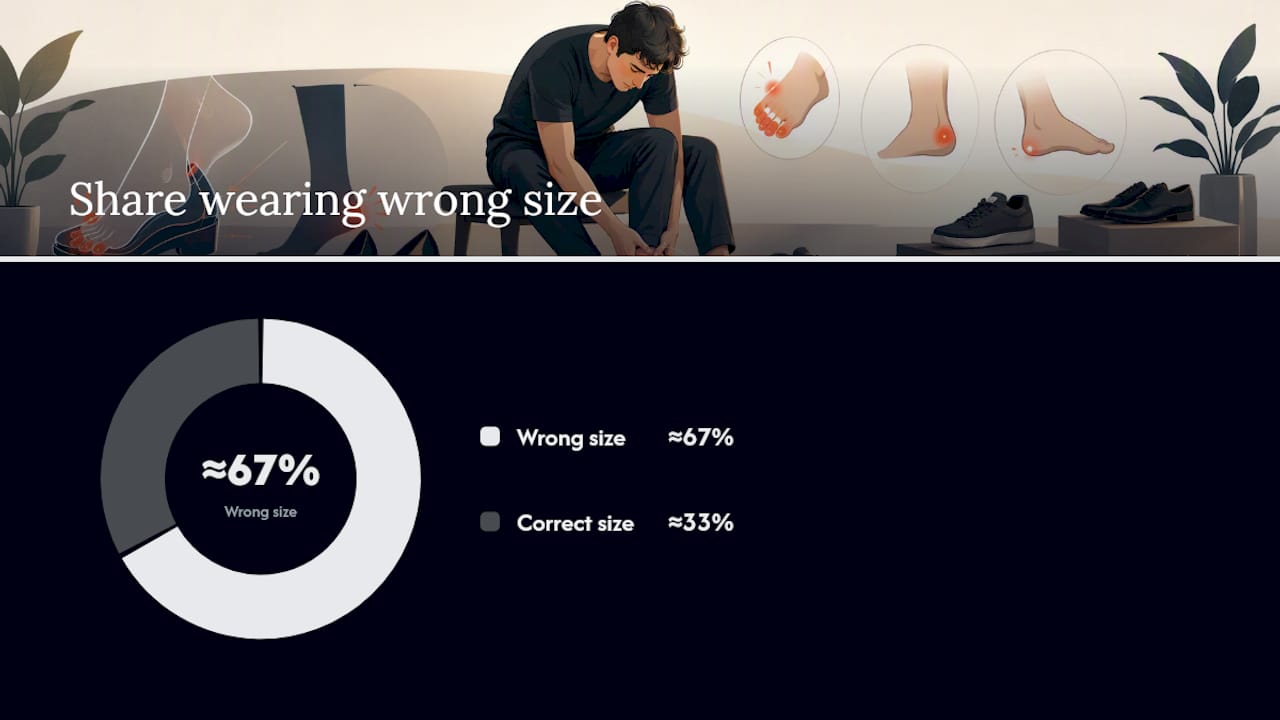
Once you have a length in millimetres, resist the urge to run it through a generic online converter. Sizing standards differ enough between manufacturers that a study in the Journal of Foot and Ankle Research found up to two thirds of people may be wearing shoes that don’t actually fit them correctly, largely because they trusted a size label rather than measuring against the specific brand’s chart. The number on the box is a starting point, not gospel.
Go to the product page or brand’s own size chart and match your measurement directly to it. A few practical points to keep in mind:
- If your foot length sits between two sizes, it’s usually safer to go up rather than down, particularly for anything you’ll wear for long periods or exercise in.
- Running shoes and other athletic styles often need extra room in the toe box for foot swelling during activity, so consider sizing up half a size compared with casual shoes.
- Factor in the socks and any insoles you’ll use daily. A thick orthotic insole can eat several millimetres of internal volume.
- Check the width guidance alongside length. Some brands offer wide or narrow fittings, and a length-perfect shoe in the wrong width will still hurt.
Retailer fit guides, including Clarks’ own sizing and width chart, consistently push the same message: measure length and width separately, then read them against that brand’s own numbers rather than a rough mental conversion.
How do you measure a child’s shoe size correctly?
Measure children standing up, exactly as you would an adult, and always use the larger foot’s measurement. Growing feet change fast, so the process needs slightly different rules than sizing yourself.
- Stand your child up straight with weight on both feet before marking or tracing.
- Allow a small allowance of growing room beyond the longest toe, roughly equivalent to a thumb’s width.
- Prioritise a flexible sole and toe-box room over squeezing in maximum growth allowance; too much extra length makes shoes trip hazards and loosens heel grip.
- Re-measure every two to three months for younger children, since foot growth spurts can outpace how often shoes get replaced.
Check fit at the shop, not just on paper. Press a thumb at the end of the toe box with your child standing, and watch how they walk in the shoes rather than relying on the number alone, a point echoed in Nike’s own foot-measuring guidance.
What are the most common shoe sizing mistakes?
Most poor fits trace back to a handful of repeatable errors, and every one of them is fixable in minutes.
- Measuring seated instead of standing. This shortens the reading and is the single biggest cause of shoes that feel fine in the shop and tight an hour later.
- Measuring only one foot. Feet are rarely identical; always measure both and size for the larger one.
- Measuring first thing in the morning. Feet are at their smallest then, so an evening measurement gives a truer picture.
- Ignoring width entirely. A shoe that’s the right length but too narrow will still cause pain, blisters, or numbness.
If a shoe already feels wrong, small fixes often solve it: a heel grip for slipping, a thin insole for excess volume, or trying the same brand in a different last or style, since Shoe Carnival’s home-measuring guide notes that fit varies noticeably even within one brand’s own range. If pain persists after these adjustments, the shoe is the wrong shape for your foot, not just the wrong size, and it’s worth exchanging rather than persevering. Shoes that consistently cause pain shouldn’t be worn through; ongoing pressure in the wrong spot can lead to real injury over time.
Pro Tip: Keep a small note of your millimetre measurement on your phone. Pull it up whenever you’re buying shoes online, and you’ll skip the guesswork entirely, even six months from now when you’ve half forgotten your usual size.
What is the mm First Method and who needs extra care?
A fitting approach referred to as the mm First Method starts with the raw millimetre measurement rather than a size number, then maps that figure onto each shoe’s actual internal dimensions. It’s a more reliable route than guessing from a previous size, especially given how much sizing drifts between brands and even between styles from the same brand.
Some feet need extra thought beyond a standard measurement:
- Wide or swollen feet benefit from measuring later in the day and checking a brand’s specific wide-fit options rather than simply going up a size.
- Pregnancy commonly causes temporary foot swelling and even permanent length changes, so re-measuring during and after pregnancy is worth doing rather than assuming your old size still fits.
- Diabetic foot care calls for a cautious approach to any tightness or pressure point, and it’s worth involving a podiatrist or GP for fitting advice rather than relying on measurement alone.
For a fuller walkthrough with worked examples, Ydauk’s guide on measuring foot size for shoes covers the process step by step, and the women’s mm First Method guide goes deeper into the clinical reasoning behind it.
Why accurate measurement matters more than people think
Feet aren’t fixed. Weight changes, ageing, and even pregnancy shift foot shape and length over time, which is exactly why Cleveland Clinic recommends re-measuring at least annually rather than trusting whatever size you bought five years ago. Every return caused by a bad fit traces back to a measurement someone skipped or rushed. Measure again before your next purchase, especially if you’re switching brands or shoe types.
— Panagiotis
Where to find fit-focused footwear once you know your size
Some performance footwear brands focus on foot health first, with sizing and technology designed to match the kind of precise measurement covered above rather than a generic size label. Once you’ve got your millimetre figure and checked it against a brand chart, it’s worth exploring how that translates into a shoe built with foot comfort and energy efficiency in mind.
The Technology of YDA Shoes page breaks down the foot-health engineering behind Ydauk’s range, useful if you’re dealing with wider feet, diabetic considerations, or simply want a shoe that holds its shape properly through a full day. Measure your foot, cross-check it against the specific product’s size chart, and use that page to see which technology suits your fit before you order.
Sources
- Why your shoe size changes and how to measure | Cleveland Clinic
- Footwear fit and foot pain study | Journal of Foot and Ankle Research (2018)
- Shoe size chart & guide | Clarks fit guide
FAQ
How do I know my shoe size?
Measure your foot length standing up, heel against a wall, from heel to the tip of your longest toe, then compare that millimetre figure to the specific brand’s own size chart rather than a generic converter.
What is 42 in shoe size?
European sizes vary between brands, so always check the individual product’s size chart rather than relying on a generic conversion.
Is a 38 a size 7 or 8?
European and UK sizing scales run on entirely different numbering systems, so brand-specific charts matter more than mental conversion.
How do I check my UK shoe size?
Measure your foot length in millimetres using the wall or tracing method, then match that figure to the UK sizing column on the specific brand’s chart, since UK sizes can shift by several millimetres between manufacturers.