
Athletic shoe selection checklist for active people
Choose athletic shoes by matching four things at once: your activity, your gait, your fit, and your terrain. Get any one wrong and the other three won’t save you.
Before you touch a shopping app or walk into a shop, run through this:
- Identify your sport and how often you do it (if you perform it frequently each week, you need a sport-specific shoe, not a general trainer)
- Know your gait: neutral, overpronating, or underpronating
- Test toe room, heel lock, and midfoot pressure before buying
- Match the outsole to your actual terrain, not the terrain you wish you trained on
- Check the shoe feels right the moment you put it on, not after two weeks of “breaking it in”
Pro Tip: If a shoe pinches, rubs, or feels stiff in the shop, it will not magically soften into comfort after 50 miles. That’s a myth. A well-fitted shoe feels right on day one.
The rest of this guide walks through gait analysis, precise fit testing, and terrain matching in more detail, because the checklist above only works once you understand what’s actually driving each decision.
Key Takeaways
The right athletic shoe comes from matching activity, gait, fit, and terrain together, not from picking the most popular model on the shelf.
| Point | Details |
|---|---|
| Match sport frequency | Buy a sport-specific shoe if you do that activity more than twice a week. |
| Get a gait check | A wet-foot test or in-store gait analysis narrows your shoe category fast. |
| Test fit properly | Check thumb-width toe room, heel lock, and midfoot pressure before buying. |
| Match outsole to terrain | Road, trail, court, and gym surfaces each need a different tread and upper. |
| Replace on wear signs | Watch for flattened midsoles and worn tread, not just a mileage number. |
| Choose fit-first technology | Ydauk’s shoe range prioritises midsole resilience and upper construction that support the fit checks in this guide. |
Table of Contents
- How do you understand your activity profile and gait?
- What’s the correct way to check athletic shoe fit?
- Which shoe features actually match your gait and goals?
- Road, trail, court or gym: which outsole do you actually need?
- When should you replace your athletic shoes?
- What’s the final checklist before you buy?
- What role does shoe technology actually play in your decision?
- Sources
How do you understand your activity profile and gait?
Start by naming your sport honestly. Running, court sports (tennis, badminton, squash), gym training, trail running, walking, or cleated sports (football, rugby) all load the foot differently. If you do one of these more than two or three times a week, buy a dedicated shoe for it rather than a generalist cross-trainer, because sport-specific engineering exists precisely because different sports stress the foot in different directions.
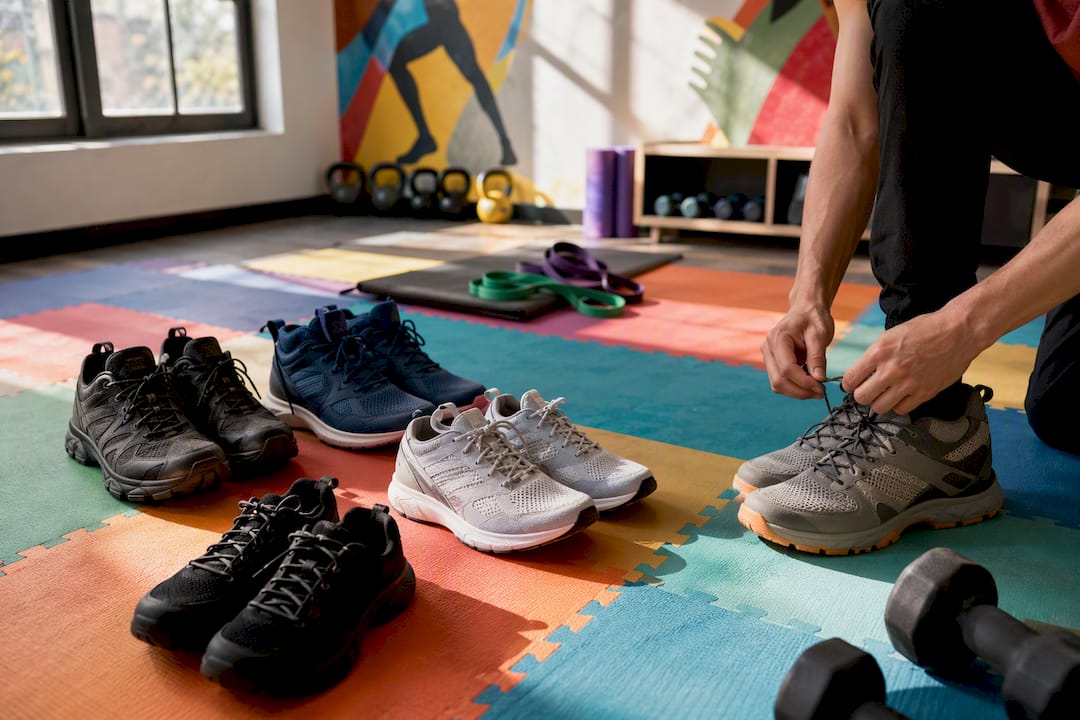
Frequency and distance matter as much as the sport itself. Someone running 8km twice a week has different needs to someone running 30km weekly on trails. A practical starting point narrows the field fast: identify your foot type, your primary surface, your weekly mileage, and any current pain or injury history. Answer those four questions and you’ve already ruled out most of the shelf.
Working out your foot type doesn’t require special kit. Wet your foot, step onto a piece of card or paper, and look at the print:
- A print showing most of the midfoot suggests a flatter, more flexible foot (often linked to overpronation)
- A print showing only a thin band along the outside suggests a high arch (often linked to underpronation, or supination)
- A print roughly halfway between the two suggests a neutral arch
Wear patterns on old shoes tell a similar story. Heavy wear on the inner edge points to overpronation; heavy wear on the outer edge points to underpronation. Neither test replaces a proper gait analysis, which most specialist running shops offer free with a treadmill camera, but they’ll get you close enough to shortlist the right shoe category.
Pro Tip: If you’ve had a persistent ache in your knees, shins, or lower back after runs, get a gait analysis before buying anything. It’s a fifteen-minute check that can save months of frustration.
What’s the correct way to check athletic shoe fit?
Timing and preparation change the outcome more than people expect. Try shoes on later in the day, when your feet have naturally swollen slightly from normal use, and wear the actual socks (and orthotics, if you use them) you’ll train in. Shoes that pinch in the shop won’t loosen up later; an uncomfortable first impression is a reliable warning sign, not something to push through.
Run through these steps in order:
- Stand up and press your thumb against the tip of the shoe. You want roughly a thumbnail’s width, about half an inch, between your longest toe and the front of the shoe.
- Check the toe box width separately from length. Wiggle your toes. If they’re cramped side to side, the length might be right but the shape is wrong for your foot.
- Lace up fully and test the heel lock by walking a few steps. Your heel shouldn’t lift or slide inside the shoe.
- Flex the shoe at the ball of the foot, where your foot naturally bends. The shoe should flex there too, not further back.
- Walk, then jog, on any surface the shop allows. Pay attention to midfoot pressure or hot spots developing within the first minute.
- Try both shoes, not just one. Most feet have a size or width difference between them, and shops routinely have customers who only ever try the right foot.
If the heel still feels loose after lacing normally, try a runner’s loop lacing technique before assuming the shoe is the wrong size entirely, and don’t be shy about asking for a half-size up or a wider last if your foot shape calls for it.
Pro Tip: Bring the exact socks you’ll wear for the activity. A thick trail sock versus a thin racing sock can shift your true size by half a size in either direction.
Which shoe features actually match your gait and goals?
Stability shoes, built with medial posts or supportive rail systems along the inner midsole, exist to control excess inward rolling for people who overpronate. If your gait is neutral or you underpronate, stability features can push your foot into an unnatural position rather than help it, so match the feature to the gait, not the marketing.
Cushioning runs on a spectrum from minimal (close ground feel, lighter shoe, less shock absorption) to maximum (thick stack height, more shock absorption, often heavier). Higher weekly mileage generally favours more cushioning underfoot; shorter, faster sessions often favour less.
Heel-to-toe drop, the height difference between heel and forefoot, changes how you land. Higher drop shoes tend to suit heel strikers and reduce Achilles strain, while lower drop shoes encourage a mid or forefoot strike. Switching drop height abruptly is one of the more preventable causes of calf and Achilles overload, so transition gradually if you’re changing from what you normally wear.
A few more features worth checking before you buy:
- A firm, well-shaped heel counter keeps your heel locked in place during lateral or forward movement
- Engineered mesh uppers breathe better for high-intensity or hot-climate activity than solid synthetic overlays
- Outsole tread should match your terrain: aggressive lugs for trails, flatter and denser rubber for court sports
Pro Tip: Don’t buy a stability shoe just because a friend swears by it. If your gait analysis shows a neutral stride, a stability shoe can actually work against your natural movement.
Road, trail, court or gym: which outsole do you actually need?
Road running shoes use fairly flat, durable rubber with moderate tread, built for a predictable, consistent surface. Trail shoes need aggressive lugs for grip on loose or uneven ground, and many include a rock plate, a thin protective layer in the midsole that shields your foot from sharp stones without adding much weight.
Court sports demand something different again: flatter, non-marking soles with dense rubber compounds for grip during sharp lateral cuts, paired with reinforced uppers that resist the sideways stress a running shoe’s upper was never designed for. Surface type changes the demands on footwear more than most players realise, which is why a shoe built for hard courts can feel unstable and slippery on clay or grass.
Cross-trainers sit in the middle, trading specialisation for flexibility at the front of the foot and enough lateral control for mixed movements like weightlifting, box jumps, and short sprints. Cleated sports add their own rules entirely: check for width options, whether studs are removable or moulded, and whether a high-top design suits your position better than a low-cut boot.
| Activity | Outsole priority |
|---|---|
| Road running | Flat, durable tread for consistent grip |
| Trail running | Aggressive lugs plus rock plate protection |
| Court sports | Dense, non-marking sole with lateral grip |
| Mixed gym training | Flexible forefoot with lateral stability |
When should you replace your athletic shoes?
The commonly cited range is roughly 300 to 500 miles for running shoes, though heavier runners, harsher terrain, and softer midsole foams all shorten that window. Watch for the signs rather than relying on mileage alone.
- Midsole feels noticeably flatter or less springy than when new
- Outsole tread is visibly smoothed or worn unevenly on one side
- New aches appear in your knees, shins, or hips after runs that never used to cause discomfort
A genuinely well-fitted shoe feels comfortable from the first wear. If you’re changing to a different drop or cushioning level, increase your new-shoe mileage gradually, no more than about 10% per week, and alternate with your old pair for the first fortnight to give your calves and Achilles time to adjust.
What’s the final checklist before you buy?
Run through this before paying:
- Activity and frequency matched to a sport-specific shoe
- Gait identified (neutral, over, or underpronating), ideally via analysis
- Toe room, heel lock, and midfoot pressure all checked
- Both shoes tried on with the actual socks or orthotics you’ll use
- Walk and jog test completed on a real surface
If you’re buying from a fitter or online seller, ask these questions:
- What’s the expected lifespan of this shoe for my mileage and weight?
- Do you stock this in half sizes or wider width options?
- What’s the return policy if the fit feels wrong after a week of light use?
- Is there an alternative model built for my specific gait?
Red flags to walk away from: a seller who insists the shoe “just needs breaking in,” no clear return policy for online orders, visible stitching or sole defects, or a pair that’s clearly sat on the shelf gathering dust for a season.
What role does shoe technology actually play in your decision?
Midsole material and how well it resists compression over time matter more for long-term comfort than any marketing claim printed on the box. A foam that stays springy after 300 miles is doing its job; one that flattens out after six weeks isn’t, regardless of how it was advertised.
Energy-return foams genuinely help during high-mileage or performance running, where every bit of rebound reduces fatigue late in a session. For walking, gym work, or casual sport, simpler, well-cushioned midsoles are usually enough, and you’re not paying for a feature you won’t use.
Upper engineering matters more than upper decoration. A structured heel counter and properly placed overlays affect fit and lockdown far more than a flashy knit pattern does.
- Prioritise midsole resilience over brand claims about “revolutionary” foam
- Judge uppers by structure and heel counter firmness, not appearance
Pro Tip: Ydauk’s shoe technology page breaks down how midsole materials and upper construction are engineered for everyday comfort and energy efficiency, worth a look if you want to see these principles applied in practice.
A fitter’s honest take
Biomechanics should always beat brand loyalty. When a customer’s gait analysis contradicts their favourite shoe brand, the analysis wins, every time. For more on this, Ydauk’s blog covers fit testing and footwear selection in far more depth.
How Ydauk brings this checklist to life
Ydauk builds its shoes around the same priorities this checklist walks through: genuine fit, midsole materials that hold their resilience over time, and upper construction that supports the foot rather than just decorating it. The YDA Technology approach focuses on foot health and energy efficiency rather than seasonal trends, which is exactly what the fit and gait checks above are designed to protect.
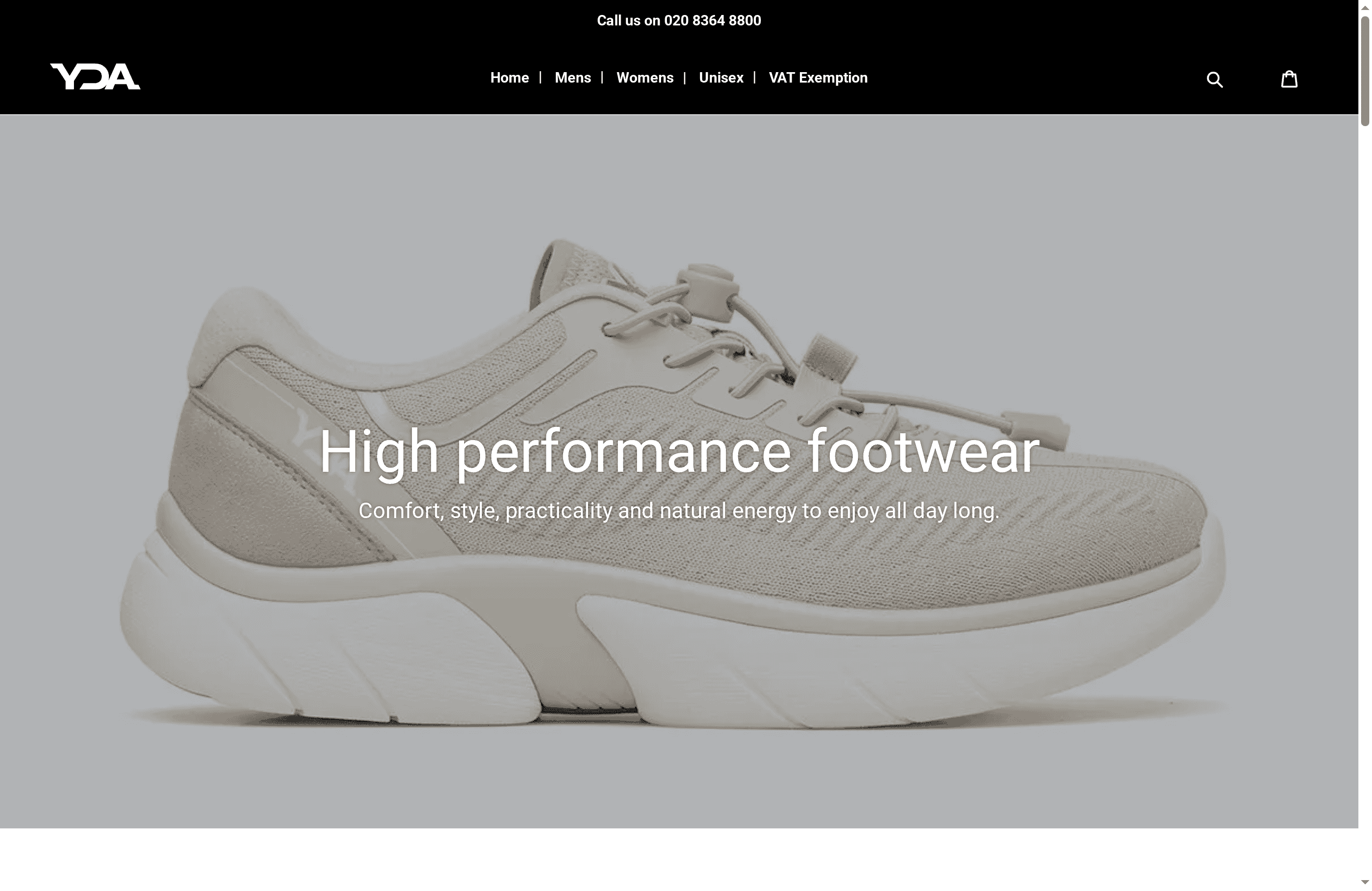
If you’ve worked through the gait and fit steps above and want to see how that translates into an actual pair of shoes, browse the Ydauk range and check current availability. Reading about heel counters and midsole resilience only gets you so far; trying a pair against your own gait profile is the next real step.
Sources
- Athletic Shoes - OrthoInfo - AAOS
- How to pick the running shoe that is best for you — Cleveland Clinic
- PubMed resource on sport-specific footwear engineering
- How to select athletic shoes — FootCareMD