
Why Shoes Matter for Seniors’ Wellbeing
Foot pain can quietly limit the freedom you once took for granted, especially as you grow older and each step brings new challenges. For seniors, understanding what your feet truly need is the key to staying active, safe, and comfortable. Foot pain and foot disorders are remarkably common in older adults, so finding footwear that addresses both style and support becomes more than a preference—it becomes a lifeline for your independence.
Table of Contents
- Defining Foot Health Needs In Seniors
- Footwear Types And Key Technology Innovations
- Feet Changes With Age And Impact On Footwear
- Footwear For Diabetic And Mobility Challenges
- Risks Of Poorly Fitted Shoes And Injury Prevention
- Choosing The Best Shoe For Comfort And Safety
Key Takeaways
| Point | Details |
|---|---|
| Foot health is critical for seniors | Understanding and addressing foot health needs is essential for maintaining independence and preventing injuries in older adults. |
| Proper footwear is vital | Shoes should be tailored to individual foot health challenges, such as diabetes or arthritis, to enhance comfort and prevent complications. |
| Regular foot assessments are important | Seniors should routinely evaluate their foot condition and seek professional advice for footwear to ensure appropriate fit and support. |
| Footwear innovations enhance mobility | Advances in shoe technology can provide significant benefits for seniors by improving comfort, stability, and overall foot health. |
Defining Foot Health Needs in Seniors
Your feet have carried you through decades of life, yet they’re often the last thing you think about until pain disrupts your routine. For seniors, understanding what healthy feet actually require has become increasingly critical to maintaining independence and quality of life. Foot pain and foot disorders are remarkably common in older adults, affecting your ability to walk, enjoy daily activities, and stay mobile. The challenge isn’t merely aesthetic or comfort-related; poorly supported or unhealthy feet directly undermine your independence and increase the risk of falls, a leading cause of injury in older age.
What makes foot health in seniors distinctly different from younger years? Your feet undergo real, measurable changes as you age. The skin becomes thinner and dryer, fat padding beneath your heels diminishes, and blood circulation decreases, all making your feet more vulnerable to infection and injury. Meanwhile, decades of walking, standing, and various activities accumulate into structural changes that affect how your feet function. If you’ve noticed your feet feel more fatigued after shorter walks than they once did, or if certain shoe styles that once felt comfortable now cause irritation, you’re experiencing these age-related shifts firsthand. Understanding age-related foot changes and care strategies helps you recognise what’s normal variation versus what signals a genuine problem requiring attention.
Seniors often live with several overlapping foot health concerns simultaneously. Arthritis in your joints, diabetes affecting circulation and sensation, reduced balance, and weakened muscles all converge to create a complex set of demands that your footwear must address. Your shoes aren’t simply about comfort anymore; they’re a critical tool for preventing ulcers, managing pain, maintaining stability, and enabling you to remain active. Research from health professionals emphasises that regular foot care and inspections prevent serious complications, particularly for those with conditions like diabetes. This is where podiatrist recommended footwear becomes essential, as shoes specifically designed to support ageing feet can dramatically reduce pain, prevent injuries, and maintain your mobility. The difference between standard shoes and those engineered for senior foot health often comes down to targeted support zones, cushioning that protects sensitive areas, and materials that accommodate swelling or structural changes you experience throughout the day.
Your specific foot health needs depend on your individual circumstances. Some seniors face diabetic complications requiring specially protective soles. Others battle arthritis and need exceptional arch support to reduce joint strain. Many experience reduced sensation or circulation issues that demand moisture-wicking materials and seamless construction to prevent skin breakdown. Rather than viewing foot health as a single category, think of it as a constellation of overlapping needs: pain management, stability for safety, moisture control, and accommodation of structural changes. The process begins with honest self-assessment. Notice which activities cause discomfort. Observe whether your feet swell during certain times of day. Check for any redness, cracks, or areas where shoes rub. These observations form the foundation for choosing footwear that genuinely supports your lifestyle rather than merely fitting your shoe size.
Here is a comparison of common senior foot problems and the type of footwear features that best support each:
| Foot Condition | Key Challenge | Recommended Footwear Feature |
|---|---|---|
| Arthritis | Joint pain and stiffness | Enhanced arch and heel support |
| Diabetes | Reduced sensation, ulcers | Extra depth, seamless lining |
| Bunions | Big toe inward deformity | Wider toe box, flexible sides |
| Swollen Feet | Daily size fluctuation | Adjustable fastening, deeper shoe |
| Hammertoes | Bent/curling toes | Soft uppers, extra space |
Pro tip: Schedule a brief consultation with a podiatrist to understand your individual foot structure and specific support needs before investing in new footwear; this single appointment often clarifies whether your foot concerns stem from shoe choice, structural issues, or health conditions requiring medical attention.
Footwear Types and Key Technology Innovations
Modern footwear for seniors has evolved dramatically from basic comfort shoes into technologically sophisticated solutions tailored to specific health challenges. The footwear landscape now encompasses several distinct categories, each designed to address particular foot health concerns you might face. Understanding these types and the innovations behind them helps you choose shoes that genuinely solve your problems rather than simply feel comfortable in the shop. The shift from one-size-fits-all footwear to personalised solutions reflects decades of research into how materials, design, and technology can work together to support ageing feet.
The most common footwear types for seniors include orthotic-friendly shoes that accommodate custom inserts, diabetic-specific shoes with protective soles and seamless interiors, arthritis-relief designs with cushioning systems that reduce joint stress, and stability shoes engineered to prevent falls through enhanced grip and structural support. Beyond these traditional categories, smart footwear technology now integrates sensors capable of monitoring your health metrics in real-time. These sensor-equipped shoes track your gait, detect falls before they happen, monitor pressure points to prevent ulcers, and even sync with your mobile device to provide fitness data. For someone managing diabetes, these innovations represent a genuine breakthrough: shoes that alert you to dangerous pressure zones before they develop into serious complications. Similarly, if you struggle with balance or mobility, stability-focused designs combine advanced cushioning materials with sole technologies that provide superior traction on various surfaces, directly reducing your fall risk.
The technology innovations powering modern senior footwear centre on three key areas. First, material science has produced advanced fabrics and cushioning systems that adapt to your foot throughout the day, providing support when needed whilst remaining flexible enough for natural movement. Second, biomechanical design integrates the latest understanding of how your foot mechanics change with age, creating support zones precisely where your ageing feet need them most. Third, data-driven personalisation uses footwear research covering biomechanics and material properties to allow manufacturers to design shoes tailored to your specific foot structure and health conditions rather than generic shapes. Memory foam insoles that mould to your unique foot contours, breathable mesh that prevents the moisture buildup that causes infections, and pressure-relief zones that protect vulnerable areas all represent years of research translated into practical features. Many senior-focused shoes now include removable insoles, allowing you to insert custom orthotics, and seamless construction that eliminates the rubbing and blistering that plague traditional shoes.
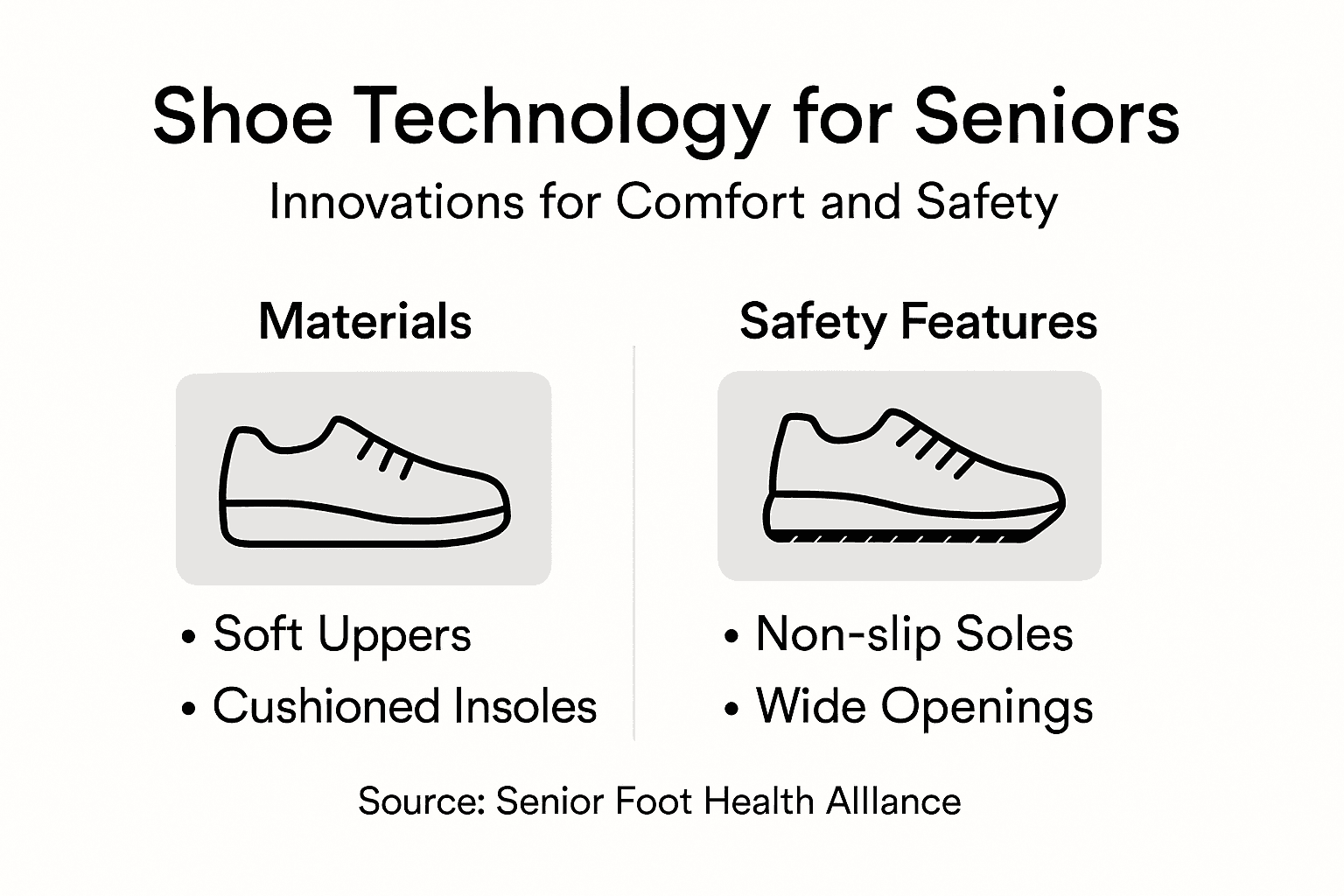
The following table summarises footwear technologies advancing senior foot health:
| Innovation Area | Example Technology | Benefit for Seniors |
|---|---|---|
| Material Science | Memory foam insoles | Cushions sensitive foot regions |
| Biomechanical Design | Pressure-relief zones | Reduces stress on vulnerable areas |
| Data-driven Personalisation | Gait-sensing shoe sensors | Tracks walking patterns and alerts |
When evaluating footwear types for your needs, consider which health challenges matter most to you. If diabetes-related complications concern you, prioritise shoes specifically labelled as diabetic-friendly, as they undergo rigorous testing to ensure they protect vulnerable feet. If arthritis pain drives your shoe choice, look for designs emphasising arch support and cushioning at impact points like heels and balls of your feet. If mobility and balance concerns you most, stability shoes with reinforced heel counters and wider toe boxes provide the security you need. The best shoe isn’t necessarily the most technologically advanced; it’s the one that addresses your specific challenges whilst remaining comfortable enough to wear daily. Many seniors find that investing in two or three pairs suited to different activities (casual wear, walking, dress occasions) works better than forcing one pair to handle every situation. Pay attention to features like depth to accommodate swelling, lightweight construction to reduce foot fatigue, and moisture management to prevent infections.
Pro tip: Try on shoes later in the day when your feet are slightly swollen from normal activity, as this gives you an accurate sense of how the shoe will fit during real wear, and always test shoes on both feet since most people’s feet differ slightly in size and shape.
Feet Changes With Age and Impact on Footwear
Your feet are not the same as they were twenty or thirty years ago, and acknowledging this reality fundamentally changes how you should approach shoe selection. As you age, your feet undergo genuine structural transformations that go far beyond simple cosmetic changes. The ligaments and tendons that have kept your feet arched and structured begin to weaken, causing your feet to flatten and lengthen over time. Many seniors discover that shoes fitting perfectly five years ago now feel uncomfortably tight, even though they assumed their shoe size remained constant throughout adulthood. This isn’t vanity or miscalculation; it’s a measurable change reflecting decades of walking and the natural softening of connective tissues. Additionally, reduced circulation means less oxygen reaches your foot tissues, affecting both sensation and your ability to detect problems developing beneath the skin. Combine these changes with decreased flexibility in your ankles and reduced cushioning in the fat pads under your heels, and you’re left with feet that require dramatically different support than they once did.
Common foot deformities develop or worsen with age, fundamentally altering which shoe styles work for you. Bunions, where your big toe angles inward, become increasingly common and painful as ligaments weaken. Hammertoes, where one or more toes curl upward, can develop from wearing tight shoes for decades or from arthritis affecting your joints. Arthritis in your feet, ankles, and toes directly impacts your walking mechanics and pain levels during daily activity. Foot shape changes due to weakening ligaments and tendons mean that off-the-shelf shoes designed for younger feet with different proportions may pinch, rub, or provide inadequate support. These aren’t minor inconveniences; they influence your willingness to walk, your confidence in movement, and ultimately your activity level and independence. A shoe that causes blistering or pressure points discourages you from the very activity your health requires most.
The footwear implications of these age-related changes are profound and specific. You now need shoes with significantly more depth to accommodate swelling that develops throughout the day, wider toe boxes to prevent pressure on bunions or hammertoes, and substantially firmer heel support to compensate for lost cushioning and weakened tendons. Proper footwear should include firm heel support, secure fastening, and slip resistant soles to address the fall risk that accompanies reduced ankle flexibility and altered balance mechanics. Lightweight construction becomes essential, as your muscles fatigue more quickly under additional weight. Materials that accommodate your foot’s changing shape throughout the day, rather than forcing your foot into a rigid structure, become non-negotiable. The shoes that worked brilliantly at forty or fifty simply won’t provide adequate support at seventy or eighty. This means resisting the temptation to continue buying the same brands or styles you’ve worn for years, even if they feel familiar. Your feet have changed; your shoes must change too. Many seniors find that investing time in properly fitting shoes, perhaps with professional assistance from a podiatrist or specialised shoe fitter, prevents months of discomfort and reduces the risk of serious foot complications developing from constant pressure or friction.
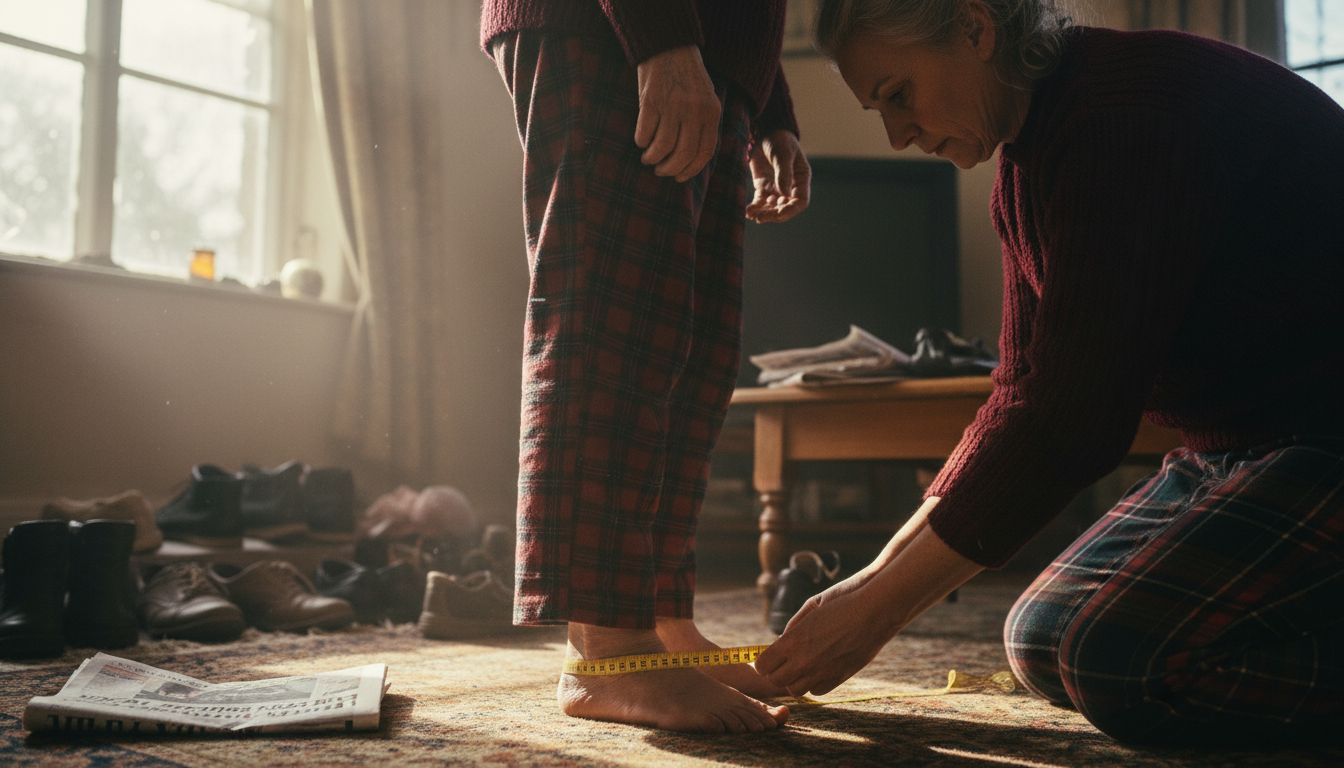
Understanding how your individual feet have changed requires honest observation. Stand and look at your feet from above. Do they appear flatter than you remember? Has your big toe angle shifted inward? Can you feel prominent bones or bumps that weren’t pronounced before? Observe your walking pattern; do you favour one side or walk differently to avoid discomfort? Notice which shoes in your current collection cause problems and which feel tolerable, then analyse what features the comfortable shoes possess. Do they have extra depth? Wider toe boxes? Soft, flexible sides? This personal assessment, combined with knowledge of common age-related changes, guides you towards footwear styles genuinely suited to your current feet rather than your past feet.
Pro tip: Have your feet measured professionally at least every two years, as most seniors experience measurable size changes; bring your most comfortable current shoes to compare fit and features, which helps a shoe fitter understand your specific needs without relying solely on your description.
Footwear for Diabetic and Mobility Challenges
If you manage diabetes, your shoe choice transcends comfort and style to become a critical component of your health management strategy. Diabetes fundamentally changes how your feet function and what they require from footwear. High blood sugar levels damage nerves over time, a condition called neuropathy, which means you may not feel pain, temperature changes, or pressure points that could signal developing problems. Simultaneously, diabetes reduces blood flow to your feet, slowing your body’s ability to heal even minor cuts or blisters. This combination creates a dangerous scenario where small, unnoticed injuries can escalate into serious infections or ulcers within days. Your shoes are no longer simply about preventing blisters or providing comfort; they’re about preventing foot ulcers that could eventually lead to amputation if left untreated. This reality demands footwear engineered specifically for diabetic feet, not standard shoes adapted for diabetes management. Extra-depth diabetic shoe designs accommodate orthotics and relieve pressure, protecting vulnerable areas where ulcers most commonly develop. The difference between standard shoes and therapeutic diabetic footwear is measurable and life-altering.
Therapeutic diabetic footwear addresses the unique vulnerabilities your feet face. Seamless interiors eliminate the seams that cause blistering and skin breakdown. Extra depth accommodates custom orthotics and prevents compression of sensitive areas. Specialised cushioning distributes pressure evenly across your foot, reducing concentrated stress points where ulcers typically form. Moisture-wicking liners keep your feet dry, preventing the fungal and bacterial infections diabetes makes you susceptible to. Protective toe boxes shield your toes from minor impacts you might not feel due to neuropathy. Perhaps most critically, specialised diabetic footwear and offloading devices prevent foot ulcers and support healing when ulcers do develop. This isn’t marketing language; it’s medical guidance from international diabetes organisations. Many people living with diabetes for decades report that switching to properly prescribed therapeutic shoes transformed their foot health, eliminating chronic pain and preventing complications they’d considered inevitable. However, therapeutic diabetic shoes only work effectively when professionally prescribed and correctly fitted to your individual foot structure and pressure distribution patterns.
Mobility challenges, whether from arthritis, Parkinson’s disease, stroke recovery, or general weakness, demand equally specialised footwear solutions. When movement becomes difficult or painful, the temptation to reduce activity increases significantly. Yet reduced activity accelerates muscle loss, weakens bones, and increases fall risk, creating a downward spiral. Your shoes must actively support mobility rather than merely accommodating reduced movement. Lightweight construction reduces the muscular effort required with each step. Slip-resistant soles provide traction and confidence on various surfaces, directly reducing falls. Firm heel support stabilises your ankle, critical when balance is compromised. Secure fastening systems that don’t require bending or significant dexterity keep shoes securely on your feet during movement. Rocker soles reduce the push-off effort required during walking, beneficial for those with arthritis or weakness. For many seniors with mobility challenges, the right shoes mean the difference between maintaining independence and becoming sedentary. A person struggling with hip arthritis might find that shoes with superior cushioning and a gentle rocking sole enable a thirty-minute walk that was previously impossible in standard footwear.
Selecting footwear when managing diabetes or mobility challenges requires specific considerations beyond standard fit guidance. If diabetic, request professional fitting at a specialised diabetic foot clinic or with a podiatrist experienced in diabetic footwear prescription. Avoid shopping when your feet are most swollen; your shoes should fit comfortably even when swelling peaks. Inspect your shoes regularly for internal damage or worn areas that might cause pressure points. For mobility challenges, prioritise stability and safety features over fashion. Test shoes on various surfaces: carpet, tile, stairs. Notice whether shoes reduce pain during walking or if certain movements still trigger discomfort. Remember that therapeutic shoes often feel different initially; they’re designed for function rather than the feel of casual footwear. Some seniors require multiple pairs tailored to different activities: one for daily wear, one for walking, one for dressing up. This layered approach ensures you always have appropriate footwear regardless of your plans.
Pro tip: Request a prescription for therapeutic footwear from your doctor or podiatrist before purchasing, as many insurance companies cover the cost when medically prescribed, potentially saving you hundreds of pounds whilst ensuring professional fitting rather than self-selection.
Risks of Poorly Fitted Shoes and Injury Prevention
Poorly fitted shoes aren’t simply uncomfortable; they’re a direct pathway to serious foot injuries and long-term deformities that compound with age. When your shoes don’t fit properly, every step forces your foot into an unnatural position, creating concentrated pressure zones that damage tissue over time. This isn’t a minor inconvenience you can ignore. The cumulative effect of wearing ill-fitting shoes for months or years can result in permanent structural changes to your feet that require medical intervention or even surgery. Bunions, hammertoes, corns, and other painful deformities develop progressively, each causing increasing pain that discourages the very activity your health depends on. Wearing tight or improperly fitted shoes leads to foot deformities including bunions, corns, hammertoes, and crossover toes, all of which cause pain and may eventually require surgical correction. What makes this particularly frustrating is that these conditions are largely preventable through proper shoe selection early on. Yet many seniors continue wearing shoes that pinch, rub, or provide inadequate support simply because they’ve grown accustomed to the discomfort or assume pain is an inevitable part of ageing.
The injury risks extend beyond foot deformities to encompassing balance, stability, and fall prevention, a critical concern for your long-term independence and safety. Falls represent the leading cause of injury-related death in seniors and the most common cause of non-fatal injury and hospitalisation. Your shoes directly influence whether you fall. Poorly fitted shoes with loose heels, narrow toe boxes, or smooth soles dramatically increase your risk of slipping, tripping, or losing your footing on stairs or uneven surfaces. When your shoe doesn’t stay securely on your foot, your body compensates by tensing muscles and altering your gait, creating instability rather than security. High heels, even modest ones, shift your centre of gravity forward, making balance precarious. Narrow toe boxes restrict your foot’s natural spreading during walking, reducing the ground contact that provides stability. Poor footwear is linked to foot pain, impaired balance, and increased fall risk in seniors, with shoes featuring poor fixation, high or narrow heels, and smooth soles significantly increasing fall incidents. Consider this: a single serious fall can result in a broken hip, hospitalisation, surgery, loss of independence, and permanent life changes. Your choice of shoes influences this outcome more directly than many people realise.
Prevention requires specific attention to shoe characteristics that protect against both deformity development and fall risk. Proper fit means your heel stays firmly in place without slipping, your toes have adequate room to spread naturally without pressure, and you can comfortably fit one finger between your heel and shoe. Wide toe boxes prevent compression of your toes and reduce the pressure that creates bunions and hammertoes. Secure fastening systems using laces, straps, or velcro keep your shoe locked on your foot during movement. Slip-resistant soles provide traction on various surfaces, critical for preventing slides and falls. Low, stable heels maintain your natural centre of gravity and walking mechanics. Arch support reduces stress on your foot’s internal structures, preventing the pain that encourages poor walking patterns. Beyond these features, regular inspection of your shoes matters significantly. Look for worn areas in the sole that reduce traction, compressed cushioning that no longer supports properly, or structural damage that compromises stability. Replace shoes when these signs appear rather than continuing to wear them beyond their functional lifespan. Footwear plays a critical role in injury prevention by combining proper fit, secure fastening, and slip-resistant design to enhance your stability and reduce fall-related injuries.
Your current shoe collection likely contains pairs that don’t fit optimally. Rather than viewing this as a problem, treat it as valuable information. Wear each pair for short periods and observe what happens. Does your heel slip? Do your toes feel cramped? Do certain shoes make you feel unsteady or cause pain after short walks? Keep shoes that feel secure and cause no discomfort. Donate or discard shoes that pinch, slip, or make you feel unbalanced. When purchasing new shoes, shop later in the day when your feet are swollen to their largest size, ensuring shoes fit even when swelling peaks. Try both shoes on both feet, as your feet differ slightly. Walk around the shop, test on stairs if possible, and notice whether you feel secure and balanced. The best shoes are ones you’ll actually wear because they feel good and keep you safe. Resist the temptation to keep worn-out shoes simply because they’re familiar; your safety matters far more than nostalgia.
Pro tip: Keep a simple record of which shoes cause discomfort or feel unstable, as this pattern reveals your specific fit needs and helps you avoid similar styles when shopping for replacements.
Choosing the Best Shoe for Comfort and Safety
Selecting shoes that genuinely serve your feet rather than simply looking acceptable requires moving beyond assumptions and practising deliberate evaluation. Most seniors approach shoe shopping with vague criteria: “comfortable enough” or “looks nice.” This approach inevitably leads to shoes that disappoint after a few hours of wear. Instead, think of shoe selection as a practical problem-solving exercise. Your shoes must simultaneously provide comfort for daily wear, protect your feet from injury, accommodate any specific health challenges you face, and feel secure enough that you forget they’re on your feet. This combination doesn’t happen by accident. It happens when you understand what qualities genuinely matter and evaluate shoes against those criteria before purchasing. Proper shoe fit is essential for comfort, preventing injuries, and maintaining foot and overall body health, yet many people underestimate how profoundly the right shoe choice impacts their daily life.
Start by understanding that different activities require different shoe characteristics. Walking shoes differ fundamentally from dress shoes or athletic trainers, and using the wrong shoe type for your primary activity guarantees discomfort. Walking shoes have flexible soles and angled heels to absorb shock, which is precisely what your ageing feet need during daily movement. This flexibility matters because it allows your foot to move naturally through its walking cycle rather than forcing rigid movement. The shock absorption protects your joints from the cumulative impact of thousands of steps. Look for walking shoes specifically, not generalised “comfort shoes.” Beyond activity type, evaluate shoes against your individual foot characteristics and health needs. If you have bunions, wide toe boxes become non-negotiable. If you manage diabetes, seamless interiors and extra depth for orthotics are essential. If arthritis causes heel pain, superior cushioning in that area matters more than other features. If balance concerns you most, slip-resistant soles and stable heel support outweigh other considerations. Match your shoe choice to your specific situation rather than following generic recommendations.
The practical process of selecting shoes involves several concrete steps that take time but prevent costly mistakes. First, have your feet measured professionally at a specialised shoe retailer, not just a standard shoe shop. Your feet likely differ in size, so measure both. Shop later in the day when your feet are at their largest, ensuring shoes fit even when swelling peaks. Try shoes on both feet and walk around extensively, preferably on different surfaces. Notice whether your heel slips, whether your toes feel compressed, whether you feel balanced and secure. If a shoe feels uncomfortable in the shop, it won’t magically become comfortable with wear; avoid the myth that shoes need a breaking-in period. The best shoes feel good immediately. Check that you can fit one finger comfortably between your heel and the back of the shoe, and that your toes can spread naturally without pressure. Inspect the sole for adequate traction, the heel for stability, and the overall construction for quality materials. Ask yourself whether you’d actually wear these shoes regularly, not just for special occasions. A beautiful shoe you wear once monthly provides no benefit compared to a practical shoe you wear daily. Consider purchasing multiple pairs suited to different scenarios: daily casual wear, dedicated walking shoes, dressier options, and perhaps one pair for challenging weather. Having choices means you can always select the most appropriate shoe for your plans rather than forcing one pair to handle every situation.
Beyond the initial selection process, ongoing shoe maintenance extends their lifespan and preserves their protective qualities. Replace shoes when their soles show significant wear, their cushioning feels compressed, or their structure shows damage. Many people wear shoes far beyond their functional lifespan, continuing to use deteriorating footwear that no longer provides adequate support or cushioning. This economy ultimately costs more through increased foot problems and the need for medical treatment. Clean your shoes regularly and allow them to dry completely after wet conditions. Store them in a cool, dry place away from direct heat, which damages materials. Rotate between pairs so each shoe has time to recover its cushioning between uses. Proper maintenance preserves the protective qualities that make good shoes valuable.
Pro tip: Mark a calendar reminder to assess your shoe collection every six months, replacing any pairs showing sole wear, compressed cushioning, or structural damage; this simple discipline prevents wearing degraded footwear that no longer protects your feet adequately.
Prioritise Your Foot Health with Footwear Designed for Seniors
Foot pain and changing foot structure are challenges seniors face daily but they do not have to limit your wellbeing. The article highlights how ageing feet need special support zones cushioning and stability to prevent injuries and maintain mobility. If arthritis, diabetes or swollen feet disrupt your comfort or safety, choosing the right footwear is critical. At YDA UK, you will find high-performance shoes engineered with advanced technology that adapts to your foot’s unique needs, providing both style and health benefits.

Do not wait until foot discomfort worsens or falls become a risk. Explore the YDA Technology features that deliver superior cushioning, secure fastenings and pressure relief specifically designed for seniors. Take control of your foot health today by visiting YDA UK and selecting shoes that combine comfort safety and innovation for your everyday needs.
Frequently Asked Questions
What are the common foot problems seniors face that can be addressed by footwear?
Seniors often experience foot problems such as arthritis, diabetes, bunions, hammertoes, and swollen feet. Proper footwear can provide support, alleviate pain, and help manage these conditions effectively.
How do age-related changes in feet impact footwear choices for seniors?
As seniors age, their feet can flatten, lengthen, and develop conditions such as bunions or arthritis. This necessitates footwear with features such as wider toe boxes, extra depth, and enhanced cushioning to provide the support and comfort their feet now require.
What features should seniors look for in shoes to promote foot health?
Seniors should look for shoes with secure fastening systems, slip-resistant soles, cushioned insoles, and adequate arch support. Features like seamless interiors and extra depth are important for those with diabetes or foot sensitivities.
Why is it important for seniors to consult a podiatrist before buying new shoes?
Consulting a podiatrist can help seniors understand their unique foot structure and specific support needs. This ensures they invest in footwear that not only fits well but also addresses any underlying health issues and prevents complications.
Recommended
- Why Shoes Wear Out: Complete Guide Explained – YDA UK
- Why Replace Shoes Regularly for Foot Health – YDA UK
- Podiatrist Recommended Footwear: Lasting Comfort and Health – YDA UK
- Why Shoes Matter for Active Urban Lifestyles – YDA UK
- Spa Temperature Shock – Protecting Your Comfort and Health - ClearSpa™
- Comfortabele bh: dit zijn de beste materialen voor dagelijks comfort - Philotes