
What shoes does the Good Feet Store sell?
TL;DR:
- The Good Feet Store primarily sells prefabricated arch support inserts, with shoes playing a secondary role in select locations. Its limited shoe inventory is intended to complement the inserts and is variable across franchises. Proper shoe selection, featuring support-friendly characteristics, is essential for optimal results with their system.
The Good Feet Store is defined primarily as an arch support retailer, not a shoe shop. Its flagship product is the 3-Step Arch Support System, a set of prefabricated inserts retailing typically between $1,299 and $2,499 per set. Some franchise locations do stock a limited selection of third-party footwear brands, including Brooks, New Balance, Asics, Vionic, and Saucony, but these shoes are secondary to the insert system. If you are searching for what shoes does the Good Feet Store sell, the honest answer is: very few, and availability depends entirely on your local franchise.
What types of shoes does the Good Feet Store sell?
The shoe options from Good Feet Store are limited by design. Shoe inventory varies by location, with most franchises stocking only a handful of styles and sizes from select third-party brands. The purpose of stocking these shoes is practical: to give customers a compatible shoe to walk out with on the same day they purchase their arch supports.
The brands you are most likely to find at Good Feet Store locations include:
- Brooks running and walking shoes, known for their structured midsoles and deep toe boxes
- New Balance trainers with wide-fit options and removable insoles
- Asics stability shoes, particularly the Gel series, which accommodate inserts well
- Vionic casual and walking shoes, engineered with built-in arch support
- Saucony running shoes with firm heel counters and motion control features
Stock is narrow. You will rarely find more than two or three colourways per model, and sizing gaps are common. The Good Feet Store footwear offerings are not meant to compete with a specialist running shop or a department store shoe section. They exist to complement the insert fitting, giving customers an immediate, compatible option rather than a broad retail experience.
Pro Tip: Ring your local Good Feet Store before visiting if footwear is your priority. Ask specifically which brands and sizes are currently in stock, as inventory is not standardised across franchises.
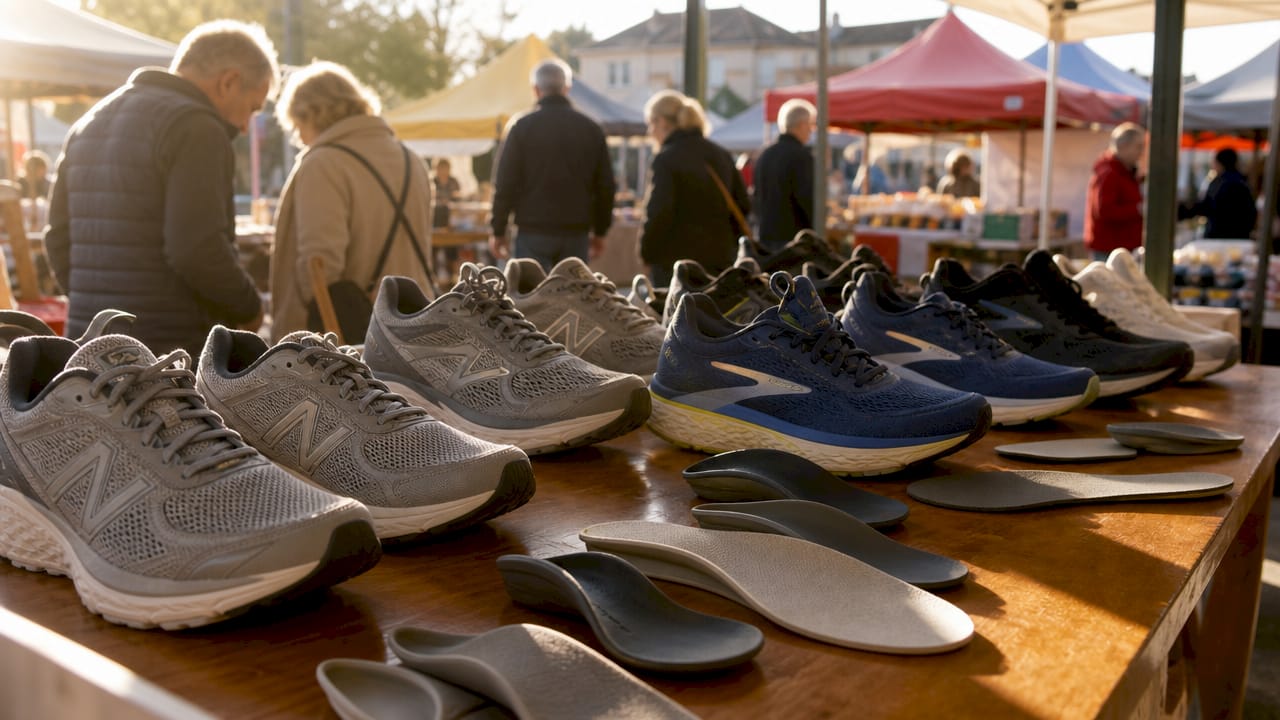
The limited shoe inventory at franchises serves primarily to help customers immediately accommodate their new arch supports. The main sale focus remains the insert system itself.

How does the Good Feet 3-step system work with your shoes?
The core product at The Good Feet Store is the 3-Step Arch Support System, which includes three distinct inserts: the Strengthener, the Maintainer, and the Relaxer. Each serves a different purpose across your daily activities, and the system is designed to be rotated throughout the day rather than used as a single permanent insert.
Understanding this system changes how you think about shoe selection entirely. The inserts are designed to fit inside your existing shoes, which means the quality and compatibility of your footwear matters as much as the insert itself.
Here is how the three-step rotation works in practice:
- Strengthener is worn during the most active part of your day, typically in a supportive trainer or walking shoe, to correct alignment under load.
- Maintainer transitions you through moderate activity, such as work or errands, and suits a structured everyday shoe.
- Relaxer is used during rest or light activity, fitting into a softer, more flexible shoe for recovery periods.
The Good Feet philosophy centres on rotating arch supports across different shoes to cover daily activities rather than relying on a single corrective shoe. This approach makes shoe compatibility a genuine consideration, not an afterthought.
For a shoe to work properly with any of these inserts, it needs specific structural features. Ideal shoes for arch supports have firm heel counters, adequate interior depth, and minimal built-in midsole cushioning that would conflict with the insert’s own support profile. Motion control features reinforce alignment best when paired with proper arch support rather than used alone.
Pro Tip: Remove the factory insole from any shoe before inserting a Good Feet arch support. Most shoes have a thin removable sockliner that, if left in, reduces interior depth and compromises the insert’s positioning.
How does Good Feet compare to other orthotic solutions?
Understanding where Good Feet sits among orthotic options helps you make a better purchasing decision. The comparison below covers the three main categories most customers consider.
| Solution | Cost (approx.) | Fitted by | Best suited for | Limitations |
|---|---|---|---|---|
| Good Feet 3-Step System | $1,299 to $2,499 | Sales associate | Mild to moderate arch issues | No clinical assessment; prefabricated |
| Custom orthotics (podiatrist) | $400 to $800+ | Licensed clinician | Complex biomechanical conditions | Higher cost; longer wait time |
| Off-the-shelf insoles (e.g. PowerStep Pinnacle) | $30 to $60 | Self-fitted | General comfort and mild support | Less structured; no fitting guidance |
The Good Feet prefabricated system occupies an expensive middle ground between inexpensive store-bought insoles and custom-moulded orthotics from podiatrists. That positioning is not inherently wrong, but it does mean customers pay a premium without receiving the clinical assessment that custom orthotics include.
The fitting process at Good Feet uses a foot imprint and a consultation with a sales associate. Good Feet Store fitting is conducted by commissioned sales associates, not licensed medical professionals, which contrasts directly with podiatrist-prescribed orthotics. For customers with plantar fasciitis, flat feet, or mild overpronation, this may be entirely sufficient. For those with complex conditions such as posterior tibial tendon dysfunction or significant leg length discrepancy, a podiatrist referral is the more appropriate route.
Pro Tip: Good Feet arch supports are eligible for HSA and FSA reimbursement as medical devices, which can meaningfully reduce the out-of-pocket cost. Confirm eligibility with your plan provider before purchase, as Limited-Purpose FSAs are excluded.
Some customers have reported feeling pressured into expensive packages during their fitting appointment. Request a written quote before committing, and ask for a clear breakdown of what each insert does and whether you genuinely need all three steps for your specific condition.
What should you look for in shoes to pair with arch supports?
Choosing the right shoe to pair with any arch support insert, including Good Feet’s system, is where most buyers make avoidable mistakes. The shoe does not just carry the insert. It either reinforces or undermines everything the insert is trying to do.
The six key footwear features that support orthotic compatibility are:
- Wide toe box: Prevents compression of the forefoot and allows natural toe splay under load
- Low heel drop: A heel height above 12mm tilts the foot forward and shifts pressure away from the arch support’s intended contact points
- Removable insoles: Non-removable factory insoles make it impossible to seat an orthotic insert correctly
- Stability features: A firm medial post or torsional rigidity prevents the shoe from collapsing inward and negating the insert’s correction
- Moderate cushioning: Thick, soft foam midsoles absorb the insert’s feedback and reduce proprioceptive benefit
- Flexible upper materials: Leather, mesh, or knit uppers accommodate foot swelling throughout the day without creating pressure points
Brands consistently recognised for orthotic-friendly shoe design include New Balance, Brooks, Hoka, and Vionic. Each offers models with removable insoles and structured heel counters across multiple width fittings.
The most common mistake buyers make is choosing a shoe based on cushioning alone. A maximally cushioned shoe feels comfortable in the shop but often lacks the structural integrity to hold an orthotic insert in the correct position. Comfort and support are not the same thing, and a shoe that feels soft underfoot is not automatically good for your feet.
Key takeaways
The Good Feet Store sells arch support inserts as its primary product, with shoes playing a supporting, secondary role across select franchise locations.
| Point | Details |
|---|---|
| Shoes are secondary at Good Feet | Most locations stock limited third-party brands; the core product is the 3-Step insert system. |
| Brands vary by franchise | Brooks, New Balance, Asics, Vionic, and Saucony appear most commonly, but stock is not standardised. |
| Shoe compatibility matters | Removable insoles, firm heel counters, and adequate depth are non-negotiable for insert performance. |
| Good Feet occupies a middle ground | It costs more than off-the-shelf insoles but lacks the clinical assessment of custom orthotics. |
| Request written pricing | Costs range from $1,299 to $2,499 and vary by location; always get a written quote before purchasing. |
Why the shoe question reveals something important about Good Feet
People searching for what shoes Good Feet Store sells are often asking the wrong question, and I say that with genuine sympathy. When you are in pain, you want a product that solves everything at once. A shoe that fixes your feet. A single purchase that ends the problem. The Good Feet Store’s marketing is sophisticated enough to feel like that solution, which is why so many customers walk in expecting a shoe shop and walk out having spent over a thousand pounds on inserts.
What I have found, after years of writing about foot health and orthotic products, is that the insert-first model is actually sound in principle. The problem is the execution and the price point. A prefabricated insert fitted by a sales associate is not inherently inferior to a custom orthotic for mild conditions. For many people with flat feet or plantar fasciitis, a well-made prefabricated insert in a compatible shoe genuinely works. The issue is that the Good Feet system costs as much as a custom orthotic without the clinical oversight that justifies that price.
My honest advice: if your foot pain is mild to moderate and you have no diagnosed biomechanical condition, the Good Feet system may help. But pair it with a shoe you have chosen carefully using the six features above, not just whatever is on the shelf at your local franchise. And if your pain is severe or persistent, see a podiatrist before spending $1,500 on inserts. The shoe you choose will always matter more than the brand name on the insert.
— Panagiotis
Footwear engineered to work with arch supports
If you are serious about foot health, the shoe you pair with any arch support insert is as important as the insert itself. Ydauk designs footwear around the principles that make orthotic compatibility possible: removable insoles, firm heel counters, structured midsoles, and materials that support your foot rather than fight it. The YDA shoe technology is built specifically for everyday wearers who need genuine support without sacrificing style. Whether you use Good Feet inserts, custom orthotics, or off-the-shelf supports, Ydauk’s range gives those inserts the structural foundation they need to perform. Explore the collection and find footwear that actually complements your support system.
FAQ
Does the Good Feet Store sell shoes directly?
The Good Feet Store sells shoes only as a secondary offering at select franchise locations. Its primary product is the 3-Step Arch Support System of prefabricated inserts.
What brands does Good Feet carry in store?
Some Good Feet Store locations stock Brooks, New Balance, Asics, Vionic, and Saucony, though availability varies by franchise and stock is limited in style and size.
Are Good Feet arch supports the same as custom orthotics?
Good Feet arch supports are prefabricated inserts fitted by sales associates, not licensed clinicians. Custom orthotics are individually moulded by a podiatrist following a full clinical assessment.
Can I use Good Feet inserts in my existing shoes?
Yes. Good Feet arch supports are designed to fit inside your own shoes. The best results come from shoes with removable insoles, firm heel counters, and adequate interior depth to seat the insert correctly.
Are Good Feet arch supports covered by HSA or FSA?
Good Feet arch supports qualify for HSA and FSA reimbursement as medical devices, though Limited-Purpose FSAs are excluded. Confirm eligibility with your benefits provider before purchasing.