
Types of leather shoes material: a buyer's guide
TL;DR:
- Understanding leather grades helps distinguish quality, durability, and care requirements for shoes. Full-grain leather is the most durable, develops a patina, and is ideal for longevity, while finishes like suede or nubuck require more maintenance. Exotic leathers such as shell cordovan and kangaroo offer unique properties but demand specialized care and sourcing.
When you start researching types of leather shoes material, the sheer number of terms thrown around can make even a straightforward purchase feel unnecessarily complicated. Full-grain, top-grain, suede, nubuck, cordovan — what does any of it actually mean? More to the point, which leather type will hold up to daily wear, look good after two years, and match the occasions you have in mind? This guide cuts through the confusion by explaining exactly what each leather type and grade means, how they compare in durability and style, and how to use that knowledge to buy smarter.
Table of Contents
- Key takeaways
- Types of leather shoes material: grades explained
- Leather finishes and textures in footwear
- Exotic and luxury leathers in footwear
- How to choose the right leather for your shoes
- My perspective on leather quality claims
- Leather quality and technology at Ydauk
- FAQ
Key takeaways
| Point | Details |
|---|---|
| Full-grain is the gold standard | Full-grain leather retains the outer hide layer intact, making it the most durable and breathable grade available. |
| Grade and finish are separate things | Leather grade affects strength and ageing; finish or texture affects water resistance, care needs, and formality. |
| Suede and nubuck suit casual wear | Both textures are less formal than smooth leathers and require more diligent maintenance to stay looking good. |
| Exotic leathers demand specialist care | Shell cordovan and kangaroo leather have unique fibre structures that respond differently to standard conditioning products. |
| Maker reputation matters as much as labels | Two shoes both labelled full-grain can differ greatly depending on tanning methods, hide selection, and finishing processes. |
Types of leather shoes material: grades explained
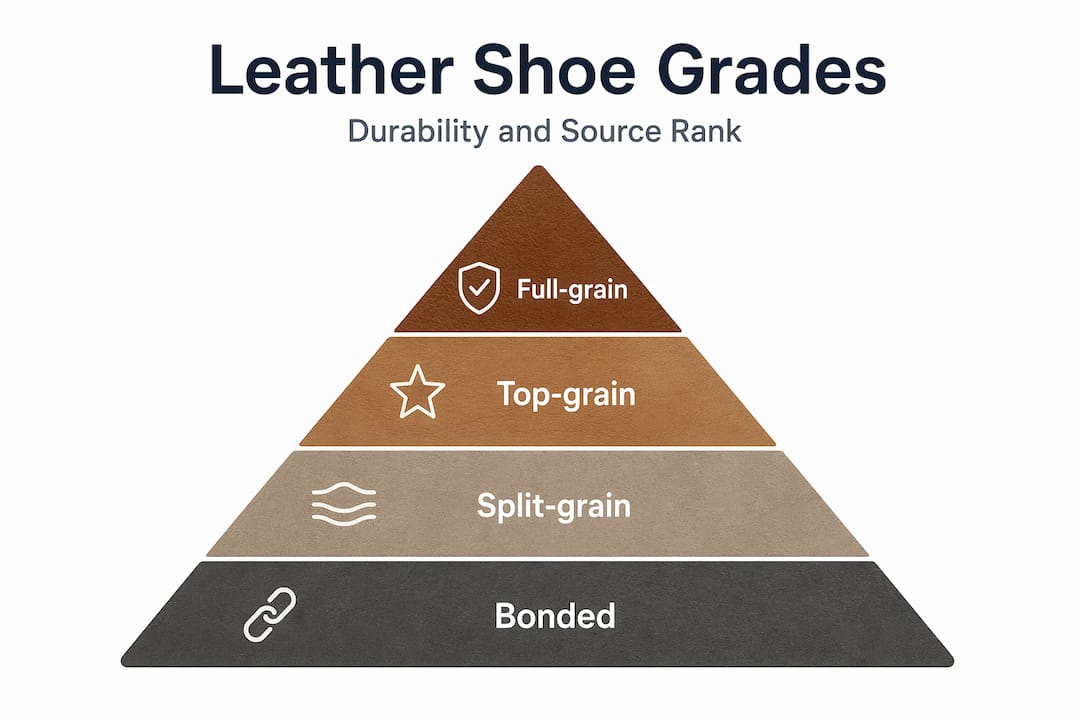
Not all leather is created equal, and the biggest factor separating quality from compromise is grade. Leather grades differ mainly by which layers of the hide are used and how much sanding or buffing occurs before finishing. Understanding this single principle makes most marketing language considerably easier to decode.
Full-grain leather
Full-grain leather is the highest-quality grade available. The outermost layer of the hide is kept completely intact, with no sanding or buffing applied to the surface. This means the natural fibre structure remains undisturbed, resulting in leather that is stronger, more breathable, and capable of developing a rich patina over time. You will find full-grain leather used in premium dress shoes, quality boots, and any footwear designed to last decades rather than seasons. Blemishes, grain variations, and natural markings may be visible, which actually signals authenticity rather than defect.
Top-grain leather
Top-grain leather uses the same outermost hide layer as full-grain, but the surface is lightly sanded to remove natural imperfections. The result is a more uniform, consistent appearance. The trade-off is real. Sanding removes some of the dense outer fibres responsible for strength and breathability, so top-grain leather is slightly less durable over the long term. It remains the second-highest grade and is common in mid-to-high-range footwear where a cleaner aesthetic matters.
Split-grain, bonded, and genuine leather
Split-grain leather comes from the lower layers of the hide once the outer layers have been separated. It lacks the tight fibre density of full or top-grain, so it is noticeably weaker and less breathable. You will find it in budget shoes and as a backing material for suede.
Bonded leather sits at the bottom of the quality ladder. It is made from shredded leather scraps bound together with adhesives, then embossed with a grain pattern. It looks like leather from a distance but peels, cracks, and deteriorates quickly. The label “genuine leather” offers little reassurance either — it is a legal term meaning the product contains some real leather, not that it is quality leather.
| Grade | Source layer | Surface treatment | Durability | Ageing |
|---|---|---|---|---|
| Full-grain | Outermost | None | Highest | Develops rich patina |
| Top-grain | Outermost | Light sanding | High | Some patina possible |
| Split-grain | Lower layers | Heavy finishing | Moderate | Minimal character |
| Bonded | Scraps | Embossed coating | Low | Peels and cracks |
| Genuine leather | Variable | Variable | Low to moderate | Poor |
Pro Tip: When a shoe listing uses vague terms like “premium leather” or “genuine leather” without specifying grade, treat it as a warning sign. Reputable manufacturers name the grade clearly.
Leather finishes and textures in footwear
Grade tells you about structure. Finish tells you about surface. These are two separate dimensions of leather quality, and grade influences durability while finish texture dictates water resistance and care demands.
Suede
Suede is made from the inner corium layer of the hide, split away from the grain side. Its characteristic soft, brushed texture comes from the loose fibres on this flesh side. Because suede originates from the inner hide, it lacks the tight fibre density of the grain surface, making it more susceptible to moisture and staining. Suede’s nap is longer and less durable than nubuck, and it requires a dedicated suede brush and water-repellent spray to maintain well. Stylistically, suede brings a casualness to a shoe that smooth leather cannot replicate, making it well-suited to loafers, desert boots, and Chelsea boots worn in relaxed settings.

Nubuck
Nubuck is full-grain leather with the outer surface lightly sanded to create a short, velvet-like nap. Unlike suede, nubuck originates from the grain side of the hide, meaning it retains considerably more structural integrity. This makes nubuck more durable than suede while still offering that soft, matte texture. It does, however, share suede’s sensitivity to moisture and marks, and proper waterproofing spray is non-negotiable if you intend to wear nubuck shoes outdoors.
Roughout leather
Roughout is simply leather used flesh-side out, with no surface finishing applied. It looks similar to suede but is typically thicker and used in more rugged footwear such as work boots and outdoor shoes. The unfinished surface actually repels light moisture and dirt reasonably well, making roughout a practical choice for demanding conditions.
Patent leather
Patent leather is smooth leather coated with a high-gloss lacquer finish, traditionally shellac and now often polyurethane. The result is a mirror-like surface that is completely impermeable to water. Patent leather is a staple for formal occasions such as black tie events, and it pairs exclusively with formal dress. It requires almost no conditioning but does show scuffs prominently, which can be buffed out with a soft cloth.
Here is a quick summary of finish pros and cons for everyday decision-making:
- Full-grain smooth: Excellent durability, develops patina, moderate care requirements, suits formal and smart-casual occasions.
- Nubuck: Soft appearance, good durability for a napped finish, requires waterproofing, best for smart-casual and casual wear.
- Suede: Distinctive texture, lower durability, highest maintenance of the group, works well for casual footwear.
- Roughout: Rugged, practical, low maintenance by design, suited to outdoor and workwear contexts.
- Patent leather: Glossy, waterproof, minimal upkeep, strictly formal in application.
Exotic and luxury leathers in footwear
Beyond standard bovine leather, a specialist market exists for exotic and luxury leather types that offer unique properties and genuinely exceptional longevity.
Shell cordovan
Shell cordovan is arguably the most revered leather in shoemaking. It comes from a specific membrane located beneath the rump skin of horses, a small yield per animal that partly explains its high cost. The tanning process is extensive, taking six months or longer, and the result is a dense, non-porous leather with a distinctive lustre that needs no surface coating to achieve its shine.
Where standard leather creases, cordovan does something different. Its unique fibre structure causes it to “roll” rather than crease, meaning the leather pushes outward and recovers rather than forming permanent fold lines. Shoes made from shell cordovan age extraordinarily well and are considered lifetime investments by serious shoe collectors.
Care for cordovan differs from standard leather. Over-conditioning shell cordovan can actually harm its appearance, because the dense, non-porous structure does not absorb product the way calf leather does. A light application of cordovan cream, less frequently than you would condition calf leather, is the correct approach.
Kangaroo leather
Kangaroo leather is prized in athletic and performance footwear, particularly football boots. It achieves an exceptionally high strength-to-weight ratio, meaning thin cuts of kangaroo hide are significantly stronger than comparable thicknesses of bovine leather. The result is a boot or shoe upper that feels light and close to the foot without compromising on durability.
Other exotic options
Ostrich leather, recognisable by its distinctive quill pattern, is used in luxury loafers and dress boots. Snake leather appears in fashion-forward styles where visual impact takes priority. These materials are more decorative than functional in footwear, and their durability varies considerably depending on the tannery and finishing process used.
Pro Tip: For caring for leather handbags and shoes made from exotic leathers, always use products formulated specifically for that leather type. A leather care guide built around calf leather does not translate reliably to cordovan or ostrich.
How to choose the right leather for your shoes
Now that you understand the different leather grades and finishes, the practical question is: which one suits your needs? The answer depends on three things: how you will wear the shoes, how much maintenance you are willing to commit to, and how long you expect them to last.
Here are the key decision criteria to work through before buying:
-
Identify your primary use case. Formal occasions call for smooth full-grain or patent leather. Casual everyday wear suits suede, nubuck, or relaxed full-grain styles. Outdoor and active use benefits from roughout or performance leathers like kangaroo hide.
-
Consider your maintenance commitment. Full-grain smooth leather needs regular conditioning and polishing but rewards the effort with years of improving appearance. Suede and nubuck require waterproofing spray and brushing after each wear. Patent leather needs almost no maintenance other than wiping down after use.
-
Think about longevity expectations. Full-grain leather shoes, properly maintained, can last ten to twenty years and look better with age. Top-grain shoes offer good longevity at a lower entry cost. Bonded leather or genuine leather shoes will show wear and degradation within a year or two of regular use. Read about maintaining shoes effectively to maximise the lifespan of whatever grade you choose.
-
Factor in climate and environment. If you live in a wet climate, smooth full-grain or patent leather with a good wax polish will serve you better than suede or nubuck. If you are in a dry climate, both smooth and napped leathers perform well with appropriate conditioning.
-
Match the leather to the shoe construction. A Goodyear welted full-grain derby represents maximum longevity. A cemented suede loafer is stylish but not built for years of hard wear. Shoe care best practices also vary considerably between construction methods, so it helps to know what you are working with.
My perspective on leather quality claims
I have spent years researching and writing about footwear, and one thing I keep returning to is how much the label “full-grain” actually obscures rather than clarifies. Two full-grain leathers can differ greatly depending on the tannery, the age and breed of the animal, the thickness of the cut, and the finishing chemistry applied.
I have held full-grain shoes from two different makers at similar price points, and the difference in density, smell, and pliability was remarkable. One developed a beautiful patina after six months. The other started showing stress lines within weeks. Both were technically full-grain.
What I have learned is that grade is a starting point, not a guarantee. The maker’s reputation, the tannery they source from, and the finishing choices they make after grading have as much influence on real-world performance as the grade label itself. I now pay as much attention to where a brand sources its leather as to the grade they advertise.
My other hard-won lesson is about finish and care commitment. Nubuck looks extraordinary on the shelf but requires consistent attention that many buyers simply do not give it. If you know you will not reach for the brush and waterproofing spray regularly, buy smooth leather and condition it twice a year. Honest self-assessment about your care habits will save you money and disappointment.
— Panagiotis
Leather quality and technology at Ydauk
Understanding types of leather shoes material is the foundation of buying footwear that genuinely lasts. Ydauk approaches shoe construction with that same rigour, combining premium leather selection with proprietary foot health technology to produce footwear that performs as well as it looks.

The YDA shoe technology page goes into detail on how material choices and construction methods work together to support everyday comfort and longevity. If you want shoes built on a clear understanding of leather quality and foot biomechanics rather than marketing language, Ydauk’s approach is worth exploring. You can also find expert care tips to keep your leather footwear performing at its best long after purchase.
FAQ
What are the main types of leather used for shoes?
The main types of leather used for shoes are full-grain, top-grain, split-grain, bonded leather, suede, nubuck, and exotic leathers such as shell cordovan and kangaroo. Each differs in durability, appearance, and maintenance requirements.
What is the best leather for shoes if you want them to last?
Full-grain leather is the most durable and long-lasting option. Its intact fibre structure makes it stronger and more breathable than sanded or corrected grades, and it develops a patina that improves appearance over time.
Is suede the same as nubuck?
No. Nubuck is lightly sanded full-grain leather from the outer hide, while suede comes from the inner corium layer. Nubuck is more durable than suede, though both have a similar soft, matte appearance and require similar care.
What does “genuine leather” mean on a shoe label?
“Genuine leather” is a legal designation meaning the product contains real leather, but it does not indicate quality. It typically refers to lower-grade split or corrected leather and should not be confused with full-grain or top-grain quality.
How do I care for exotic leathers like shell cordovan?
Shell cordovan requires lighter conditioning than standard calf leather. Its dense, non-porous fibre structure means less frequent conditioning is advised, using products specifically formulated for cordovan to avoid over-saturating the surface.