
Match Insoles for Foot Pain: Which Types Work, When to See a Clinician
Rigid or semi-rigid orthotics with a deep heel cup work best for plantar fasciitis, firm arch supports help flat feet and overpronation, cushioned foam or gel insoles suit long hours on your feet or forefoot pain, and 3/4-length pads with metatarsal support target ball-of-foot discomfort. Try the condition-matched option first and see a podiatrist if pain lasts beyond a few weeks.
TL;DR:
- Proper insoles should match the specific foot condition, such as rigid orthotics with deep heel cups for plantar fasciitis or firm supports for flat feet and overpronation.
- Material choice, including EVA foam, gel, cork, and plates, greatly affects insole durability and support, with high-density EVA lasting longer but feeling firmer.
- For effective pain relief, the insole’s fit, volume, and proper trimming are critical, and gradual break-in helps prevent discomfort or new pressure points.
- Combining insole use with supportive shoes tailored to your foot mechanics enhances effectiveness and avoids compensating with inappropriate footwear.
- Off-the-shelf orthotics can manage many foot pains, but persistent symptoms or structural changes should prompt professional assessment.
Table of Contents
- Types of insoles for foot pain: the main categories explained
- Materials and construction: what actually changes performance
- Which insole to try for each common condition
- Fit, trimming and how to break insoles in safely
- What the evidence actually shows, and expert tips worth following
- Why the shoe matters as much as the insole
- YDA Technology: built-in support for everyday comfort
- Sources
Types of insoles for foot pain: the main categories explained
Walk into any pharmacy and the insole wall looks like chaos. It isn’t. Every product on that shelf falls into one of a handful of categories, and once you know what each one does, the choice gets a lot simpler.
Orthotic or custom insoles are rigid or semi-rigid shells moulded to control how your foot moves through each step. They’re built to correct, not just cushion, which is why podiatrists reach for them first when someone’s pain stems from mechanical misalignment rather than simple fatigue.
Cushioned or foam insoles are the soft option. A layer of dense foam absorbs pressure and spreads your weight more evenly, which suits people who stand or walk for hours without a specific structural problem.
Gel insoles concentrate shock absorption exactly where you need it, usually the heel and forefoot. They compress under load and rebound, making them a good match for impact-heavy days rather than all-day structural support.
Cork and semi-rigid materials sit between the two extremes. Cork softens slightly with body heat and moulds to your foot shape over weeks of wear, giving supportive contouring without the stiffness of a full orthotic shell.
Length matters as much as material:
- Full-length insoles replace the entire factory insole and suit most everyday shoes and trainers.
- 3/4-length insoles stop before the toes, freeing up space in tighter shoes while still supporting the arch and heel.
- Heel cups and forefoot pads target one zone only, useful when the rest of the shoe already fits and supports well.
The NHS distinguishes between functional and accommodative devices: functional insoles correct movement, accommodative ones simply cushion. That single distinction explains most of the confusion people have when shopping.
Materials and construction: what actually changes performance
The brand printed on the box tells you almost nothing. The density, layering and plate material inside tell you everything.
EVA foam is the workhorse cushioning material. Low-density EVA feels plush underfoot but breaks down within months; higher-density EVA lasts longer but feels firmer, so there’s a real trade-off between comfort and durability.
- Gel pads sit over impact zones (heel strike, ball of foot) for targeted shock absorption.
- Cork contours to your foot shape over time, giving supportive, semi-custom shaping without a lab-made mould.
- Polypropylene or carbon fibre plates add rigidity for correction and long-term shape retention.
- Moisture-wicking, anti-odour top covers matter more than most buyers expect, especially for daily wear.
Pro Tip: Check the insole’s overall volume before buying. A high-volume, thickly cushioned insole can make a snug shoe feel a full size tighter, while a low-volume insole slots into narrow or trainer-style shoes without crowding your toes.
Podiatrists interviewed for consumer round-ups consistently point to a sculpted heel cup and appropriate rigidity as the two features worth checking before anything else on the spec sheet.
Which insole to try for each common condition
Matching the insole to the actual mechanical problem, rather than grabbing whatever’s cheapest, is where most people go wrong.
- Plantar fasciitis — a rigid or semi-rigid orthotic base with a deep heel cup and dense heel cushioning tends to work best. Trials and clinical reviews point to polypropylene or carbon-based orthoses paired with firm heel cushioning as effective for chronic pronation-related foot pain, and podiatrists interviewed by Prevention recommend the same rigid-base-plus-cushioning combination specifically for this condition.
- Overpronation and flat feet — firm arch support, semi-rigid orthotics, or wedged insoles help correct the inward roll. A randomised clinical study on runners with pronated feet found wedged orthoses reduced pain compared with standard insoles.
- High arches or supination — cushioned contouring with a firm heel cup absorbs shock without over-correcting. Avoid overly rigid forefoot sections here; a stiff plate under a naturally high arch often creates pressure points rather than relieving them.
- Forefoot pain or metatarsalgia — a 3/4-length insole with a dedicated metatarsal pad redistributes pressure away from the ball of the foot.
- Heel and Achilles issues — a deep heel cup combined with shock-absorbing gel or foam helps, though tight calf muscles often contribute to this pain and won’t be solved by an insole alone.
- Wide feet — a low-volume or trimmable insole avoids crowding, though checking shoe volume before adding any insole often matters more than the insole itself.
Pro Tip: If you’re unsure which category fits, start with an accommodative (cushioned) insole for two weeks. If pain persists or worsens, that’s usually a signal you need a corrective, more rigid option instead.
Fit, trimming and how to break insoles in safely
Getting the fit wrong undoes most of the benefit, no matter how good the insole is on paper.
- Trim gradually. Lay the insole against your shoe’s existing liner, mark the outline, and cut a fraction inside the line rather than to it. You can always trim more; you can’t put material back.
- Match volume to the shoe. A snug trainer needs a low-volume insole; a roomy boot can take a thicker, high-volume one without crowding your toes.
- Break in gradually. Wear new insoles for an hour or two on day one, then add an hour or so daily. Most people adapt within one to three weeks, and some mild adjustment discomfort is normal in that window.
- Know the difference between adjusting and wrong. Dull aching that fades within days is adaptation. Sharp pain, numbness, or tingling means the insole doesn’t suit your foot and needs swapping.
- Replace on schedule. Foam compresses and loses support well before it looks worn out; check for flattened arches or a shiny, compressed heel area every few months.
Pairing the right insole with supportive shoe types built for arch support makes a bigger difference than most people expect, since even the best insole struggles inside a shoe with no structure of its own.
What the evidence actually shows, and expert tips worth following
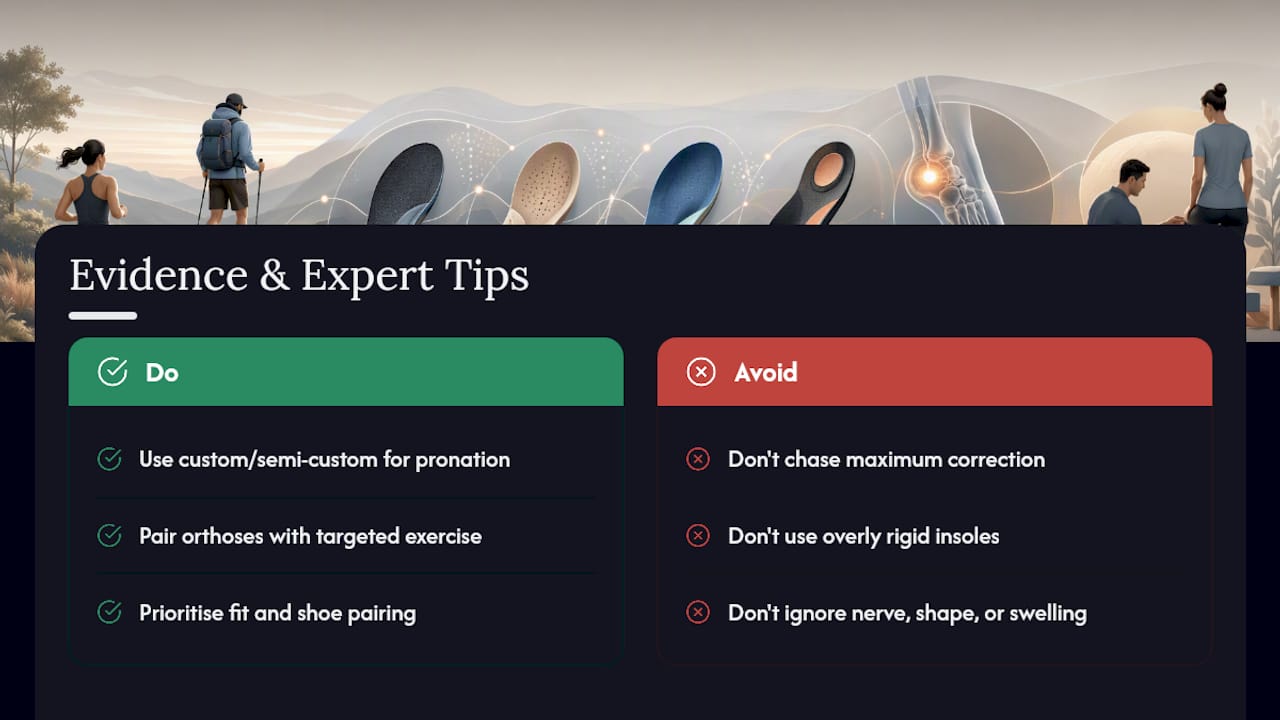
Clinical evidence here is genuinely encouraging, though it’s worth being precise about what it says. A systematic review of insole types for musculoskeletal foot and lower limb disorders found that custom and semi-custom orthoses may reduce pain in people with excessive pronation and chronic foot pain, particularly when paired with targeted exercise. That’s a meaningful signal, not a guarantee, and results vary by individual foot mechanics.
Off-the-shelf orthotic aids can manage many common foot pains effectively, but persistent or worsening symptoms warrant a proper assessment rather than another trip to the pharmacy shelf.
That framing, drawn from NHS guidance on purchasing off-the-shelf orthotic aids, is worth taking seriously.
Pro Tip: Prioritise fit and shoe pairing over chasing maximum correction. An insole that’s more rigid than your foot needs often causes new pressure points rather than solving the original problem.
See a podiatrist if you notice severe nerve symptoms, rapid changes in foot shape, or swelling that doesn’t settle. Those aren’t insole problems.
Why the shoe matters as much as the insole
Insoles get all the attention, but the shoe underneath them does half the work. A rigid orthotic dropped into a soft, unstructured shoe loses much of its effect because the shoe itself offers no resistance to unwanted motion. I’ve come to think of insole selection and shoe selection as one decision, not two, and some footwear ranges are built with that pairing in mind, offering structural support that works alongside an insole rather than fighting against it.
— Panagiotis
YDA Technology: built-in support for everyday comfort
Not everyone wants to shop for insoles at all, and that’s fair. Purpose-built footwear with structural support engineered into the midsole can reduce how much you need to rely on aftermarket inserts for ordinary daily wear, particularly if your pain is mild or fatigue-related rather than a diagnosed mechanical issue.
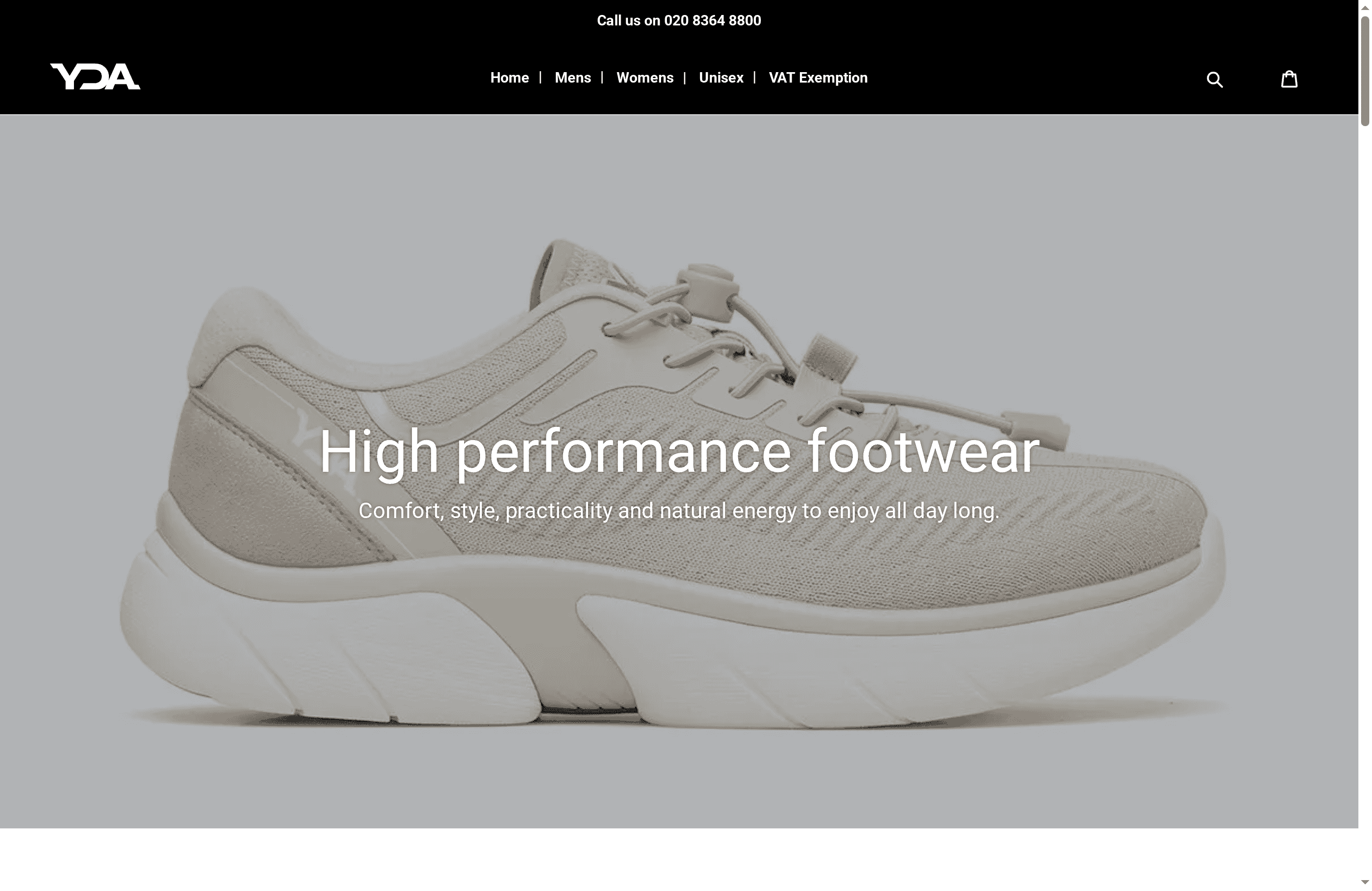
Ydauk designs its footwear around this idea directly. Rather than treating comfort as an insole problem to solve after the fact, YDA Technology builds support and energy efficiency into the shoe itself, which suits anyone who wants relief without swapping insoles in and out of every pair they own. If you’re currently propping up unsupportive shoes with insert after insert, it’s worth checking whether a shoe built with foot health in mind from the outset solves the problem more directly. Take a look at the Technology of YDA Shoes page to see the fitting guidance and decide whether it’s the simpler route for your feet.
This article is general information, not a substitute for advice from a qualified doctor. Consult a qualified healthcare professional about your own circumstances before acting on anything here.
Sources
- Main types of insoles described in the literature and their applicability for musculoskeletal disorders of the lower limbs: A systematic review of clinical studies — PubMed
- Purchasing off-the-shelf orthotic aids and how to manage common foot pains — Dorset Healthcare NHS
- Foot insoles - Overview — Guy’s and St Thomas’ NHS
- Best shoe inserts for every foot ailment, per podiatrists — Prevention