
Signs you need orthotic shoes: stylish support for everyday wear
If your feet ache by mid-afternoon, your heels hurt first thing in the morning, or your shoes wear down unevenly, those are clear signs you need orthotic-style supportive shoes. Try a pair now. If you have numbness, open sores, or sudden severe swelling, see a GP or podiatrist before buying anything.
Key takeaways
Supportive everyday shoes with built-in structural technology resolve most common foot pain symptoms when chosen correctly and worn consistently for 4–8 weeks.
| Point | Details |
|---|---|
| Act on multiple signs | Heel pain, morning stiffness, uneven wear, and fatigue together are a clear prompt to try supportive shoes now. |
| Test your current shoes | The twist-and-squeeze and bend tests reveal structural failure in minutes; replace any shoe that collapses or bends through the arch. |
| Prioritise structure over cushioning | A firm heel counter, correct flex point, and secure fastening matter more than soft foam alone. |
| Allow a fair trial | Wear new supportive shoes for 4–8 weeks, rotating with another pair, before judging whether they work. |
| Ydauk for everyday support | Ydauk’s YDA Technology addresses heel pain, forefoot loading, and fatigue in stylish shoes with removable footbeds and a clear returns policy. |
Table of Contents
- What ‘orthotic shoes’ actually means for everyday shoppers
- Signs you need orthotic shoes: the checklist
- Quick at-home checks to see if your shoes are the problem
- Key features to prioritise when buying supportive everyday shoes
- UK price bands and how long before you notice a difference
- When supportive shoes may not be enough
- Getting the most from your supportive shoes once you buy them
- How Ydauk shoes address these signs
- What actually matters when choosing supportive shoes
- Ydauk: supportive shoes built for everyday UK wear
- Sources
What ‘orthotic shoes’ actually means for everyday shoppers
This guide is about consumer orthotic-style footwear: shoes with built-in structural support, cushioning, and stability technology designed for everyday wear. Think YDA Technology engineered into a shoe you’d actually want to wear to work or at the weekend.
This is not about prescription orthoses or clinical insoles fitted by a podiatrist. Those are medical devices for diagnosed structural conditions. The distinction matters because most people with common foot pain symptoms don’t need a clinical referral first. They need better shoes. Clinician-aligned guidance consistently recommends starting with a condition-matched supportive shoe before escalating to custom devices.
Signs you need orthotic shoes: the checklist
These are the patterns worth paying attention to:
- Heel or arch pain in the morning — that sharp first-step pain is a classic sign of plantar heel stress, often worsened by unsupportive footwear.
- Foot fatigue by early afternoon — if your feet feel exhausted after a few hours of standing or walking, your shoes aren’t absorbing load properly.
- Forefoot soreness or burning — pressure under the ball of the foot often signals poor forefoot cushioning or a flex point in the wrong place.
- Uneven outsole wear — heavy wear on one edge shows your foot is rolling inward or outward, a sign the shoe isn’t correcting your gait.
- Knee, hip, or lower-back discomfort — foot mechanics travel upward; poor footwear often causes recurring discomfort in the knees and hips, not just the feet.
- Instability or ankle rolling — a weak heel counter lets the foot slide, which compounds instability with every step.
- Symptoms that ease when you change shoes — if your pain drops noticeably in one pair versus another, footwear is almost certainly a factor.
A nurse doing 10-hour shifts, a commuter walking between stations, or someone standing at a retail counter all day will often recognise several of these at once. Signs 1, 2, and 4 together are a strong prompt to act now rather than wait. Sign 3 alone, appearing occasionally, is worth monitoring for a week or two first.
Pro Tip: If your symptoms ease on rest days but return within an hour of putting on your usual shoes, that’s footwear-related. Don’t wait for the pain to worsen before trying a supportive pair.
Quick at-home checks to see if your shoes are the problem
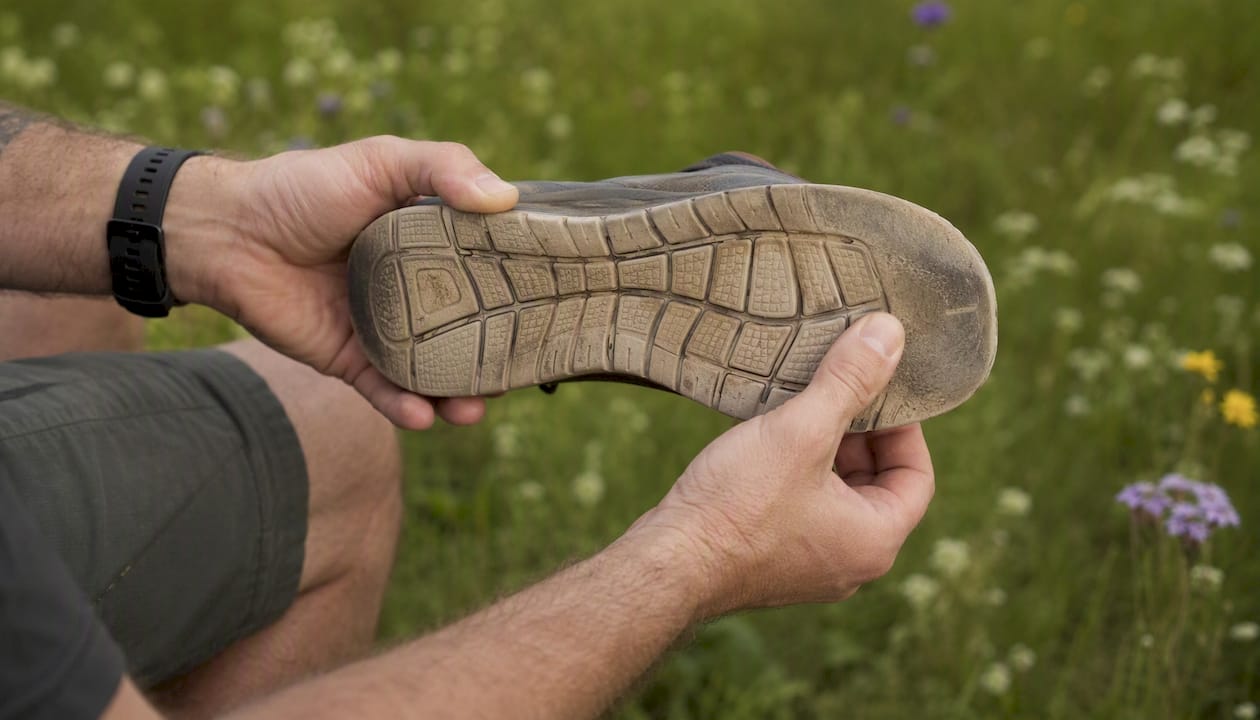
Inspect the outsole. Flip your current shoes over. Heavy wear concentrated on the outer heel or inner forefoot edge indicates your foot is pronating or supinating. Uneven wear patterns are a reliable first diagnostic step and a good reason to replace the pair.
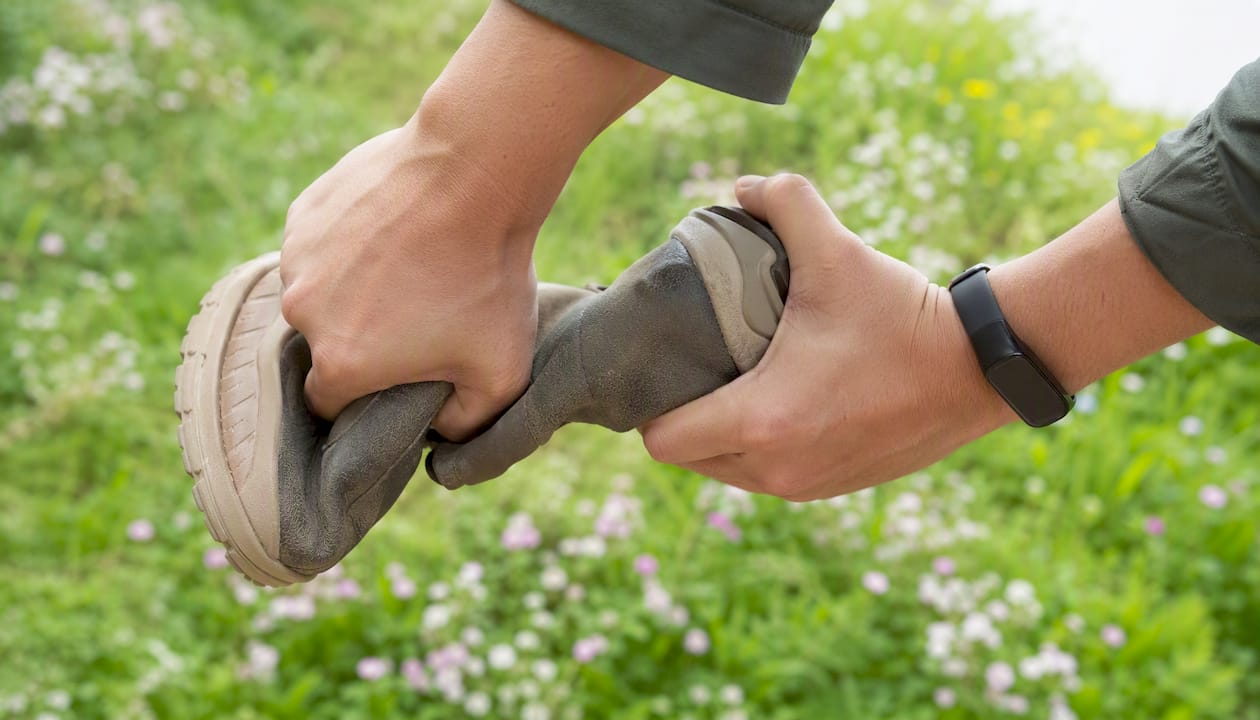
The twist-and-squeeze test. Hold the shoe at both ends and try to twist it like a wet towel. A supportive shoe resists this firmly. Then squeeze the heel counter between your fingers. It should feel solid, not collapsible. Podiatry practitioners use this twist-and-squeeze check to assess structural integrity before recommending a shoe.
The bend test. Flex the shoe by pressing the toe toward the heel. A well-constructed supportive shoe bends at the forefoot, roughly where your toes meet the foot, not through the middle of the arch. A shoe that folds in half has no midfoot support.
Stand and feel. Stand barefoot on a hard floor and look at your arch. If it collapses flat, you’re likely overpronating. A stability shoe with a medial support element can address moderate overpronation without a custom device.
If these checks reveal a structurally compromised shoe, replace it. If you’ve already tried a supportive pair and symptoms persist beyond eight weeks, that’s the point to book a podiatry appointment rather than keep self-managing.
Key features to prioritise when buying supportive everyday shoes
A shoe can look great and still fail structurally. Here’s what to check before buying:
- Firm heel counter — squeeze it; it should not collapse under light pressure.
- Forefoot flex point — the shoe should bend where your toes bend, not through the arch.
- Adequate depth — enough room for your foot and, ideally, a removable footbed so you can swap in an OTC insole if needed.
- Secure fastening — laces, straps, or a robust hook-and-loop closure. NHS footwear guidance is explicit: even advanced support technology fails if the foot slides or the heel lifts inside the shoe.
- Wide enough toe box — your toes should not be compressed; forefoot pressure is one of the most common complaints from people in narrow shoes.
- Shock-absorbing midsole — a firm midsole with cushioning at the heel and forefoot reduces impact loading across the day.
- Heel height under 4 cm — NHS guidance recommends keeping heel height below roughly 4 cm for everyday comfort and safety.
On fit: the shoe should feel supportive from the first wear, not after a painful break-in period. Test heel stability by standing on one leg in the shoe; if you feel the heel shifting laterally, the counter is too soft.
Style doesn’t have to be sacrificed. Supportive silhouettes now include clean leather uppers, low-profile trainers, and smart casual designs that work with most outfits. The guide to orthotic-friendly styles at Ydauk shows how support and aesthetics can coexist.
Pro Tip: In-store, press your thumb into the midsole at the heel. It should compress slightly but spring back. A midsole that stays compressed has lost its cushioning and won’t absorb impact effectively.
UK price bands and how long before you notice a difference
| Price band | What you typically get | Realistic trial period |
|---|---|---|
| — | Basic cushioning, limited structural support, fixed footbed | 2–4 weeks to assess comfort |
| — | Firmer heel counter, removable footbed, better midsole materials | 4–6 weeks for symptom change |
| — | Built-in stability technology, premium materials, warranty, returns policy | 4–8 weeks for measurable improvement |
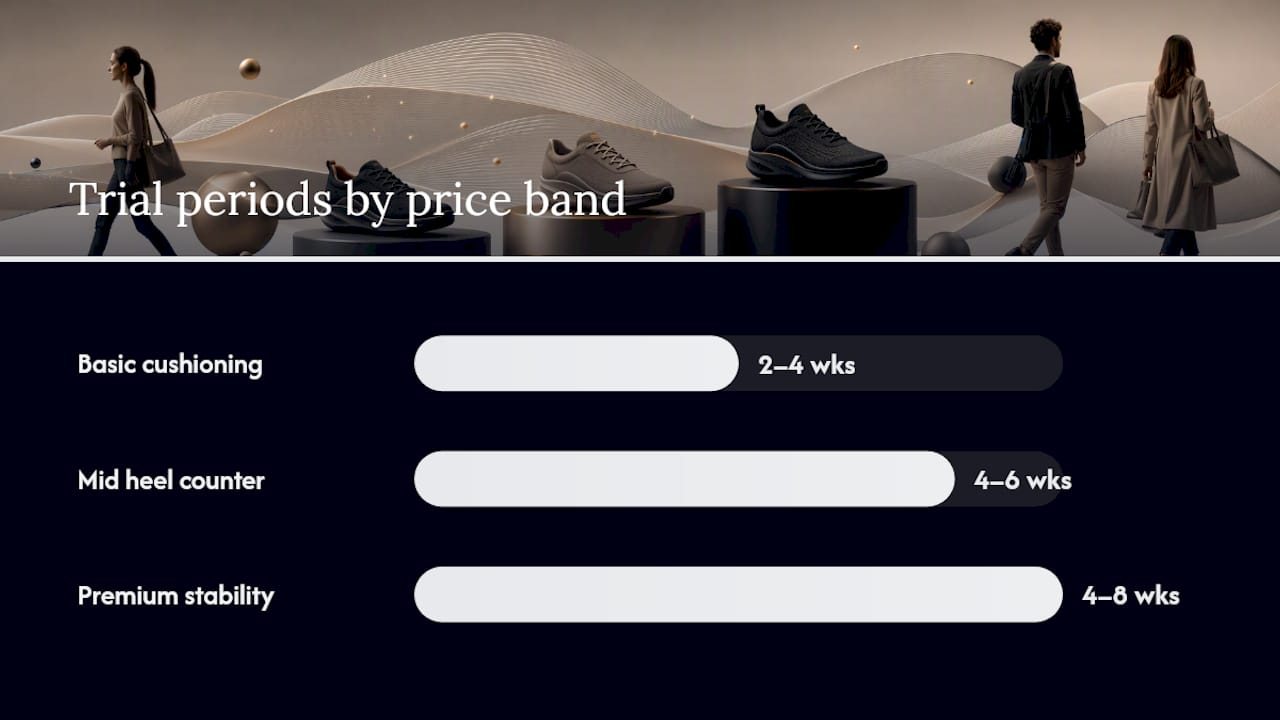
Value factors beyond price include a generous returns window (essential for online buying), a removable footbed that lets you add an OTC insole, and clear sizing guidance. A shoe with a 30-day returns policy is worth more than a cheaper pair you can’t return.
Clinician-guided escalation follows a clear path: supportive shoe first, then a quality OTC insole if needed, then custom devices only if conservative care fails after a fair trial. Most people with mild-to-moderate symptoms don’t reach the third step.
Expect to notice reduced fatigue within two to three weeks. Heel and arch pain typically improves over four to six weeks of consistent wear. Give it the full 4–8 week trial before concluding a shoe isn’t working.
When supportive shoes may not be enough
See a podiatrist promptly if you have:
- Pain that is severe, worsening week on week, or wakes you at night.
- Numbness, tingling, or loss of sensation in the foot or toes.
- Open skin lesions, ulcers, or wounds that are slow to heal.
- Sudden swelling in one foot or ankle with no obvious cause.
- Persistent imbalance, frequent falls, or difficulty walking normally.
- Diabetes or circulatory conditions affecting the feet — specialist diabetic footwear guidance applies here.
Seek urgent care (A&E or 999) for fever combined with limb pain and redness, or for sudden loss of sensation.
For everyone else: if a supportive shoe plus a quality OTC insole hasn’t improved symptoms after eight weeks, that is the clinical signal to seek a podiatry assessment. This is general information, not a medical diagnosis. Always confirm with a qualified professional when symptoms are persistent or unusual.
Getting the most from your supportive shoes once you buy them
Start with two to four hours of wear on the first day and build up over a week. Rotate with another pair rather than wearing the new shoes exclusively from day one. This lets your feet adapt without overloading any new pressure points.
If the shoe has a removable footbed, try it first without an additional insole. Add an OTC insole only if you feel you need more arch contact after a week of wear. Shoes and insoles work as a system: a high-quality insole in a structurally weak shoe will underperform.
Track your symptoms simply. Note your pain level out of ten each morning and after your longest activity of the day. A photo of your outsole wear at week one and week six tells you whether your gait is changing. If pain increases rather than decreases in the first two weeks, stop wearing the shoes and reassess.
Pro Tip: A simple symptom diary doesn’t need to be elaborate. A note in your phone each morning takes 10 seconds and gives you real data to share with a podiatrist if you need one.
How Ydauk shoes address these signs
Ydauk’s YDA Technology is built around the structural principles this article covers: a firm heel counter, a forefoot flex point, adequate depth for insole interchange, and shock absorption across the midsole. Each model is designed to address the most common foot pain symptoms without sacrificing the clean, everyday aesthetic most shoppers want.
For heel and arch pain, the heel counter and midsole construction reduce impact at first contact. For forefoot soreness, the flex geometry distributes load more evenly. For general fatigue from long shifts or commuting, the cushioning system maintains energy return across the day. Removable footbeds mean you can pair Ydauk shoes with a quality OTC insole if your symptoms need more arch contact.
Ydauk’s online buying guide covers sizing, fit, and the returns policy in detail. Check the sizing notes carefully before ordering; the returns window gives you the trial period you need to test the shoes fairly.
What actually matters when choosing supportive shoes
Most people overthink the orthotic question. The honest answer is that a well-constructed supportive shoe resolves the majority of everyday foot complaints, and the evidence consistently backs starting there before spending money on custom devices.
What I see people get wrong most often is focusing on cushioning alone. Cushioning without structure is just soft foam. The heel counter, the flex point, and the fastening system are what make a shoe genuinely supportive. A shoe that feels plush but twists easily is not doing the job.
The other mistake is giving up too quickly. Two weeks is not a fair trial. Four to eight weeks of consistent, rotating wear is the minimum before drawing conclusions. Foot mechanics change slowly, and so does pain.
Ydauk: supportive shoes built for everyday UK wear
Foot pain from poor footwear is one of the most fixable problems most people never fix, because they assume the solution has to be clinical. Ydauk exists to close that gap: shoes with genuine structural support and YDA Technology, designed to look like something you’d actually choose to wear.
If the signs in this article sound familiar, the practical next step is straightforward. Browse the current Ydauk range, use the sizing guide, and take advantage of the returns policy to give a pair a proper 4–8 week trial. Visit Ydauk to see what’s available and find the model that fits your daily routine.
Sources
- Footwear advice - NHS Lanarkshire
- Supportive Footwear: What to Look for If You’re on Your Feet All Day | Bailey Podiatry & Reflexology
- Orthotics or Better Shoes: How to Actually Decide | MySoleMatch Journal | MySoleMatch Shoe Finder
- Podiatrist Recommended Orthotics 2026: DPM Clinical Guide