
Proper shoe storage tips to protect your footwear
TL;DR:
- Proper shoe storage involves maintaining a stable, breathable environment to extend footwear lifespan and prevent damage. Using cedar shoe trees, cleaning shoes before storage, and organizing them visibly help protect shoes and promote rotation. Avoiding moisture, heat, and plastic containers is essential for preserving different shoe materials and shapes over time.
Proper shoe storage is defined as keeping footwear in a controlled, breathable, and organised environment that protects it from moisture, heat, crushing, and dust. Done correctly, it extends the life of every pair you own, maintains their appearance, and makes retrieval effortless. The wrong conditions, by contrast, cause leather to crack, rubber to warp, and suede to grow mould. These proper shoe storage tips cover the full picture: ideal conditions, preparation techniques, organisation methods, and the mistakes that silently destroy good shoes.
What conditions are ideal for shoe storage?
Experts recommend a stable temperature below 70°F (21°C) and a relative humidity between 45% and 55% for long-term shoe storage. These figures matter because leather and rubber are both sensitive to temperature swings. Heat dries out leather fibres, while cold makes rubber brittle. Humidity above 55% encourages mould; below 45%, materials dry and crack.
Attics, basements, and garages are the worst locations for shoe storage. All three suffer from unstable temperatures and poor humidity control. A bedroom wardrobe or a dedicated climate-controlled space is far more suitable.
Direct sunlight and artificial heat sources cause dyes to fade and leather to shrink and crack. Keep shoes away from radiators, south-facing windowsills, and tumble dryer vents. Airflow is equally important. Stagnant air traps moisture against shoe materials, which accelerates deterioration.
| Condition | Ideal target | What goes wrong outside this range |
|---|---|---|
| Temperature | Below 70°F (21°C) | Leather cracks; rubber warps or becomes brittle |
| Relative humidity | 45%–55% | Mould above 55%; drying and cracking below 45% |
| Light exposure | No direct sunlight | Dye fading; leather shrinkage |
| Airflow | Consistent, gentle | Moisture build-up; odour development |
Pro Tip: Place a small hygrometer in your wardrobe or shoe cupboard. They cost very little and tell you instantly whether your storage environment is within the safe humidity range.
How to prepare and store different types of shoes correctly
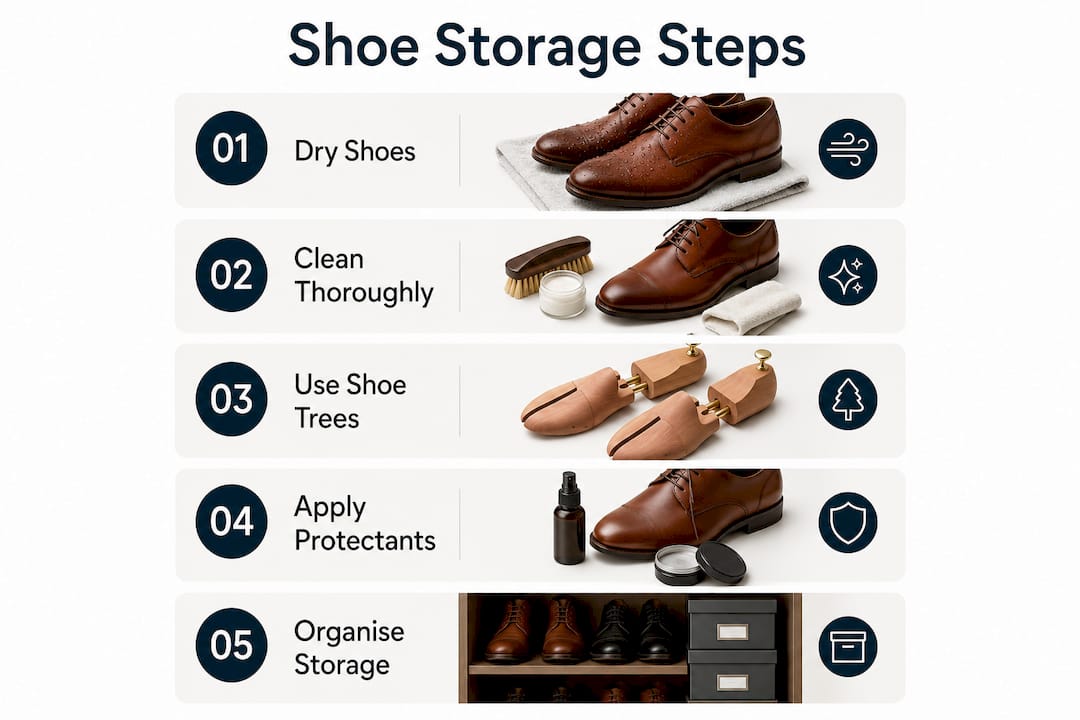
Most shoe damage begins before the shoe ever reaches the shelf. Storing shoes immediately after wear without drying and shape maintenance accelerates material deterioration faster than almost any other factor. The preparation stage is where the real protection happens.
Drying and cleaning before storage
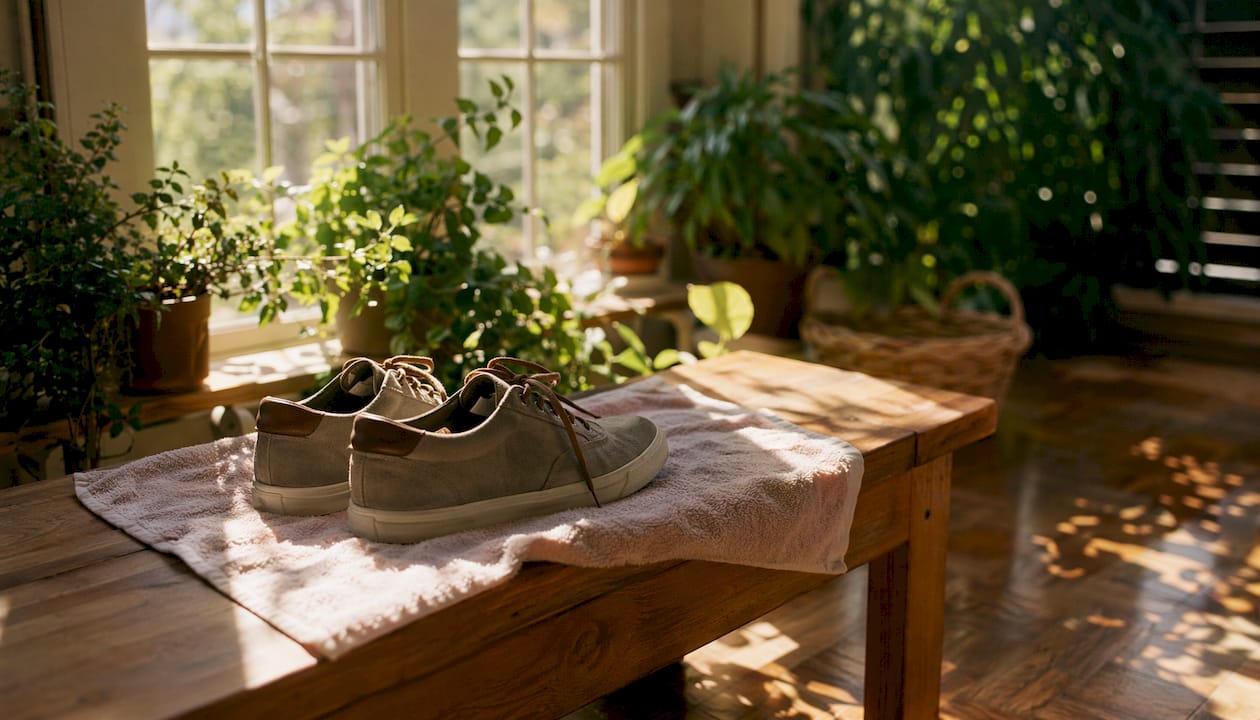
Air dry shoes for at least 24 hours after every use before placing them in storage. This prevents odour and mould from taking hold inside the shoe. Never use a direct heat source to speed up drying. A well-ventilated room at room temperature is sufficient.
Clean shoes before storing them, not just when they look dirty. Salt residue from winter pavements is particularly destructive on leather. It draws moisture out of the material and leaves white tide marks that are difficult to reverse. Remove mud, salt, and surface dirt with a soft brush or damp cloth, then allow the shoe to dry fully.
Using shoe trees and protective products
Cedar shoe trees are the single most effective tool for maintaining shoe shape during storage. Cedar wicks moisture and absorbs odour while holding the shoe in its natural form. Plastic shoe trees maintain shape but do not absorb moisture. For leather dress shoes and boots, cedar is the better choice.
For leather and suede footwear worn during wet weather, reapply waterproof spray every 2–3 weeks during heavy use periods. This keeps the protective barrier intact and prevents water from penetrating the material. Apply the spray before storage at the end of the season as well.
Cobblers also recommend applying a thin rubber sole protector to leather-soled shoes. This extends sole life and provides grip on wet surfaces. It is a minor upfront cost that prevents far more expensive resoling work later.
Storing specific shoe types
Different materials need different approaches. Follow these guidelines by shoe type:
- Leather dress shoes and boots: Insert cedar shoe trees, condition the leather, and store in breathable cotton or flannel bags. Never use plastic bags.
- Suede shoes: Brush off surface dirt with a suede brush, apply a suede protector spray, and store in a breathable cotton bag to prevent dust without trapping moisture.
- Trainers and sneakers: Remove the insoles and place them flat to air out separately. Use silica gel sachets inside the shoe to absorb residual moisture. Avoid sealed plastic bags.
- Seasonal footwear: Clean thoroughly, remove all salt and mud, condition any leather components, and store heels elevated to prevent the heel counter from collapsing.
- Heeled shoes: Store upright or use heel-specific inserts to maintain the heel’s structural integrity over time.
Pro Tip: Rotate your shoes regularly, even those in storage. Checking stored pairs every few weeks lets you catch early signs of mould or material stress before they become irreversible.
What are the best shoe organisation methods for space-saving and visibility?
Visibility in shoe storage promotes rotation and prevents clutter, according to professional organisers. A shoe you cannot see is a shoe you will not wear. It will sit forgotten, unchecked, and gradually deteriorate. The best storage systems make every pair visible at a glance.
Clear boxes and labelled containers
Stackable clear shoe boxes are the most practical solution for most households. They protect shoes from dust, allow you to see the contents without opening them, and stack efficiently to save floor space. For opaque boxes, attach a photo of the shoes to the front. This takes seconds and eliminates the need to open every box when searching for a specific pair.
Open shelving and stackable containers maintain airflow and visibility while protecting shoes from dust. Tiered shelving units work well in wardrobes and hallways. They keep pairs separated, which prevents scuffing and compression damage.
Vertical and wall-mounted solutions
Slim vertical shoe towers work well in narrow spaces such as hallways or beside wardrobes. Wall-mounted racks and over-the-door organisers use otherwise wasted vertical space. Over-the-door solutions are particularly useful for flats, sandals, and trainers that do not require rigid support.
Under-bed storage bins suit seasonal or infrequently worn shoes well. Choose bins with lids to keep dust out, and opt for breathable fabric bins rather than sealed plastic tubs. Label each bin clearly so you can locate specific pairs without pulling everything out.
Multi-purpose furniture and cubbies
Shoe benches that double as seating serve two functions in an entryway. They provide a place to sit while putting on shoes and offer enclosed or open storage beneath the seat. Single-pair cubbies are the gold standard for preventing shoe compression. Each pair sits in its own compartment, with no risk of one shoe crushing another.
Pro Tip: Arrange shoes by frequency of use, not by type. Keep everyday pairs at eye level and seasonal or occasion shoes higher up or in under-bed storage. This single change reduces daily clutter significantly.
Common mistakes in shoe storage and how to avoid them
The most damaging storage habits are also the most common. Recognising them is the first step to correcting them.
- Storing damp shoes. Moisture trapped inside a shoe creates the perfect conditions for mould and material decay. Always air dry for a full 24 hours before storing.
- Using plastic bags. Plastic seals in moisture and prevents airflow. Use breathable cotton or flannel bags instead, particularly for leather and suede.
- Stacking shoes haphazardly. Piling shoes on top of each other causes creasing, scuffing, and heel counter collapse. Use individual compartments or shoe boxes.
- Exposing shoes to sunlight or heat. UV rays fade dyes and dry out leather. Artificial heat from radiators has the same effect. Store shoes away from both.
- Skipping the clean before storage. Dirt and salt left on shoes continue to damage the material during storage. Clean every pair before putting it away.
- Ignoring moisture absorbers. Silica gel sachets and cedar shoe trees are inexpensive and highly effective. Skipping them, especially for high-end or specialty shoes, is a false economy.
The minor investment in protective measures like rubber sole guards and cedar trees significantly delays wear and expensive repairs. Spending a small amount now prevents a much larger cost later.
Key takeaways
Proper shoe storage requires a stable environment below 70°F, breathable containers, and consistent preparation before storing to prevent material decay and extend footwear lifespan.
| Point | Details |
|---|---|
| Control the environment | Keep storage areas below 70°F and between 45%–55% humidity to prevent cracking and mould. |
| Dry before storing | Air dry shoes for at least 24 hours after wear before placing them in storage. |
| Use cedar shoe trees | Cedar maintains shape and wicks moisture, making it the best tool for leather and dress shoes. |
| Prioritise visibility | Store shoes where you can see every pair to encourage rotation and prevent neglect. |
| Avoid plastic bags | Use breathable cotton or flannel bags to protect delicate materials without trapping moisture. |
Why I stopped underestimating shoe storage
I spent years treating shoe storage as an afterthought. A pile by the door, a few pairs shoved under the bed in whatever bag was nearby. Then I watched a pair of well-made leather Oxfords develop deep cracks across the toe box after a single winter stored near a radiator. That was the moment I took it seriously.
The change that made the biggest difference was not buying expensive storage furniture. It was simply moving shoes away from heat sources and starting to use cedar shoe trees consistently. The shoe lifespan improvement was noticeable within one season. Leather stayed supple, shapes held, and I stopped finding unpleasant surprises when I pulled out seasonal pairs.
Visibility changed my habits more than I expected. Once I could see every pair at a glance, I actually wore more of what I owned. Shoes that had been buried and forgotten came back into rotation. That alone justified the time spent reorganising.
The honest truth is that most shoe damage is self-inflicted through neglect rather than wear. A few consistent habits, applied every time you take off a pair of shoes, protect your collection far more effectively than any single storage product. Start with the basics: dry, clean, and store in a breathable container away from heat. Everything else builds from there.
— Panagiotis
Ydauk shoes and the value of proper care
Ydauk designs footwear around foot health and long-term comfort, using advanced materials that respond well to proper storage and care. Shoes built with technical materials and structured support benefit directly from the conditions described in this article: stable temperature, controlled humidity, and breathable storage.

Ydauk’s YDA technology is built to support foot health across everyday wear, but that technology performs best when the shoes are maintained correctly between uses. Proper storage is not just about organisation. It is an active part of keeping performance footwear in the condition it was designed to deliver. If you want to understand how Ydauk’s materials and construction work with your care routine, the technology page explains it in full.
FAQ
What temperature is best for storing shoes?
Experts recommend keeping shoe storage areas at a stable temperature below 70°F (21°C). Temperatures above this accelerate leather drying and rubber degradation.
How long should shoes dry before being stored?
Shoes should air dry for at least 24 hours after wear before storage. Storing damp shoes traps moisture and causes mould and material decay.
Are plastic bags safe for storing shoes?
Plastic bags trap moisture and restrict airflow, making them unsuitable for shoe storage. Use breathable cotton or flannel bags instead, particularly for leather and suede.
How often should I reapply waterproof spray to leather shoes?
During heavy wet weather use, reapply waterproof spray every 2–3 weeks to maintain the protective barrier on leather and suede footwear.
What is the best way to maintain shoe shape in storage?
Cedar shoe trees are the most effective tool for maintaining shoe shape. They hold the shoe’s natural form while wicking moisture and absorbing odour during storage.