
How to improve blood circulation in your feet fast
Improving circulation in your feet comes down to five things working together: move your ankles and calves often, drink enough water, use compression or elevation when a clinician recommends it, wear shoes that let your foot work naturally, and get any underlying condition like diabetes or peripheral artery disease properly managed. None of these fix a vascular problem overnight, but together they give your calf muscles and blood vessels the daily stimulus they need to keep blood moving where it should.
Start today with these:
- Do 10 ankle pumps and 10 toe curls right now, then repeat every 30 to 60 minutes if you’re sitting for long stretches.
- Take a five to ten minute walk, even indoors, at least twice today.
- Drink water steadily through the day rather than in one or two large gulps.
- Elevate your feet above hip height for several minutes this evening.
- Check your shoes for anything tight across the toes or the top of the foot.
Cold feet, numbness or mild swelling after a long day is common and often responds to movement and better footwear. Sudden severe pain, a wound that won’t heal, or a foot that turns pale or blue needs same day medical attention.
The British Heart Foundation lists staying active, elevating the legs, hydration, a heart-healthy diet and compression stockings among the practical measures that help circulation, and that combination is the backbone of everything below.
Key Takeaways
Improving blood circulation in your feet works best when frequent calf muscle activation, hydration, supportive footwear and medical management of underlying conditions are combined rather than treated as separate options.
| Point | Details |
|---|---|
| Move every 30 to 60 minutes | Ankle pumps, toe curls and short walks activate the calf pump far better than one long session. |
| Know your red flags | Sudden severe pain, spreading redness, a non-healing wound or a pale, cold foot need same day care. |
| Use compression carefully | Get properly fitted and confirm with a clinician if arterial disease is possible. |
| Address the underlying cause | PAD, diabetes and venous insufficiency each need their own diagnostic path and treatment. |
| Check your footwear | Flexible soles and roomy toe boxes support natural gait and calf engagement; Ydauk’s YDA Technology range is built around this principle. |
Table of Contents
- How to tell if you have poor circulation in your feet
- What causes poor circulation and who’s most at risk
- What are the best exercises to improve blood flow in your feet?
- Which daily habits actually improve circulation over time?
- Do compression stockings and leg elevation actually help?
- When should you see a doctor about foot circulation?
- Do vitamins and supplements really improve blood circulation?
- Why the calf muscle pump matters more than most people realise
- A simple daily routine to protect your foot circulation
- What’s a realistic timeline for improving circulation in your feet?
- Footwear that makes movement easier on your feet
- Sources
How to tell if you have poor circulation in your feet
Poor circulation in the feet usually shows up as a cluster of symptoms rather than one obvious sign. The most common are persistent coldness, numbness or tingling, swelling, cramping, skin that looks pale, blue or blotchy, and wounds that take far longer than usual to heal.
These symptoms happen for different mechanical reasons. Coldness and numbness often trace back to reduced arterial inflow, meaning less oxygen-rich blood is reaching the tissue. Swelling and heaviness, particularly by the end of the day, point more towards venous pooling, where blood struggles to travel back up the leg against gravity. Tingling and pins-and-needles can also signal nerve involvement, which is common in diabetes-related neuropathy.
The NHS identifies cold feet, numbness, swelling, cramping, discolouration and slow-healing wounds as the signature signs of poor circulation, and stresses that early diagnosis matters when an underlying condition is driving the symptoms.
Not every symptom is equally urgent. A few signs mean you should get seen the same day rather than waiting to see if things settle:
- Sudden, severe pain in the foot or leg that comes on quickly.
- Rapidly spreading redness, warmth or swelling, which can indicate infection or a clot.
- A wound or ulcer that isn’t healing, especially if you have diabetes.
- A foot that turns pale, blue or feels cold and loses its pulse.
What causes poor circulation and who’s most at risk
Reduced blood flow to the feet almost always has an identifiable driver, and several conditions are far more common than people expect.
Peripheral artery disease (PAD) narrows the arteries carrying blood down to the legs and feet, usually through the same fatty build-up that affects the heart’s arteries. The CDC names PAD as a leading cause of reduced arterial flow to the lower limbs, and it’s diagnosable with straightforward tests.
Diabetes damages both small blood vessels and the nerves that supply the feet, a combination that blunts pain signals at exactly the moment early warning would matter most.
Chronic venous insufficiency is the opposite mechanical problem. The valves in your leg veins weaken, so blood pools instead of returning efficiently to the heart, causing the heaviness and swelling many people notice by evening.
Other contributors include:
- Blood clots (deep vein thrombosis), which need urgent assessment rather than home management.
- Obesity, which increases pressure on leg veins and reduces mobility.
- Smoking, which constricts blood vessels directly.
- Long periods of sitting or standing without moving.
- Certain medications, including some blood pressure drugs and hormone treatments.
Age, family history and existing cardiovascular disease raise your risk but can’t be changed. Smoking, weight, activity levels and diet can, and they’re where the rest of this guide focuses.
What are the best exercises to improve blood flow in your feet?
Targeted movement works because it activates what’s often called the calf muscle pump. Every time your calf contracts, it squeezes the deep veins and pushes blood upward against gravity. The NHS specifically recommends ankle pumps, calf raises and toe curls as useful exercises for leg circulation, alongside its broader guidance of 150 minutes of moderate activity a week.
- Ankle pumps. Sit or lie down, point your toes away from you, then flex them back towards your shin. Do 15 to 20 repetitions per foot, several times a day.
- Calf raises. Standing (holding a chair for balance if needed), rise onto your toes, hold for two seconds, then lower slowly. Aim for 10 to 15 reps, two to three sets.
- Toe curls. Scrunch your toes as if gripping a towel on the floor, hold briefly, release. Repeat 15 times per foot.
- Foot circles. Lift one foot slightly and rotate the ankle in full circles, 10 each direction, then switch feet.
- Seated marches. Sitting tall, lift knees alternately as if marching, for one to two minutes.
- Short walking breaks. Get up and walk for two to three minutes at least once an hour if you sit for work.
| Exercise | Target | Frequency | Good for |
|---|---|---|---|
| Ankle pumps | Calf muscle pump, ankle mobility | Every 30 to 60 minutes | Desk workers, flights, bed rest |
| Calf raises | Deep vein return, calf strength | Daily, 2 to 3 sets | General maintenance |
| Toe curls | Small foot muscles, arch circulation | Daily | Numbness, mild neuropathy |
| Foot circles | Ankle joint, local blood flow | Daily | Stiffness after sitting |
| Seated marches | Whole-leg circulation | Several times daily | Limited mobility |
| Short walks | Cardiovascular and calf pump combined | Hourly if possible | Everyone |
If standing exercises aren’t possible, every movement above has a seated version, and a light resistance band looped around the foot adds gentle load to ankle pumps without strain. If you have diabetic neuropathy or numbness, check your skin after exercise rather than relying on pain to tell you if something’s rubbing.
Pro Tip: Frequent, low-intensity movement beats one long workout followed by hours of stillness. A minute of ankle pumps every half hour drains far more pooled blood from your lower legs across a day than a single 30 minute gym session ever will.
Which daily habits actually improve circulation over time?
Exercise alone won’t outrun a sedentary lifestyle built around long sitting and poor diet. The habits that move the needle are boring in the best way: consistent, unglamorous, and cumulative.
Regular moderate activity is the foundation. The NHS’s 150 minutes a week target, spread across most days, supports circulation throughout the body, not just the legs, by improving how efficiently your heart and vessels work under everyday demand.
- Break up sitting or standing with a two to three minute walk every hour.
- Set a hydration target and sip through the day rather than catching up in the evening; dehydration thickens the blood and makes it harder to circulate.
- Favour a Mediterranean-style diet: oily fish, olive oil, vegetables, wholegrains, and less processed meat and salt.
- Keep body weight in a healthy range, since excess weight adds pressure to leg veins.
- Moderate alcohol and caffeine, both of which can affect hydration and vessel tone.
- Quit smoking. Smoking directly constricts blood vessels and damages artery walls over time, making it one of the single most effective changes available to someone with circulation problems.
Small structural nudges help these stick. A phone reminder every hour, or a rule that you stand during ad breaks instead of the next episode, does more for long-term circulation than any single “big” intervention.
Do compression stockings and leg elevation actually help?
Compression stockings and elevation both work on the venous side of circulation, helping blood travel back up the leg rather than pooling at the ankle. They’re not interchangeable tools, and using either incorrectly can cause problems rather than solve them.
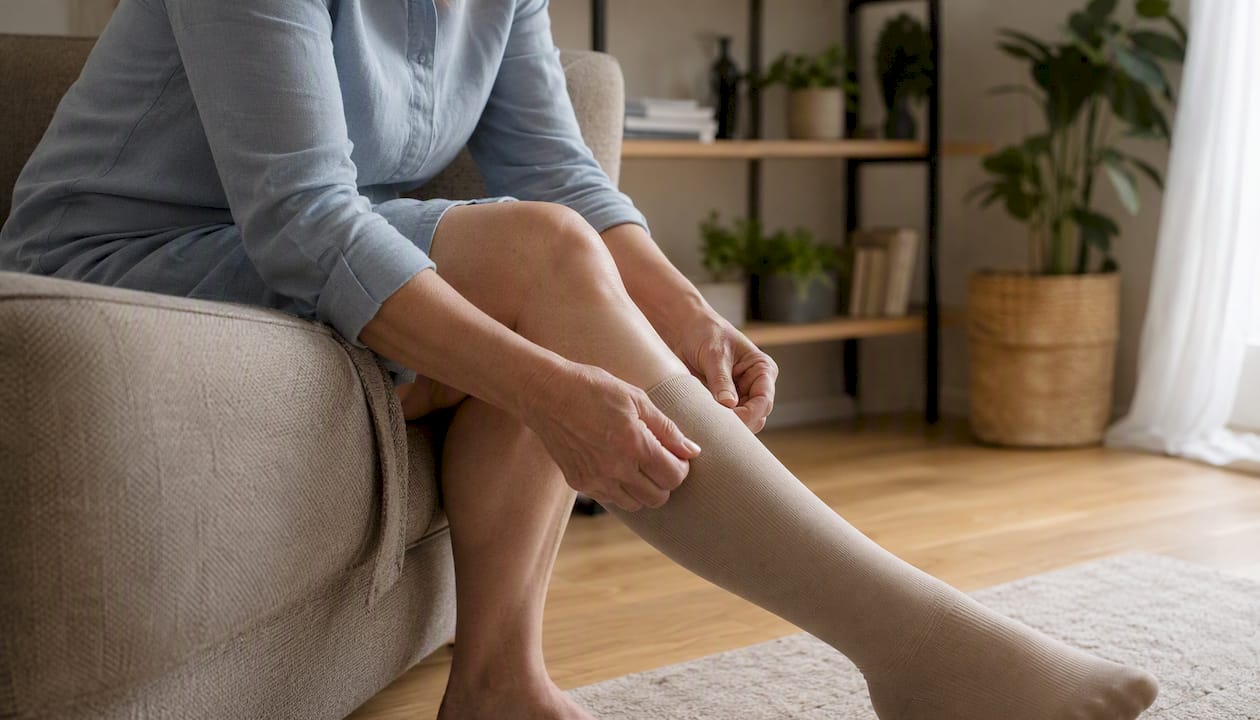
Compression stockings apply graduated pressure, tightest at the ankle and looser higher up, which helps push blood upward. They’re commonly used for visible swelling, varicose veins, long flights or days spent mostly standing. Correct sizing matters more than people assume: the NHS notes that poor fit or the wrong pressure grade can cause harm, and a professional fitting is the safer route the first time.
Compression is not automatically safe for everyone. If arterial disease such as PAD is present, external pressure can restrict the already-limited blood supply further, which is why anyone with suspected PAD should get medical advice before buying compression wear.
| Approach | Best used for | Key caution |
|---|---|---|
| Compression stockings | Venous swelling, varicose veins, travel | Get professionally fitted; avoid if arterial disease is suspected |
| Leg elevation | Short-term swelling relief, end-of-day heaviness | Raise above hip level; not a substitute for treating the cause |
| Warm foot soaks | Temporary comfort and relaxation | Check water temperature carefully if you have numbness |
Elevation is simpler but still has rules. Raising your legs above hip height for 10 to 20 minutes, a couple of times a day, gives gravity a break and helps drain pooled fluid. It’s a genuinely useful short-term measure, but it treats the symptom, not the cause behind it.
Before trying over-the-counter compression, run through this checklist:
- Have your leg and ankle measured rather than guessing a size.
- Confirm the compression grade with a pharmacist or GP if you’re unsure.
- Inspect your skin daily for marks, sores or colour changes once you start wearing them.
- Stop and seek advice if your foot feels colder or more painful after putting them on.
When should you see a doctor about foot circulation?
Book an appointment if symptoms are persistent, worsening, or paired with any risk factor like diabetes, smoking history or previous cardiovascular disease. Certain signs need urgent same day care rather than a routine booking.
A typical assessment starts simply: a history of your symptoms, a physical exam of your feet and pulses, and often an ankle-brachial index (ABI) test, which compares blood pressure at the ankle and the arm to screen for PAD. If narrowing is suspected, a Doppler ultrasound maps blood flow directly, and blood tests for glucose and cholesterol check for diabetes and cardiovascular risk feeding into the problem. The CDC lists ABI and Doppler studies as standard tools for diagnosing PAD, often followed by specialist vascular referral when narrowing is confirmed.
| Test | What it checks | Typically ordered for |
|---|---|---|
| Ankle-brachial index (ABI) | Blood pressure ratio, ankle vs arm | Suspected PAD |
| Doppler ultrasound | Blood flow speed and direction | Confirming arterial or venous blockage |
| Blood glucose and lipid panel | Diabetes and cholesterol control | Anyone with circulation symptoms |
| Vascular referral | Specialist assessment | Confirmed or suspected significant PAD |
Most people start with lifestyle management alongside medication such as antiplatelet drugs, statins or blood-sugar control, plus a supervised exercise programme designed to build collateral blood flow safely. Severe PAD sometimes needs an endovascular procedure or surgery to reopen or bypass a blocked artery, and any ulcer needs proper wound care to avoid infection.
Get same day or emergency care for sudden severe leg pain, a limb that turns cold, pale or blue, or a rapidly worsening infection. These are signs of a limb-threatening event, not something to manage at home.
Do vitamins and supplements really improve blood circulation?
There’s no single supplement that reliably fixes circulation, and treating one as a shortcut around the causes above usually wastes money. The NHS is direct about this: certain nutrients play supporting roles for specific people, but none replace addressing the underlying cause.
- Vitamin C and E may help some people with Raynaud’s phenomenon, where small blood vessels overreact to cold, though the evidence is limited to that specific condition.
- Iron matters when anaemia is behind poor circulation symptoms, but supplementing without a diagnosed deficiency does nothing useful and can cause its own problems.
- Dietary nitrates, found in beetroot, spinach and other leafy vegetables, support the body’s production of nitric oxide, which helps blood vessels relax and dilate.
- Omega-3 fatty acids, from oily fish or supplements, are linked more broadly to vascular health as part of a heart-healthy diet.
Get iron status checked with a blood test before supplementing, and flag any new supplement with a pharmacist or GP if you take other medication, since interactions are common and easy to miss.
Hydration deserves a mention here too, not as a supplement but as a baseline. Reduced blood volume from dehydration thickens the blood, making the heart and vessels work harder to move it, so steady fluid intake is one of the simplest levers available.
Why the calf muscle pump matters more than most people realise
The calf is sometimes called the body’s “second heart,” and that’s not marketing language. Every step contracts the calf muscles around the deep veins in your lower leg, squeezing blood upward through one-way valves that stop it falling back. Sit still for hours, and that pump switches off, which is exactly why symptoms so often worsen with desk jobs, long flights and bed rest.
Clinical guidance treats regular calf activation as central to managing circulation problems, describing the muscle’s pumping action as doing much of the work that gravity otherwise makes difficult.
Footwear plays a bigger role in this than most people give it credit for. Shoes with a rigid sole restrict the natural rolling motion of the foot during walking, which reduces how much the calf actually has to work with each stride. A narrow toe box can also change how weight distributes across the foot, subtly altering gait in ways that reduce calf engagement over the course of a day.
When checking your own shoes, look for genuine toe freedom (you should be able to splay your toes slightly), a forefoot that flexes when you bend it by hand, and a heel that isn’t dramatically raised. None of this replaces medical treatment, but it removes a mechanical barrier to the movement your feet need. People managing neuropathy alongside circulation issues benefit from footwear built around pressure reduction, since insensitive skin can’t always signal a poor fit before damage occurs.
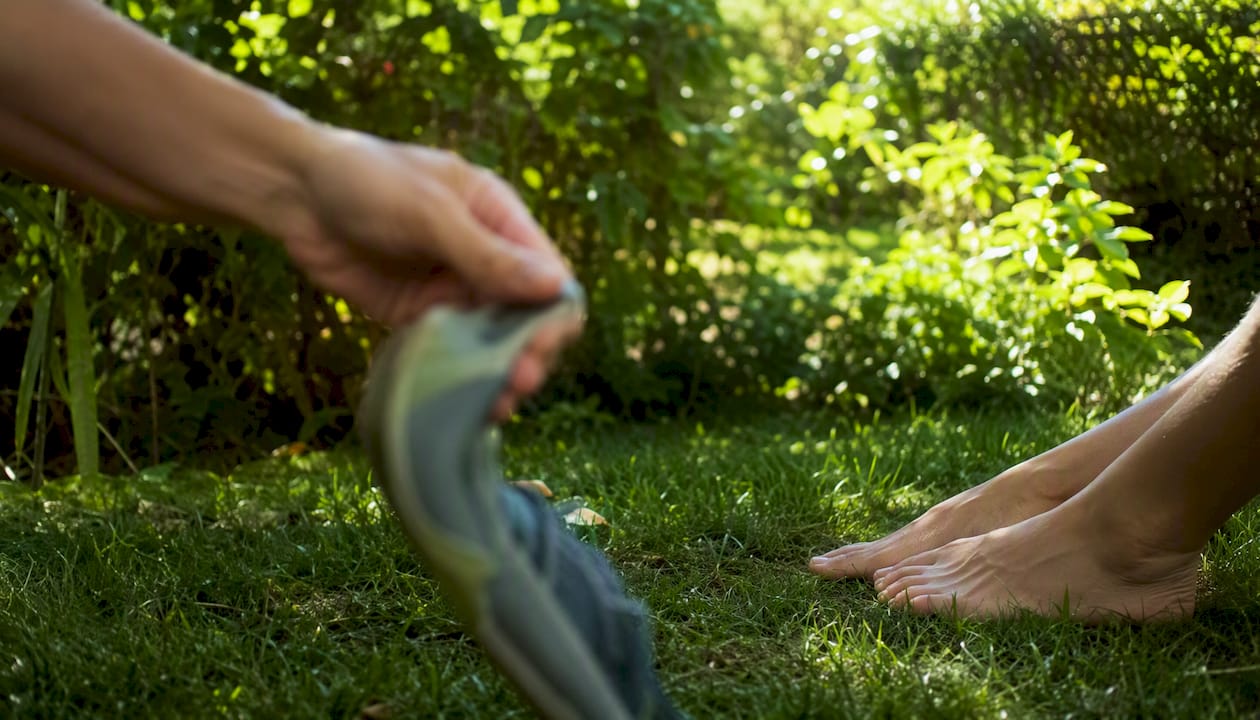
Pro Tip: Test your current shoes with a simple hand-flex: hold the heel and press the toe upward. If the sole barely bends, your foot is doing less work than it should with every step.
A simple daily routine to protect your foot circulation
Consistency beats intensity here, and a routine only sticks if it’s short enough to actually do. This version takes under ten minutes spread across the day.
- Morning: two minutes of ankle pumps and toe curls before getting out of bed.
- Through the day: stand and walk for two to three minutes every hour; sip water steadily.
- Midday: a footwear check, glancing for tight seams, damp socks or pressure marks.
- Evening: 10 to 15 minutes of leg elevation above hip height while relaxing.
Pro Tip: Attach each step to something you already do. Ankle pumps while the kettle boils, a footwear check while you take your shoes off for the evening, elevation while watching one show. Habit stacking works because it removes the decision, not because it needs willpower.
If you’ve followed a routine like this consistently for four to six weeks with no improvement, or symptoms are creeping in the wrong direction, that’s the point to book a clinician review rather than pushing on alone.
What’s a realistic timeline for improving circulation in your feet?
Most people who commit to regular calf activation, better hydration and improved footwear notice a difference within four to eight weeks, usually starting with less end-of-day swelling and fewer episodes of cold, numb toes. That’s a reasonable timeline to expect, not a guarantee, and it depends heavily on what’s actually driving the symptoms in the first place.
Lifestyle measures genuinely help circulation, but they don’t reverse structural vascular disease on their own. Someone with significant PAD narrowing will feel better with more movement and won’t have solved the underlying blockage. That distinction gets lost in a lot of general advice, and I think it does readers a disservice to blur it. The honest position is that daily habits are the highest-leverage thing you control, while diagnosis and, where needed, medication or intervention are the clinician’s job.
The practical takeaway is to treat this as a partnership rather than a choice between “trying lifestyle changes” or “seeing a doctor.” Do both, in parallel, and let a professional assessment tell you which category your particular case falls into.
Footwear that makes movement easier on your feet
Every exercise and habit in this guide depends on one thing working in the background: shoes that let your foot move the way it’s meant to. Rigid soles and narrow toe boxes quietly work against the calf pump you’re trying to activate, no matter how disciplined your routine is.
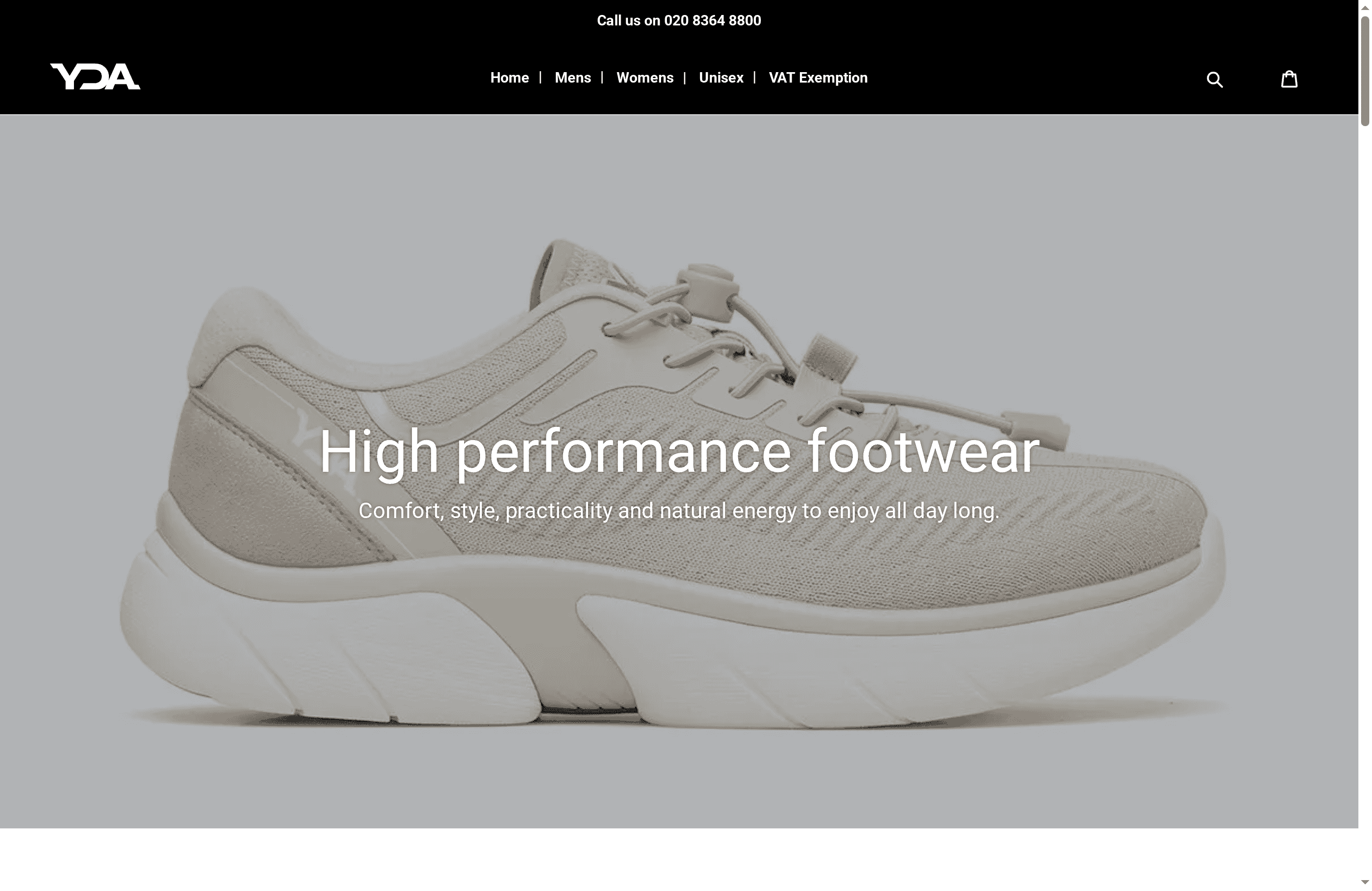
Ydauk builds footwear around that exact problem. The YDA Technology range is designed with a flexible sole and generous toe room specifically so your foot can flex naturally with each step, supporting the calf activation this guide keeps coming back to, rather than restricting it. If your circulation symptoms link back to diabetes, Ydauk’s diabetic footwear guidance covers the extra fit considerations worth knowing before you buy. None of this replaces a medical assessment if you’re showing red-flag symptoms; footwear supports movement, it doesn’t diagnose or treat vascular disease. If you want shoes built to make your daily walks and micro-movement routine easier rather than harder, take a look at the full YDA Technology range and see which style fits your daily routine.
Sources
General guidance like this is a starting point. If your symptoms are new, worsening or tied to diabetes or a known heart condition, a clinician who can examine your feet and pulses directly will always give you a more reliable answer than any article.