
What actually relieves foot pain fast (and when to stop and get it checked)
Rest the foot, ice it if the area feels hot or swollen, swap into supportive shoes rather than flip-flops or heels, and try a calf stretch and a towel roll under the arch. Most mild foot pain settles within a few days of that combination. If you cannot put weight on the foot, see swelling that will not go down, or notice numbness or an open wound, stop the home remedies and get it looked at.
TL;DR:
- Applying ice for 15 to 20 minutes every 2 to 3 hours is effective for swelling and inflammation, while heat helps loosen tight muscles.
- Proper footwear with enough toe room, arch support, and a stable sole reduces foot pain caused by poor fit and structural issues.
- Stretching calves and rolling the arch every morning can significantly improve common overuse foot problems over time.
- Elevating the foot above hip height and using compression socks can help speed recovery and decrease swelling, provided no open wounds or circulation issues exist.
- Seek urgent care if you cannot bear weight, develop severe swelling, or experience numbness, especially if you have higher risk factors like diabetes or vascular disease.
Table of Contents
- Foot pain relief tips for the first 24 to 48 hours
- How to use temperature, soaks, massage, and compression safely
- Getting your footwear right in under two minutes
- Stretches and strengthening that target common causes
- Preventing foot pain from coming back
- When foot pain needs a professional, not a home remedy
- Who’s behind this advice, and where it comes from
- Comfort over fashion: a note on why this keeps happening
- Where YDA footwear fits into this advice
- Sources
Foot pain relief tips for the first 24 to 48 hours
The first two days set the tone for how quickly a sore foot settles. Get the basics right early and you shorten the whole recovery.
- Decide ice or heat. Use ice on anything hot, swollen, or freshly tweaked. Use heat on muscles that just feel tight or tired rather than inflamed. Harvard Health frames it exactly this way: ice reduces blood flow and inflammation, heat improves circulation and eases stiffness.
- Apply for 15 to 20 minutes, every 2 to 3 hours. Never put ice directly on skin. Wrap it in a thin towel.
- Elevate the foot above hip height when resting, and cut back on standing or walking for a day or two.
- Swap footwear immediately. Ditch anything tight, flat, or backless. A cushioned pad over a pressure point buys real relief within minutes.
- Consider an OTC painkiller if needed, following the packet dosing and checking with a pharmacist if you take other medication.
Pro Tip: Keep a gel ice pack in the freezer specifically for feet. Grabbing a bag of frozen peas works once, but it thaws fast and rarely holds the right shape against a heel or arch.
How to use temperature, soaks, massage, and compression safely
Getting these four remedies right is less about effort and more about technique. Done sloppily, they do very little. Done properly, most people feel a genuine difference within a day.
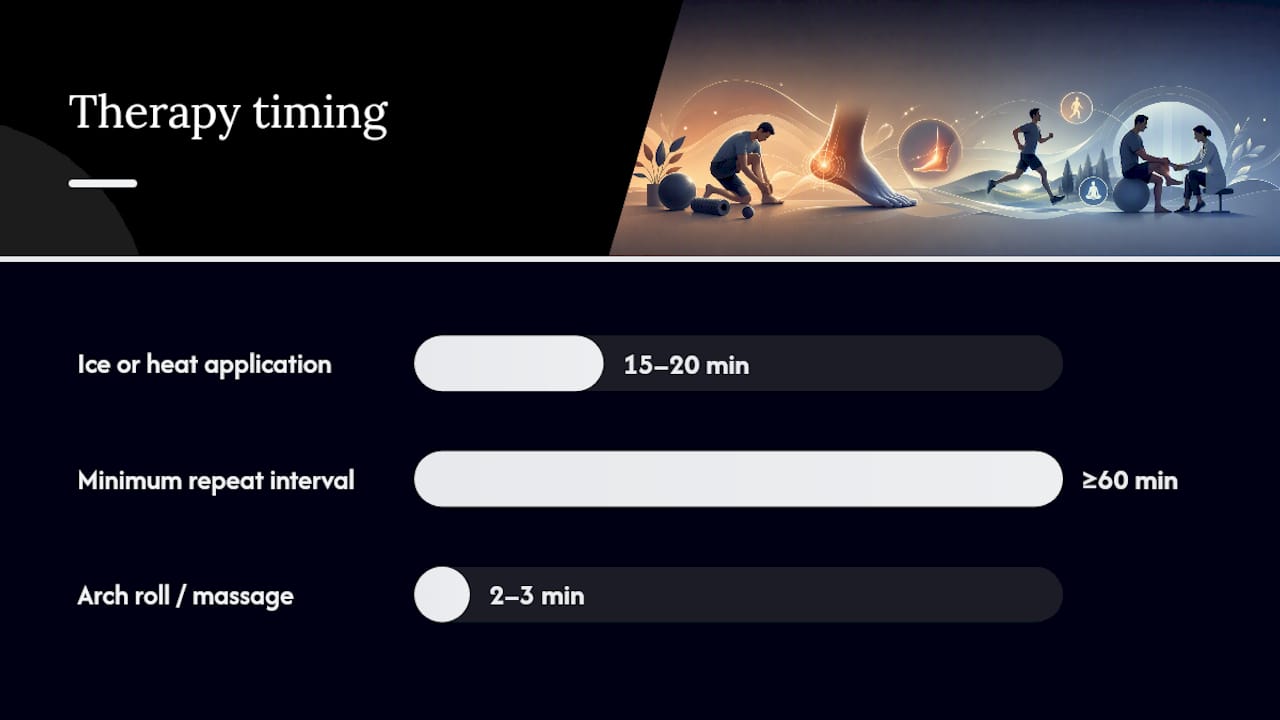
Temperature therapy follows one rule: ice calms things down, heat loosens things up. Ice suits a foot that is swollen, warm to the touch, or reacting to a fresh strain, such as after standing all day in poor shoes. Heat suits a foot that feels stiff or achy without visible inflammation, often first thing in the morning. Wrap either in a towel, apply for 15 to 20 minutes, and leave at least an hour before repeating. Skip both if you have poor circulation, diabetic neuropathy, or numbness in the area, since you may not feel damage happening. MedlinePlus lists elevation and appropriate temperature use among the standard home care steps for foot pain.
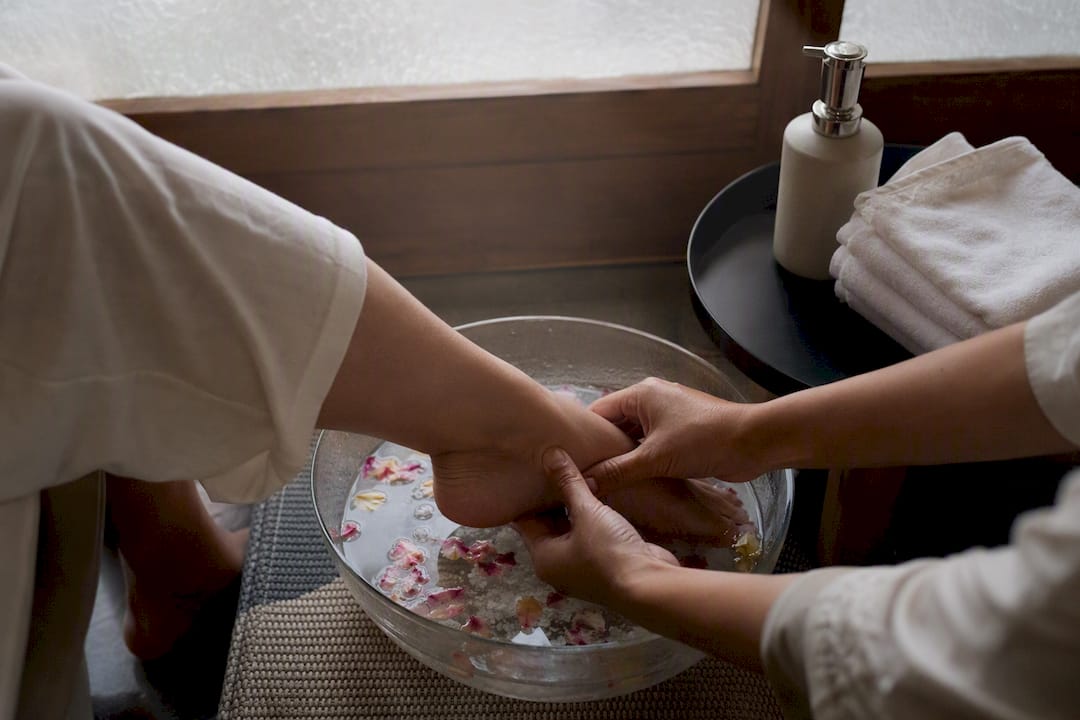
Foot soaks and Epsom salt feel good and can loosen stiff joints, but the evidence for drawing out inflammation is thin. Warm water alone often does most of the work by relaxing muscles and improving local blood flow. Treat a soak as comfort, not a cure, particularly for anything sharp or localised like a stress fracture.
Massage helps most with tight arches and tired calves rather than acute injuries:
- Roll a tennis ball or a frozen water bottle under the arch for two to three minutes, applying gentle pressure.
- Use your thumbs to work small circles along the arch and heel, moving toward the toes.
- Avoid direct pressure over a sharp, localised pain point, that pattern often signals a stress injury rather than general tightness.
- Stop if massage increases pain rather than easing it.
Compression and elevation reduce swelling by helping fluid drain away from the foot. A snug (not tight) compression sock works well alongside elevation above hip height. Skip compression if there is an open wound, signs of infection, or known poor circulation, since restricting blood flow in those cases can make things worse.
Anti-inflammatories deserve a specific caveat here. NSAIDs like ibuprofen do not work as an instant spot treatment the way ice does. Their anti-inflammatory effect builds with consistent dosing over several days, which matters for conditions like tendinitis. A single dose taken sporadically rarely does much. Check with a pharmacist before an extended course, particularly if you have stomach, kidney, or heart conditions.
Pro Tip: If you’re treating a swollen foot, ice and elevate at the same time rather than one after the other. The combined effect on swelling is noticeably faster than either alone.
Getting your footwear right in under two minutes
Poor-fitting shoes cause a huge share of everyday foot pain, and fixing that costs nothing beyond a proper check.
- Toe room: leave enough room between your longest toe and the shoe’s tip to avoid discomfort and problems. Too tight and you get bunions and cramped toes; too loose and you get blisters and instability, according to Harvard Health.
- Wide toe box: your toes should splay naturally, not squeeze together.
- Stable sole and low heel: anything past a couple of centimetres shifts your weight forward onto the ball of the foot.
- Arch support: if your current shoes have flattened insoles, an over-the-counter arch support often solves mild arch pain; persistent pain despite good support points toward a custom orthotic and a podiatry visit.
- Wear check: press your thumb into the midsole. If it barely compresses, or the outsole is worn unevenly, replace the shoe. Most trainers need replacing regularly based on wear and mileage.
Our guide to buying shoes for foot pain covers this fitting process in more depth.
Stretches and strengthening that target common causes
Plantar fasciitis and Achilles tightness respond well to a short, consistent routine rather than occasional stretching sessions.
- Standing calf stretch: face a wall, step one foot back, keep the heel down, and lean forward until you feel a pull in the calf. Hold 30 seconds, repeat three times per side, twice daily.
- Plantar fascia roll: first thing in the morning, roll a frozen bottle or ball under the arch for two minutes before you take your first steps.
- Toe curls and towel scrunches: scrunch a towel with your toes for 10 reps, three sets, building up as it gets easier.
WebMD notes that consistent calf and plantar fascia stretching paired with intrinsic strengthening reduces overuse-type foot pain over time. Pause any exercise that sharpens the pain rather than easing it, and review with a clinician if there is no improvement after two to three weeks.
Preventing foot pain from coming back
Recovery is only half the job. The other half is not repeating whatever caused the pain in the first place.
- Pace your load. If walking or running triggered the pain, build back up gradually rather than jumping straight to your previous distance.
- Cross-train with swimming or cycling while the foot settles, to keep fitness up without repeated impact.
- Rotate shoes. Wearing the same pair daily accelerates midsole compression; alternating between two pairs extends their supportive life and reduces repetitive strain.
- Mind your weight. Extra load through the feet with every step adds up over a day, and modest weight management can ease chronic foot pain.
- Get a referral to a podiatrist or physiotherapist if pain persists beyond a few weeks despite good footwear and stretching.
When foot pain needs a professional, not a home remedy
Most foot pain is manageable at home, but certain symptoms mean self-care should stop.
- Get seen immediately (A&E or urgent care) if you cannot bear any weight, notice severe or rapidly spreading swelling, see an open wound, or have sudden numbness.
- Book a GP or podiatrist within a few days if pain persists beyond a week of home care, or if you notice redness, warmth, and swelling that suggests infection.
- People with diabetes, neuropathy, or vascular disease should get any foot pain, cut, or colour change checked promptly, since reduced sensation can mask a problem that is getting worse. NHS guidance recommends a conservative first-line approach for most people, with faster escalation for these higher-risk groups.
Poor foot mechanics and worn shoes are among the most common drivers of persistent pain, and structural issues like plantar fasciitis or heel spurs sometimes need targeted treatment beyond home remedies alone.
Who’s behind this advice, and where it comes from
This guide draws on established clinical sources, including Harvard Health, Cleveland Clinic, and MedlinePlus, cross-checked against NHS guidance on red flags and escalation. Panagiotis, the author, writes on footwear and foot health for Ydauk, drawing on the brand’s ongoing work with YDA Technology, its cushioning and support system built around the same fit principles covered above.
None of this replaces a hands-on assessment. If pain persists, or if you fall into a higher-risk group such as diabetes or vascular disease, a clinician needs to examine the actual foot, not just read about one.
Comfort over fashion: a note on why this keeps happening
The number of people who buy shoes half a size too small because the bigger size “didn’t look right” is genuinely striking. Vanity sizing and narrow toe boxes cause more preventable foot pain than any single injury I’ve researched for this piece.
The fix is boring but it works: measure your feet properly, buy for the shape of your foot rather than the size on the box, and read a proper buying guide before you next replace your trainers.
— Panagiotis
Where YDA footwear fits into this advice
Ydauk is built around the exact fit principles in this guide rather than as an afterthought bolted onto a fashion shoe. The wide toe box gives your toes the room clinicians recommend, the cushioned midsole absorbs the impact that wears down cheaper soles within months, and the supportive structure targets the arch and heel pressure points covered in the massage and compression sections above.

If your current shoes fail the thumb test from the footwear section, or you’ve been putting up with arch pain that a proper support could fix, YDA Technology explains exactly how the design addresses it. Browse the range and check which model matches your foot shape before your next pair wears out completely. For anyone weighing up cost against buying new, ClothME’s guide to buying used shoes is worth a read too, though a worn pair rarely offers the same support as one built for foot health from the ground up.
Sources
- 7 ways to fix foot pain | Harvard Health
- 8 ways to avoid foot pain | Harvard Health
- Foot pain | MedlinePlus Medical Encyclopedia
- Foot pain and problems | Johns Hopkins Medicine