
ECCO Shoe Sizing: Podiatry Advice on Toe Gap and Fit
Measure both feet in millimetres and pick the ECCO size that matches your larger foot rather than the size you remember buying last time. ECCO uses anatomically shaped lasts that tend to run true to the official chart, but foot length and width can shift with age, weight and swelling. Check the brand’s conversion chart before ordering, and if you live with diabetes or wear orthoses, prioritise width and volume over length alone.
TL;DR:
- ECCO charts differ by men’s, women’s, and children’s lasts; use the category’s millimetre chart because EU increments do not match UK or US half sizes.
- Measure in the evening with the socks you plan to wear, and record ball width as well as length because swelling and shoe volume affect fit.
- Among participants with diabetes, a small study found average toe pressure of 236 kPa with 1.5 to 2.0 centimetre gaps, versus 142 kPa with smaller gaps.
- Choose extra volume for lined boots and thicker socks, but prioritize secure straps in sandals; measure children’s feet every few months and avoid oversized shoes.
- When a size pinches or gaps, test a half size or wider fit before changing length; walk for several minutes and check toe pressure and heel slip.
Table of Contents
- ECCO size charts at a glance for men, women and kids
- How to measure your feet accurately at home
- Interpreting your measurements: length, width and toe gap
- Style and age adjustments for boots, sandals and kids
- What research says about toe gaps, pressure and fitting protocols
- Author checklist: measure, map, try, test walk
- How YDA helps you get a fit that actually works
- FAQ
- Sources
ECCO size charts at a glance for men, women and kids
ECCO publishes separate size charts for men’s, women’s and children’s footwear, each mapping a measured heel-to-toe length in millimetres to EU, UK and US sizes. The EU scale is the one ECCO builds its lasts around, since the brand is Danish and sizes shoes in centimetre and millimetre increments rather than the inch-based systems used in the UK and US.
Reading the chart correctly matters more than memorising a number:
- EU sizes increase in two-thirds-centimetre steps, so an EU size often sits between two UK half sizes.
- UK and US charts use half sizes more loosely, which is why the same foot length can land on a “whole” UK size but a “half” US size.
- Some ECCO styles, particularly men’s casual and outdoor ranges, come in multiple width options or a roomier last, while others stick to a single standard fit.
Because EU increments don’t line up neatly with UK or US half sizes, the safest approach is always to work from your millimetre measurement rather than converting a remembered UK or US size directly into EU. A UK size 7 foot, for example, might measure closer to the next EU size up depending on exactly where your heel-to-toe length falls. Kids’ charts follow the same logic but step more quickly, since children’s growth rate in the UK and across Europe means the practical gap between sizes narrows as feet get longer. If you’re ordering ECCO shoes online, keep your millimetre figure handy and cross-check it against the specific chart for the category you’re buying, since men’s, women’s and children’s lasts aren’t identical in shape even at a comparable length.
How to measure your feet accurately at home
A reliable measurement takes five minutes and three household items: a sheet of paper, a pencil and a ruler, as explained in this detailed cap fit guide on measuring headwear accurately. This mirrors the approach used in professional shoe-fitting, where a Brannock device reads both length and width against a fixed scale, except you’re recording the same information by hand.
- Stand the paper on a hard floor against a wall, then step onto it with your heel touching the wall.
- Keep your weight evenly distributed on both feet, as you would when standing naturally rather than leaning back.
- Mark the paper at the tip of your longest toe, which isn’t always the big toe.
- Measure the straight-line distance from the wall edge to your mark in millimetres.
- Repeat for the other foot, since most people have a measurable difference between the two.
- Wrap a tape measure around the widest part of the ball of your foot and note that figure too.
- Write both length and width figures down for each foot before comparing them to the ECCO chart for the category you want.
Measure at the end of the day rather than first thing in the morning. Feet swell gradually through normal daily activity, so an evening measurement reflects the size your foot reaches most of the time, which is closer to how it will behave inside a shoe during a full day’s wear. Wear the sock thickness you’d actually wear with the shoe, since a thick hiking sock can add real volume compared with a thin dress sock.
Once you have four numbers (left length, right length, left width, right width), always use the longer of the two length measurements to choose your size. Foot-shape variability between left and right feet is common enough that podiatry guidance consistently recommends sizing for the larger foot rather than splitting the difference or using only one side as a reference, a point podiatry research on diabetic foot fitting makes explicit when discussing fitting errors.
Pro Tip: Trace both feet onto the same sheet of paper in different colours so you can see the size difference between them at a glance.

Interpreting your measurements: length, width and toe gap
Once you have your millimetre figure, the next decision is how much extra room to leave beyond your longest toe. This gap, usually called the toe gap or toe allowance, is the space between the tip of your longest toe and the end of the shoe, and there’s no single figure that suits everyone.
- A toe gap of roughly 0.5 to 1.0 centimetre is a commonly cited comfortable range for everyday shoes.
- Gaps approaching 1.5 to 2.0 centimetres give more breathing room but aren’t automatically safer for every foot type.
- Too little gap causes pressure on the toes during walking and can lead to blisters or nail damage over time.
An exploratory study from the University of Birmingham on footwear fit and in-shoe pressure found that, among people with diabetes, larger toe gaps of 1.5 to 2.0 centimetres were linked to higher mean hallux peak plantar pressures, around 236 kPa, compared with smaller gaps of 0.5 to 1.0 centimetre, which averaged around 142 kPa. A majority of the small study’s participants were wearing shoes of incorrect length, and many were in the wrong width. The sample was small, so the finding should be read as a caution rather than a rule, but it shows that “sizing up for extra room” isn’t automatically the safer choice for feet with reduced sensation.
Width and volume deserve equal attention to length. If your ball-width measurement sits at the wider end of ECCO’s standard fitting, or if you wear insoles or orthoses that add volume, look for a wide-fit option where ECCO offers one, rather than simply buying a longer shoe to compensate for width. When you’re stuck between two sizes, the practical order of operations is: try the half size up first if one exists, then consider a wider fitting in your true length, and only size up a full length as a last resort if the style has no half sizes or wide options available.
Style and age adjustments for boots, sandals and kids
The chart and the measuring method stay the same across ECCO’s range, but how much room you leave on top of your measurement should shift depending on the style.
- Boots and other lined, enclosed styles usually need a touch more internal volume to accommodate thicker socks and the lining itself, so check the chart’s upper end if you’re between sizes.
- Sandals and other open styles rely on strap adjustment rather than extra length, so prioritise a secure, snug strap fit over sizing up for room.
- Running and performance styles follow a narrower, more structured last shape built around the way the foot moves during activity, so these often fit truer to your bare measurement than casual shoes do.
- Children’s feet change quickly, so measure every few months rather than relying on a single reading from months earlier.
- Always size children’s shoes to the longer foot and allow a small, deliberate growth margin rather than guessing based on age alone.
A thick walking sock inside a lined boot can take up several extra millimetres of internal space compared with a thin ankle sock in a sandal, which is why the same foot can reasonably sit at different points within the size range depending on the style. For children, resist the temptation to buy generously oversized shoes “to make them last”, since too much extra length can affect gait and balance during the early stages of walking.
What research says about toe gaps, pressure and fitting protocols
Fitting protocols that combine device measurements with participant feedback and a trial walk tend to allocate shoes somewhat longer than the raw measured foot length. One such study on shoe-fitting accuracy in older people found an average difference of around 23.6 millimetres between allocated shoe length and measured foot length, and many participants needed a width adjustment beyond what the initial device reading suggested. That gap between device measurement and final fit is exactly why a quick walk test matters as much as the numbers on a chart.
Individual variability in foot shape, and the frequent difference in length between a person’s left and right foot, is why measuring both feet and choosing the larger is a standard recommendation in podiatry practice.
For most people, choosing the ECCO size that matches the longer foot, checked against the official chart, is sufficient. If you live with diabetes, neuropathy or another condition that reduces sensation in your feet, the margin for error is smaller and the consequences of a poor fit are more serious, so it’s worth working from specialist diabetic-fit guidance alongside the standard measuring steps above.
Author checklist: measure, map, try, test walk
Here’s the short version I’d run through myself before trusting any ECCO size, whether shopping online or in a shop.
- Measure both feet, heel-to-toe, in millimetres, at the end of the day.
- Map your longer foot’s measurement against ECCO’s specific chart for that style.
- Order or try the size that matches your larger foot, not an average of the two.
- Walk in the shoes for several minutes if you can, checking for pressure at the toes and heel slip at the back.
- If anything pinches or gapes, adjust width or try a half size before assuming the length is wrong.
A size that looks correct on paper can still feel wrong on your feet, which is the entire reason the walk test exists as a final check rather than an afterthought.
— Panagiotis
How YDA helps you get a fit that actually works
Getting the length right is only half the job. We design shoes with foot-health technology aimed to support and stabilise each step, so the fit work you’ve just done pays off in comfort that lasts through a full day rather than just the first few steps in the shop.
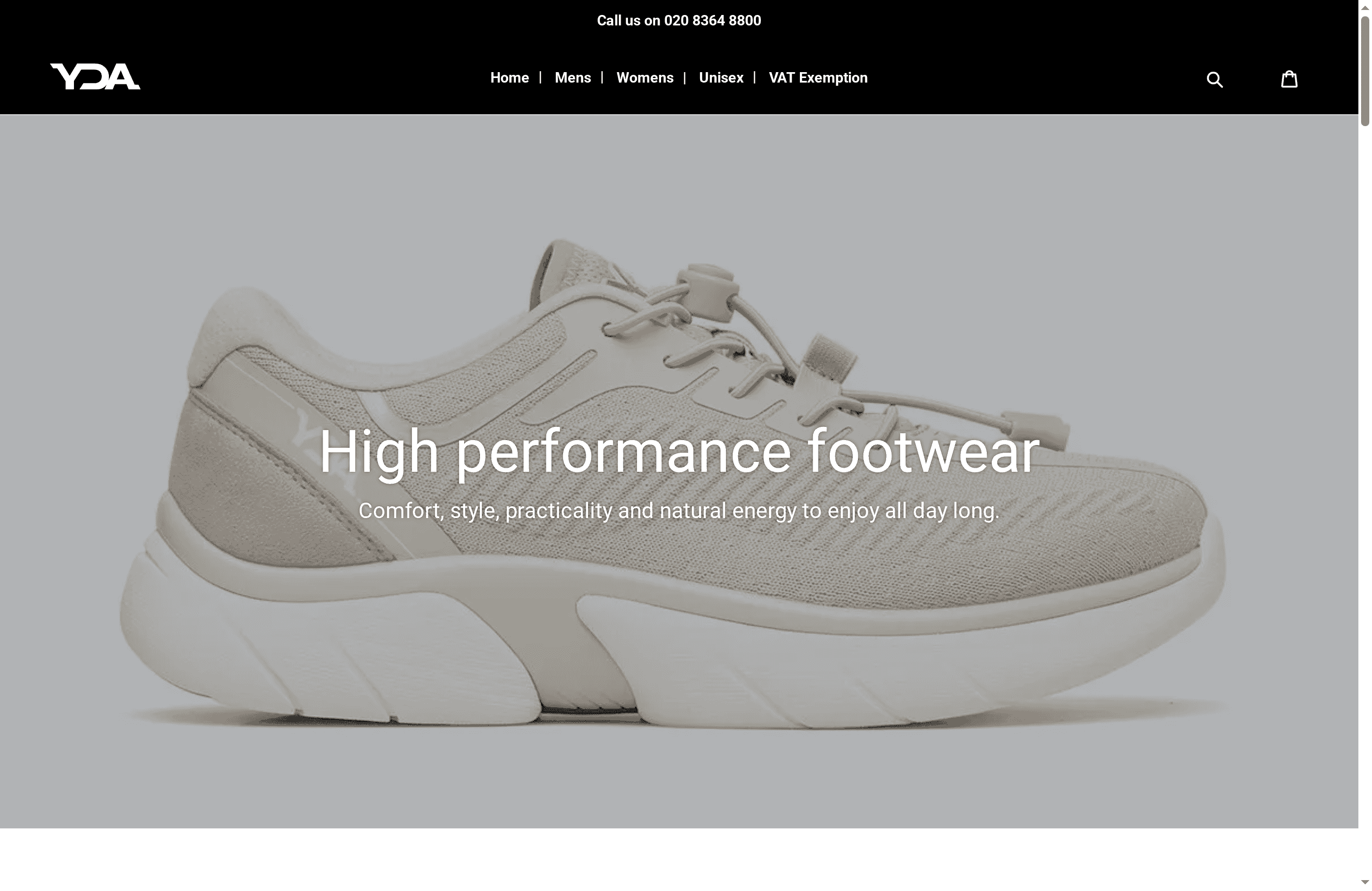
- Our YDA Technology pages explain how our lasts and support structures are designed with foot health in mind.
- We cover width and volume considerations in detail for people managing diabetes or other foot conditions.
- Once you’ve measured and mapped your size, you can browse our high-performance footwear range to find a pair built for the fit you’ve just worked out.
If you’re ever unsure between two sizes, the same millimetre-first approach you’ve used here applies directly to choosing from the available ranges.
This article is general information, not a substitute for advice from a qualified doctor. Consult a qualified healthcare professional about your own circumstances before acting on anything here.
FAQ
Do ECCO shoes fit big or small?
ECCO’s anatomical lasts generally run true to size when matched correctly against the brand’s own chart, rather than running consistently big or small. Fit can still vary by style, so always measure in millimetres and check the specific chart for the category you’re buying rather than assuming your usual size carries over.
Is ECCO wide fitting?
Many ECCO styles offer a standard width, though some ranges, particularly in men’s casual and outdoor footwear, include wider fitting options. Check the width measurement from your ball-width reading against the specific style’s chart, and favour a wide fitting where one is offered if your measurement sits at the broader end.
What do podiatrists say about ECCO shoe sizing?
Podiatry-aligned practice recommends measuring both feet and selecting a size based on the longer foot, since foot-shape variability between left and right feet is common. Research on shoe-fitting accuracy also supports combining a measured size with an actual try-on and walk test rather than relying on the chart alone.
Does a half shoe size make a difference?
Yes, a half size can meaningfully change comfort, particularly around toe pressure and heel hold. When a half size isn’t available in a given style, fitters typically choose the next length up combined with a narrower width, or add an insole to fine-tune the volume.
Sources
- Effect of recommended footwear fit upon in-shoe pressures in feet
- Comparison of shoe-length fit between people with and without diabetic peripheral neuropathy: a case–control study
- Evaluation of the accuracy of shoe fitting in older people