
Role of Anti-Fatigue Soles in Foot Health
Standing for hours at work or while running errands can leave your feet aching long before the day ends. Many health-conscious individuals search endlessly for stylish footwear that is as gentle on the feet as it is on the eyes. Anti-fatigue soles offer cushioned support that reduces pressure and strain on muscles and joints, helping to ease pain and boost your energy throughout daily life. Discover how the right footwear transforms standing and walking into a much more comfortable experience.
Table of Contents
- What Are Anti-Fatigue Soles And How They Work
- Major Types And Key Features Compared
- Health Benefits For Daily Life And Work
- Cost, Lifespan, And Choosing Alternatives
- Common Mistakes When Selecting Anti-Fatigue Soles
Key Takeaways
| Point | Details |
|---|---|
| Functionality of Anti-Fatigue Soles | They reduce foot fatigue through cushioned support, promoting blood circulation and reducing strain on joints. |
| Material Selection | Choose materials based on your work environment: polyurethane foam for comfort in dry settings, nitrile rubber for durability in wet or industrial areas, and vinyl for economical use. |
| Health Benefits | Anti-fatigue soles improve overall health by reducing pain, enhancing posture, and increasing productivity during prolonged standing or walking. |
| Common Selection Mistakes | Avoid thin cushioning, inappropriate material for your working conditions, and incorrect sizing to maximise the effectiveness of anti-fatigue soles. |
What Are Anti-Fatigue Soles and How They Work
Anti-fatigue soles are specially designed shoe inserts or built-in cushioning systems that reduce the physical stress your feet experience during prolonged standing or walking. Unlike ordinary shoe soles, they actively work to combat foot tiredness by promoting specific physiological responses in your legs and feet.
Think of your feet as constantly working pumps. When you stand still for extended periods, blood can pool in your lower legs, leading to that heavy, exhausted feeling you experience by day’s end. Anti-fatigue soles change this dynamic entirely.
How They Reduce Fatigue
These soles operate through several interconnected mechanisms:
- Cushioned support: They absorb impact and distribute your body weight evenly across your foot, eliminating painful pressure points that develop from uneven standing
- Micro-movements: The slightly unstable, contoured surface encourages tiny muscle adjustments throughout your feet and calves
- Blood circulation boost: These small muscle contractions activate the vein pump system in your legs, preventing blood pooling and maintaining proper circulation
- Reduced joint strain: Even weight distribution means less stress on your ankles, knees, and hips
Cushioning that reduces pressure and strain on muscles and joints is particularly effective for people managing conditions like arthritis or chronic fatigue.
The Science Behind the Sensation
When standing becomes uncomfortable, your body fights back with stiffness and aching. Anti-fatigue soles combat this by keeping your leg muscles engaged through gentle, constant micro-adjustments. Promoting micro-movements that improve blood flow prevents the stagnation that causes that numbing, exhausted sensation.
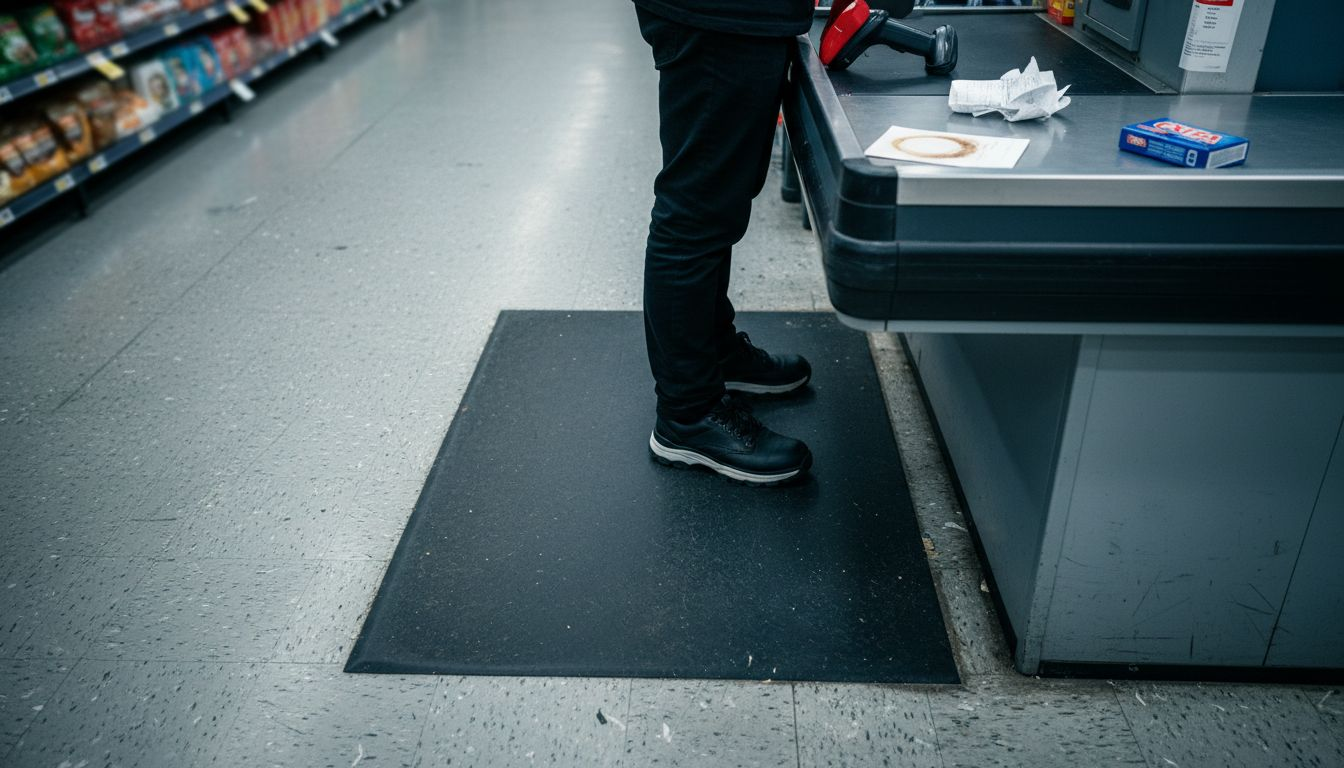
You’re not constantly working harder. Instead, you’re working smarter—your muscles stay activated at low intensity, maintaining circulation and delaying fatigue onset significantly.
Who Benefits Most
Anyone spending hours on their feet gains value from anti-fatigue technology. Retail workers, healthcare professionals, teachers, and home cooks all experience noticeable comfort improvements. The technology proves especially valuable for those with existing foot or joint conditions.
Anti-fatigue soles transform standing from a static, fatiguing activity into an active process that keeps your circulatory system engaged and prevents the pain associated with prolonged stationary positions.
Pro tip: Select anti-fatigue footwear with arch support that matches your foot type, and give your body 3-5 days to adjust to the slight instability—your muscles will strengthen quickly, and comfort will dramatically improve.
Major Types and Key Features Compared
Anti-fatigue soles come in different material options, each with distinct advantages depending on your work environment and lifestyle. Choosing the right type means understanding what each material delivers in terms of comfort, durability, and performance.
The three primary materials dominate the anti-fatigue market, each suited to different situations. Your choice depends on where you’ll be wearing them most and what conditions they’ll face.
Material Types and Their Strengths
Polyurethane foam delivers superior comfort and elasticity, making it ideal for office environments or home use. It provides excellent cushioning that feels responsive underfoot. However, it performs poorly in wet or industrial settings where moisture exposure causes rapid deterioration.
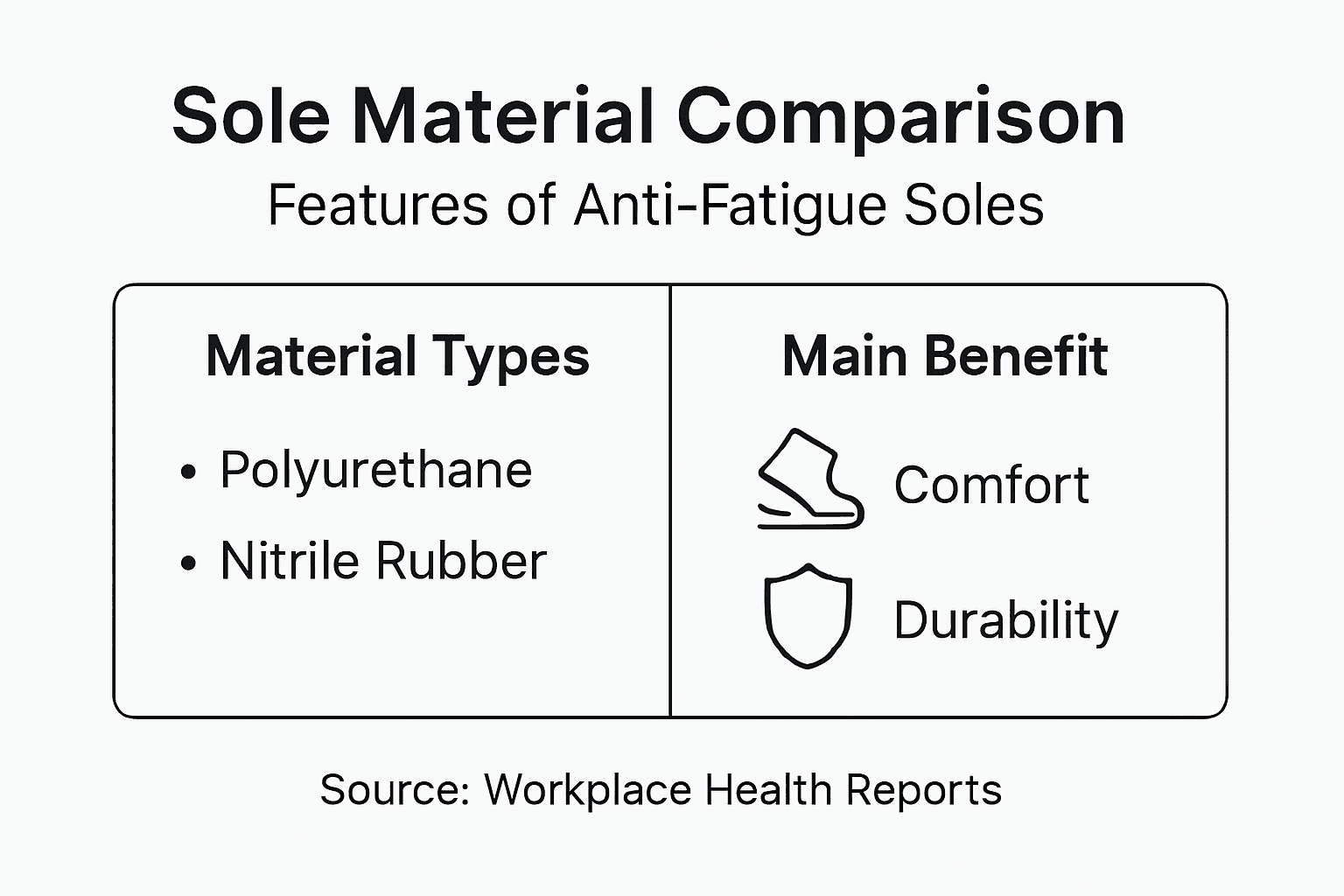
Nitrile rubber offers exceptional durability and chemical resistance, making it the preferred choice for industrial workplaces, kitchens, and healthcare settings. Slip resistance and durability are its standout features. This material withstands harsh conditions that would destroy foam alternatives.
Vinyl or PVC provides an economical middle ground for light commercial or home use. It offers moderate cushioning at an affordable price point, though it won’t match foam comfort or rubber durability.
Here’s a quick-reference comparison of anti-fatigue sole materials to help you choose:
| Material Type | Best Environment | Main Benefit | Main Limitation |
|---|---|---|---|
| Polyurethane Foam | Offices and dry settings | Superior cushioning | Weak in wet areas |
| Nitrile Rubber | Kitchens, hospitals, factories | Exceptional durability | Higher initial cost |
| Vinyl/PVC | Light home or retail use | Low price point | Less comfort, short life |
Design Formats to Consider
Beyond materials, anti-fatigue soles come in three distinct formats:
- Built-in shoe soles: Integrated directly into the shoe for seamless performance
- Removable insoles: Can be transferred between shoes for flexibility and cost-effectiveness
- Wearable insoles: Provide portability for workers changing workstations throughout the day
Various designs including foam-based, rubber, and wearable insoles offer distinct features like customisable cushioning levels and adaptability to different foot shapes.
Choosing Your Best Option
Consider your primary environment first. Wet kitchens and factories demand nitrile rubber. Office workers benefit most from polyurethane foam. Those moving between locations gain real advantage from wearable insoles.
Budget matters too. Foam offers best comfort per pound. Rubber costs more upfront but lasts significantly longer in demanding settings. Vinyl suits occasional users with modest comfort expectations.
The right anti-fatigue sole material matches your specific environment, not just your foot comfort preferences—durability in your conditions matters equally.
Pro tip: Test your chosen material in your actual working environment for a full week before committing to a full wardrobe change, as comfort and durability vary dramatically between settings like retail shops versus hospital floors.
Health Benefits for Daily Life and Work
Anti-fatigue soles deliver measurable health improvements that extend far beyond foot comfort. When you reduce the strain on your feet during standing or walking, you unlock benefits throughout your entire body.
The connection runs deeper than you might expect. Foot fatigue doesn’t stay isolated in your feet—it radiates upward through your ankles, knees, hips, and lower back, creating a cascade of discomfort that worsens throughout the day.
Pain and Fatigue Reduction
The primary benefit is straightforward: less pain and tiredness. Reducing muscle fatigue, joint pain, and discomfort during prolonged standing allows you to remain active longer without the exhaustion that normally forces you to sit down.
This matters enormously for people managing chronic conditions. Those with arthritis, chronic fatigue syndrome, or similar conditions gain the ability to extend their standing time significantly whilst experiencing considerably less pain.
Musculoskeletal Health Improvements
Your body’s structural system benefits profoundly from proper foot support:
- Improved posture: Proper foot support naturally aligns your entire spine and pelvis
- Joint protection: Even weight distribution reduces stress on knees, hips, and lower back
- Muscle balance: Correct positioning prevents overuse injuries from compensatory strain
- Long-term prevention: Reducing daily stress decreases risk of developing chronic musculoskeletal disorders
Think of it as preventative medicine for your joints. Small daily improvements compound into significant long-term health benefits.
Real-World Comfort Gains
Studies demonstrate that users report substantially reduced discomfort and fatigue in both everyday and occupational settings. Whilst objective muscle measurements sometimes show minimal changes, your subjective experience—what you actually feel—improves noticeably, particularly regarding lower back pain during extended standing.
Retail workers, nurses, teachers, and anyone spending hours on their feet experiences noticeable relief by day three or four of wearing proper anti-fatigue footwear.
Performance and Productivity
When your feet don’t hurt, your mind works better. Pain distraction diminishes, focus improves, and your capacity for sustained work increases substantially. You finish your shift with energy remaining instead of complete exhaustion.
Anti-fatigue soles transform standing from a pain-generating activity into something your body manages comfortably, unlocking hours of additional productive capacity daily.
Pro tip: Pair anti-fatigue footwear with simple daily stretches for your calves and plantar fascia—this combination maximises blood flow and prevents the tightness that develops even with excellent sole support.
This table summarises how anti-fatigue soles impact health and work quality:
| Health/Work Area | Positive Effect | Typical Outcome |
|---|---|---|
| Fatigue/Discomfort | Reduces strain and pain | Prolonged standing comfort |
| Musculoskeletal Health | Supports joints and posture | Fewer overuse injuries |
| Productivity | Less distraction from pain | Higher work output |
| Energy After Shift | Sustained energy levels | Less end-of-day tiredness |
Cost, Lifespan, and Choosing Alternatives
Anti-fatigue soles represent an investment in your foot health, but the cost varies dramatically depending on material choice and quality. Understanding the price-to-value relationship helps you make decisions that fit both your budget and your needs.
Cost doesn’t always correlate with longevity. A £40 pair of polyurethane foam insoles might feel more comfortable than a £60 pair of nitrile rubber, yet the rubber will outlast the foam by years in wet or industrial environments.
Price Breakdown by Material
Polyurethane foam costs more but delivers superior comfort, making it ideal if comfort is your priority. Nitrile rubber sits at a moderate price point whilst offering exceptional durability for demanding environments. Vinyl provides the most economical option, though you sacrifice both comfort and lifespan.
Your actual cost depends on several factors:
- Material type: Foam is priciest; vinyl is cheapest
- Brand reputation: Known brands command higher prices
- Features: Arch support, moisture-wicking, and customisation add cost
- Quantity: Buying multiple pairs reduces per-unit expense
Lifespan Expectations
Rubber mats and insoles generally outlast foam or vinyl significantly. In typical office use, expect polyurethane to last 12-18 months, whilst quality nitrile rubber can reach 3-5 years. Vinyl typically manages 6-12 months before degradation becomes noticeable.
Lifespan depends heavily on your specific environment. Wet kitchens destroy foam rapidly but barely affect rubber. Dry office settings extend all materials’ lives considerably.
Selecting the Right Option for You
When choosing anti-fatigue insoles, balance several competing priorities:
- Comfort first: Test softness and support before purchasing
- Job requirements: Static sensitivity, moisture management, or slip resistance matter
- Durability needs: How long must they last in your conditions?
- Budget reality: Calculate cost per wear over expected lifespan
A £80 pair lasting four years costs only £5 per month. A £25 pair lasting six months costs £4 per month—but leaves you without support between replacements.
The cheapest option isn’t always the best value; calculate your true cost per month of actual use in your specific working conditions.
Pro tip: Purchase insoles near the beginning of your work week, then use them consistently for at least seven days before deciding whether to return them—your feet need time to adjust, and initial discomfort often disappears by day five.
Common Mistakes When Selecting Anti-Fatigue Soles
Most people make preventable errors when choosing anti-fatigue footwear, and these mistakes undermine the health benefits you’re trying to gain. Knowing what to avoid saves money, frustration, and foot pain.
The good news? These mistakes are entirely preventable. Understanding the pitfalls helps you select soles that actually work for your life.
Choosing Insufficient Cushioning
The most frequent error is selecting soles that are too thin or lack adequate cushioning for your specific environment. Office workers sometimes buy industrial-grade insoles that feel overly rigid, whilst factory workers purchase lightweight foam that compresses within weeks.
Your cushioning needs depend directly on your working conditions. Match thickness and material density to your actual environment, not to marketing claims.
Ignoring Material and Environment Compatibility
Neglecting material compatibility with workplace chemicals or moisture is a costly mistake. Polyurethane foam dissolves rapidly near grease or cleaning solvents. Nitrile rubber handles these conditions effortlessly. Vinyl degrades in chemical exposure but performs adequately in dry offices.
Before purchasing, consider your specific environment:
- Wet environments: Kitchen, bathroom, poolside—require rubber or vinyl
- Chemical exposure: Industrial, manufacturing, healthcare—demand nitrile rubber
- Dry offices: Standard carpet or tile—foam works excellently
- Mixed conditions: Choose rubber for versatility
Overlooking Your Actual Movement Patterns
Your job requirements determine which sole design suits you best. Someone standing stationary benefits differently from someone walking constantly throughout their shift. Failing to consider mobility needs such as frequency of walking versus standing leads to purchasing the wrong product.
Static standers need maximum cushioning. Walkers require responsive support that doesn’t slow them down. Mobile workers benefit from removable insoles that transfer between shoes.
Neglecting Fit and Sizing Issues
Improper sizing dramatically reduces effectiveness and creates safety hazards. Too-loose insoles shift during movement. Too-tight insoles compress your foot and eliminate crucial space. Slip resistance matters equally—slippery soles cause workplace injuries regardless of cushioning quality.
Measure your feet before ordering. Many people wear incorrect shoe sizes without realising it.
Ignoring Foot Anatomy and Personal Support Needs
Choosing anti-fatigue technology without adequate consideration of personal foot anatomy and job demands leads to poor fit and insufficient support. Flat feet need different arch support than high arches. Pronation patterns affect which materials work best.
Consider whether you need specialised features like moisture-wicking, enhanced arch support, or metatarsal pads.
The perfect anti-fatigue sole for someone else might be entirely wrong for you—your foot anatomy, job demands, and work environment are uniquely yours.
Pro tip: Before committing to a full purchase, test insoles in your actual work environment for 2-3 days—this reveals fit issues, pressure points, and compatibility problems before you’ve wasted significant money.
Discover Footwear That Supports Your Health Every Step of the Way
Prolonged standing leads to foot fatigue, joint strain, and circulation issues that affect your entire body. The article highlights the vital role of anti-fatigue soles in reducing discomfort by promoting micro-movements, better blood flow, and pressure distribution. If you are seeking stylish shoes engineered with advanced cushioning and support to combat daily foot stress, your search ends here.
Experience the power of YDA Technology that combines innovative anti-fatigue features with elegant design. Whether you work long hours on your feet or want to protect your musculoskeletal health, our high-performance footwear range offers the comfort and durability you need. Explore the full collection now at https://ydauk.com and step confidently into a future free of foot pain. Take action today and feel the difference from your very first wear.
Frequently Asked Questions
What are anti-fatigue soles and how do they work?
Anti-fatigue soles are specially designed shoe inserts or built-in cushioning systems that reduce foot stress during prolonged standing or walking. They promote blood circulation and prevent fatigue by encouraging micro-movements in your legs and feet.
Who can benefit from using anti-fatigue soles?
Anyone who spends long hours on their feet, such as retail workers, healthcare professionals, teachers, and home cooks, can experience comfort improvements from anti-fatigue soles. They are especially beneficial for those with existing foot or joint conditions.
What materials are commonly used in anti-fatigue soles, and how do they differ?
The three primary materials are polyurethane foam, nitrile rubber, and vinyl (PVC). Polyurethane foam offers superior cushioning for office use, nitrile rubber provides durability and slip resistance for industrial settings, while vinyl is a cost-effective option for light commercial use.
How do I choose the right anti-fatigue soles for my needs?
Consider your work environment first—dry offices benefit from foam, while wet or industrial conditions require nitrile rubber. Also, evaluate the type of movement you perform and ensure the insoles provide the necessary cushioning and support for your specific foot anatomy.