
Shoe First Relief: Soothe Bunion Pain in 15–20 Minutes
The quickest way to soothe bunion pain is to take pressure off the joint at the base of your big toe. Switch straight away into wide, low-heeled shoes with a deep toe box, cushion the bump with a gel pad or moleskin, and apply a towel-wrapped cold pack for 15 to 20 minutes. A short course of NSAIDs can help if you’re able to take them, and gentle toe stretches keep the joint moving while you watch for warning signs that need a clinician’s eye.
TL;DR:
- Wearing shoes with a deep toe box and keeping heel height under one inch can significantly reduce pressure and friction on the bunion joint.
- Cold therapy, NSAIDs, and padding work together to alleviate inflammation and pain during flare-ups, but footwear modification is key for long-term relief.
- Off-the-shelf insoles and custom orthotics help redistribute pressure, while night splints offer temporary relief but do not correct deformity.
- Regular toe and joint stretches for five minutes daily can maintain mobility, but persistent stiffness may require physiotherapy.
- Proper footwear prioritization is essential, as no stretching or padding will fix a shoe that compresses the bunion continuously.
Table of Contents
- How to ease bunion pain right now
- What shoes and supports actually relieve bunion pressure?
- What exercises help with bunion stiffness and pain?
- When should you see a GP or podiatrist about a bunion?
- How do you stop bunions getting worse long term?
- Why trust this guide on bunion pain relief?
- Do acupuncture and massage actually help bunion pain?
- Can creams and topical treatments soothe bunion pain?
- Is a shoe-first approach really the best way to manage bunions?
- Ready to try shoes built with bunion comfort in mind?
- Sources
How to ease bunion pain right now
You don’t need special equipment to start feeling relief today. You need to stop making the bunion worse every time you put weight on it, which for most people means acting on footwear first and everything else second.
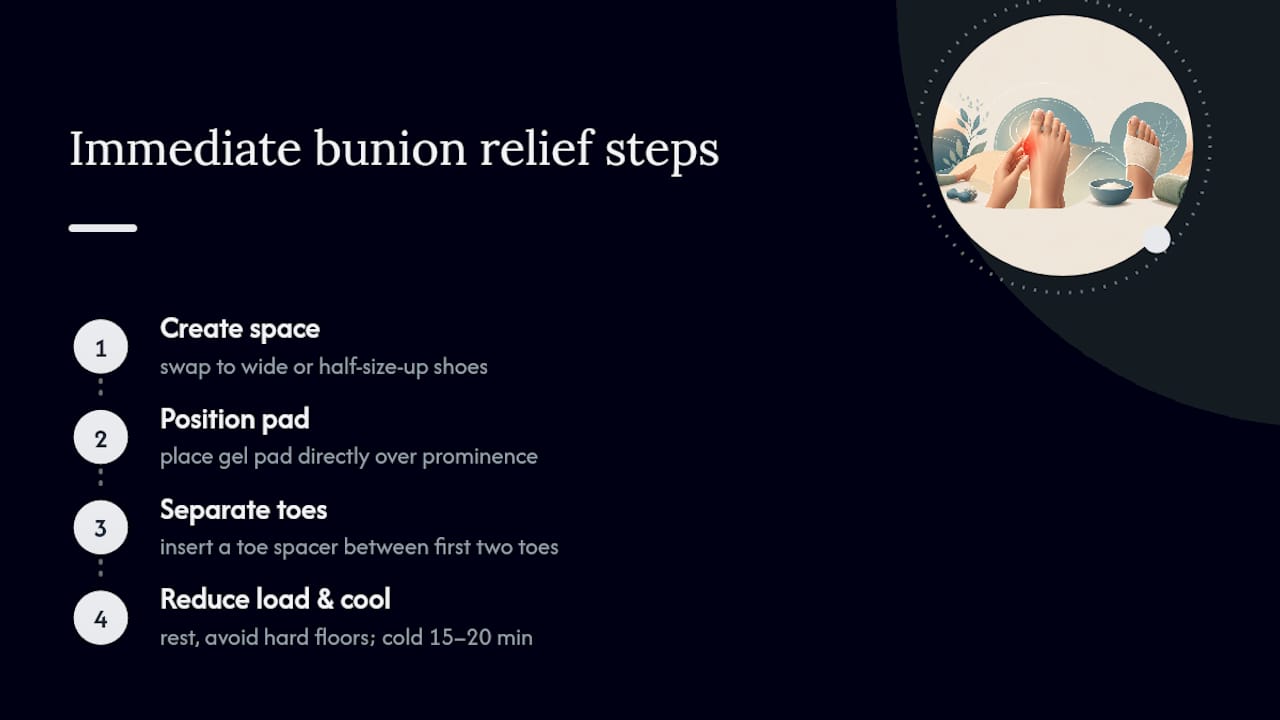
Start by swapping out whatever shoe caused the flare. If you don’t own a proper wide fit yet, borrow a pair of trainers a half-size up, or wear sandals with an open front for a day or two while you sort something better. Position a gel bunion pad directly over the bony prominence, not just near it, and slide a toe spacer between your first and second toes to stop them crowding together. Both work far better once you’ve already made room in the shoe. Non-medicated bunion pads act as a simple buffer wherever there’s enough space left in the shoe for them to do their job.
Cold therapy calms the inflammation causing that throbbing ache. Wrap a cold pack in a thin towel and hold it against the joint for 15 to 20 minutes, never applying ice directly to skin. If you have diabetes or poor circulation, check timing with a clinician first, since reduced sensation can mask skin damage before you feel it.
For medication, NSAIDs such as ibuprofen reduce swelling as well as pain, but stick to a maximum of ten consecutive days without checking with a doctor. Topical anti-inflammatory gels are a gentler alternative if you’d rather avoid tablets. Finally, cut back on standing, walking on hard floors, or anything that loads the forefoot repeatedly, for a few days while the swelling settles.
Pro Tip: Stack two or three of these measures at once, rather than trying one at a time. A combination of footwear change, padding and rest tends to bring relief faster than any single fix on its own.
What shoes and supports actually relieve bunion pressure?
Footwear is where most bunion pain either gets solved or gets made worse, so it’s worth getting specific about what to look for.
- Toe box width and depth: you want room for your toes to spread naturally, not just extra length. A shoe can be the right size and still crush your bunion if the box is shallow.
- Heel height: keep it under 1 inch. Anything higher tips weight forward onto the exact joint you’re trying to protect.
- Sole flexibility: a stiff sole forces your foot to pivot awkwardly at the bunion with every step, so look for soles that flex where your toes naturally bend.
- Upper material: leather and other natural materials stretch and mould to your foot over weeks of wear. Rigid synthetics generally don’t, and forcing a shoe stretcher onto synthetic uppers can damage or split them. Test any stretcher on a small, hidden area first, or take the shoe to a professional repairer if you’re unsure.
Off-the-shelf insoles help plenty of people simply by adding cushioning and slightly redistributing pressure away from the joint. If pain persists despite a better shoe and a decent insole, that’s usually the point where a podiatrist might suggest custom orthotics moulded to your specific foot shape.
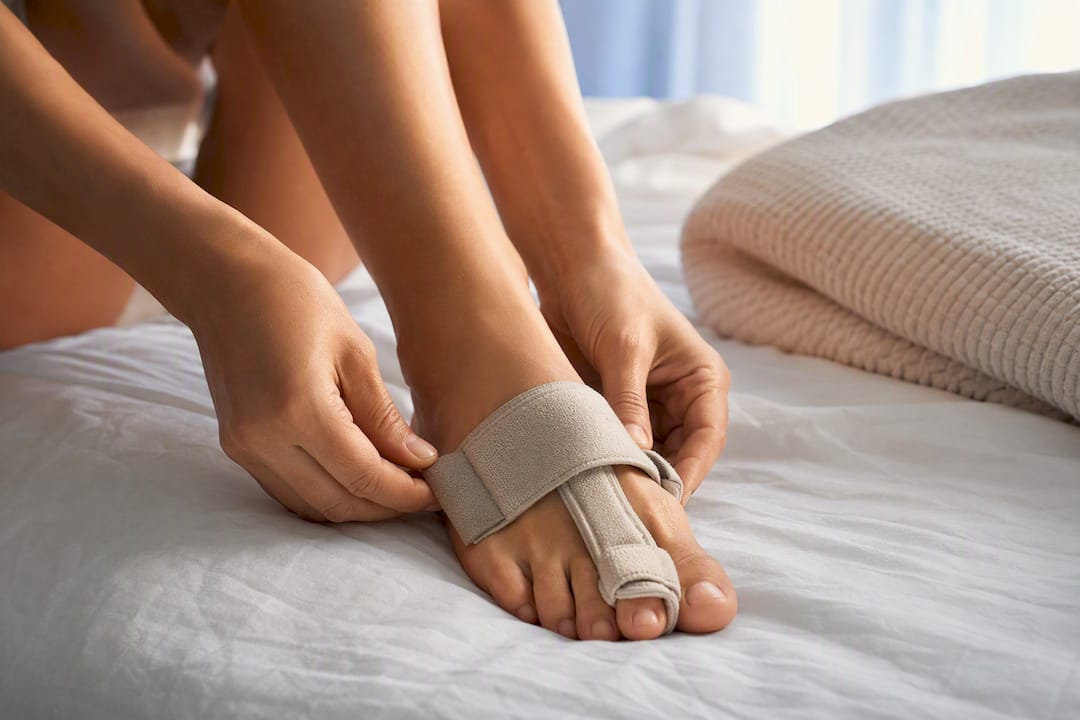
Night splints are worth knowing about too. They hold the toe straighter while you sleep, which eases resting pain, but they don’t correct the underlying deformity and work best paired with daytime footwear changes rather than used alone. YDA UK’s guide to toe-box shape and foot health covers how to judge fit properly before you buy.
Pro Tip: If you’re between half sizes, always go up rather than down. A slightly loose shoe you can pad is far kinder to a bunion than a snug one you can’t.
What exercises help with bunion stiffness and pain?
A short daily routine keeps the joint mobile and stops your gait compensating in ways that cause pain elsewhere. When people avoid pressure on the big toe, that altered stride often shows up as secondary pain in the ball of the foot or further up the leg. Five minutes a day is enough to make a difference:
- Toe curls: scrunch your toes downward and hold for five seconds, ten repetitions.
- Towel scrunches: lay a towel flat and use your toes to drag it towards you, three rounds.
- Marble pickups: pick up small objects with your toes and drop them into a bowl, twenty pickups.
- Calf stretch: press your palms against a wall, one leg back, and hold for thirty seconds each side.
- Big toe stretch: gently pull the big toe towards a straighter position for ten seconds, several times.
Do these once daily, and ease off immediately if any movement sharpens the pain rather than easing stiffness. If two to three weeks of consistent stretching brings no improvement, that’s your cue to see a physiotherapist rather than pushing through it.
When should you see a GP or podiatrist about a bunion?
Most bunion pain responds to home care within a couple of weeks. If it doesn’t, or if you notice any of the following, book an appointment rather than waiting it out:
- Pain that’s severe, constant, or getting worse despite footwear and rest changes
- Sudden swelling, redness, or warmth around the joint, which can signal infection or gout
- Numbness, tingling, or colour changes in the toes, especially serious if you have diabetes or circulation problems
- No improvement after roughly two to three weeks of consistent self-care
A podiatrist can assess your gait, fit you for custom orthotics, or offer a corticosteroid injection for a stubborn flare. Most bunions respond well to conservative measures, with surgery reserved for cases where pain persists despite proper treatment or the deformity is severe. Getting assessed early, rather than after months of struggling, tends to produce better long-term results because a clinician can catch misalignment before it worsens.
How do you stop bunions getting worse long term?
Soothing a flare is one job. Keeping it from coming back is another, and it rests on a handful of habits you can maintain without much effort.
Carrying extra weight increases load through the forefoot with every step, so modest weight management genuinely reduces pressure on the joint over time. Rotate through two or three pairs of proper wide, low-heeled shoes rather than wearing one pair into the ground, and replace them once the cushioning flattens or the upper stops giving your bunion room. If orthotics work for you, keep using them consistently rather than only during flare-ups.
Be realistic about what conservative care achieves: it manages symptoms and can slow progression, but it doesn’t reverse the bony deformity itself. A simple monthly check helps keep flares rare:
- Shoes still fit with room to spare in the toe box
- No new rubbing points or red marks after a day’s wear
- Toe mobility exercises still happening at least a few times a week
- Weight and activity levels holding steady rather than creeping up
Why trust this guide on bunion pain relief?
This guide was written by Panagiotis, drawing on published clinical guidance alongside years spent looking at how footwear design actually affects foot pain in practice.
- Every specific figure here, heel height, ice duration, NSAID limits, traces back to guidance from Harvard Health, Mayo Clinic, or the NHS, not opinion.
- YDA UK’s focus is footwear technology built around foot health, which is why the shoe-first framing runs through this whole piece.
- For deeper reading on fit and comfort, see YDA UK’s guides on reducing foot pain through better shoe choices and buying shoes when you’re in pain.
- Panagiotis has written extensively on foot health and shoe design for YDA UK’s blog, with further case studies and fitting notes added as they become available.
Do acupuncture and massage actually help bunion pain?
Acupuncture and massage sit firmly in the “might help, won’t hurt” category for most people. Massage around the joint and along the arch can loosen tight tissue and temporarily ease the ache, particularly after a long day on your feet, though the effect tends to be short-lived rather than lasting.
Acupuncture’s evidence base for bunion pain specifically is thin. It’s studied more broadly for musculoskeletal pain with mixed results, and no major clinical body treats it as a primary bunion treatment. If you already find it relaxing or it helps with general foot tension, there’s little reason to avoid it. Just don’t let it replace the footwear and padding changes that actually reduce mechanical pressure on the joint, because that pressure is the root cause acupuncture and massage don’t touch.
The same logic applies to reflexology or gentle foot soaks in warm water. They can feel good and may ease muscle tension around a stressed foot, but none of them alter the structural crowding at the joint that’s driving the pain in the first place. Treat them as a comfort add-on alongside shoe changes, not a substitute for them.
Can creams and topical treatments soothe bunion pain?
Topical treatments are genuinely useful for bunion pain because they act right where it hurts without the systemic effects of tablets. Topical NSAID gels, containing ingredients like diclofenac, reduce local inflammation and are a sensible option for anyone who wants to avoid oral medication or who is already taking other tablets.
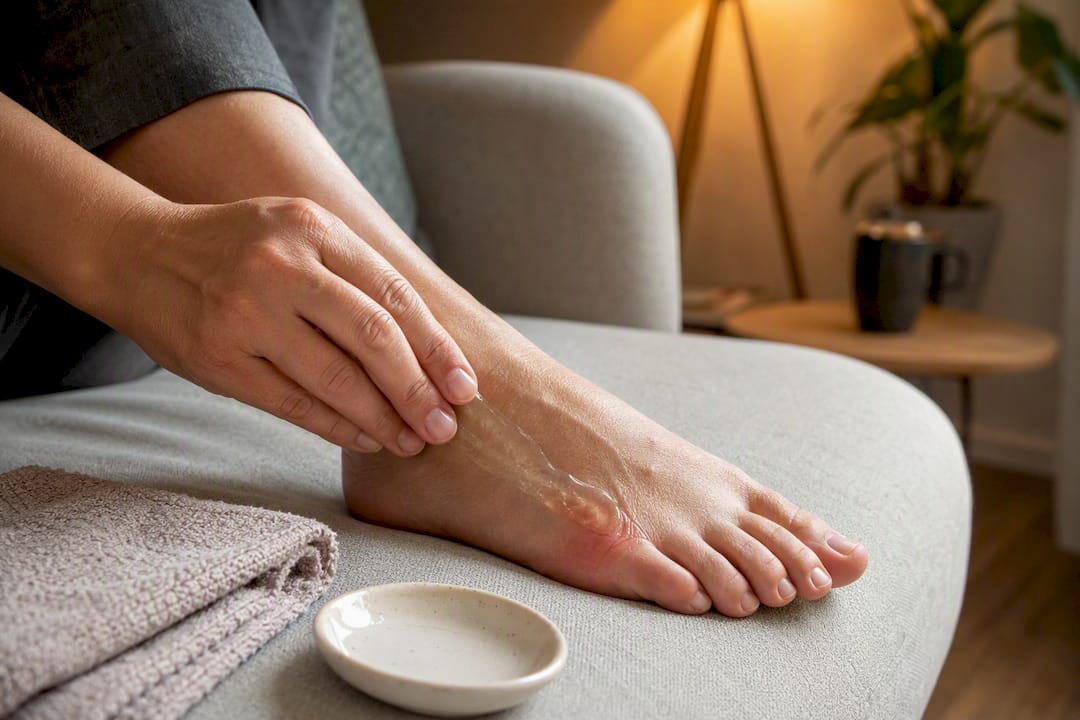
Capsaicin-based creams work differently, dulling pain signals through a burning-then-numbing sensation, and some people find them effective for the deep ache of a bunion flare, though they take consistent daily use to build an effect. Menthol or arnica-based gels, such as a muscle and joint gel formulated for topical relief, offer a cooling sensation that many people find soothing after a long day in tight shoes, functioning much like a portable version of cold therapy.
Whichever topical you choose, apply it to clean, dry skin and check the packaging for how often you can reapply, since overuse of some ingredients can irritate skin over time. None of these creams shrink the bony prominence itself. They calm the surface symptoms while the real fix, more room in the shoe, does the structural work.
Is a shoe-first approach really the best way to manage bunions?
Most advice on bunion pain treats footwear as one tip among many, buried somewhere below stretches and painkillers. That gets the priority backwards. If the shoe keeps compressing the joint, no amount of icing or NSAIDs will do more than mask the problem for a few hours at a time.
What’s underrated is how much a genuinely wide, low-heeled shoe with a proper toe box does on its own, often more than every other measure combined. What’s overrated is the idea that stretching a narrow shoe or forcing in a pad will fix a fundamentally wrong shape. Padding and exercises matter, but they’re supporting acts. The shoe is the main event.
If you take one thing from this guide, make it this: sort your footwear before you sort anything else. Everything from pads to orthotics to night splints works better once the shoe itself has stopped being the problem.
— Panagiotis
Ready to try shoes built with bunion comfort in mind?
Wide fits and low heels help, but not every “wide fit” shoe actually gives your bunion the room this guide describes. Ydauk builds its footwear around the same toe-box depth and low-heel principles covered above, using shoe technology designed specifically to reduce pressure at the joint rather than just adding a size to the label.
If you want to see how that technology works before you buy, the technology behind YDA shoes page breaks down the cushioning and structural features that support foot health day to day. For a broader look at styles built around bunion comfort, browse footwear designed for daily bunion protection and see which fit matches what your foot needs right now. Start there, check the sizing notes carefully, and pick the pair that gives your big toe the room it’s been missing.
Sources
- What to do about bunions - Harvard Health Publishing
- Bunions - Diagnosis & treatment - Mayo Clinic
- What to do about bunions - Harvard Health Publishing
- Bunions - NHS