
Sell old shoes online: quick steps for UK sellers
You can sell old shoes online in the UK today by picking the right marketplace for your goal, preparing a clean and honest listing, and posting with tracked delivery. For a fast sale with no fees, try Vinted. For the widest buyer reach, eBay. For authenticated high-value trainers, StockX or Vestiaire Collective.
Three steps to get started in under 30 minutes:
- Clean and photograph your shoes against a plain background, capturing soles, interior, labels, and any flaws.
- Research sold listings on your chosen platform to set a realistic price, then add a 15–20% negotiation buffer.
- Publish your listing with a full condition description and tracked postage included in the price.
Pro Tip: List on two platforms at once — Vinted and eBay work well together — and remove both listings the moment one sells to avoid a double-sale.
Key takeaways
The fastest way to sell old shoes online in the UK is to prepare an honest, well-photographed listing, price from sold data, and match your platform to your goal.
| Point | Details |
|---|---|
| Prepare before listing | Clean, deodorise, and photograph with at least six angles including flaws and size label. |
| Price from sold data | Research median sold prices for your exact brand and condition, then add a 15–20% negotiation buffer. |
| Match platform to goal | Vinted for fast zero-fee sales, eBay for broad reach, StockX or Vestiaire Collective for authenticated high-value items. |
| Use tracked postage | Send all items above £10 with tracking; use Royal Mail Special Delivery for shoes worth over £100. |
| Ydauk for presentation guidance | Ydauk’s cleaning and technology guides help sellers of performance footwear describe and present their shoes more effectively. |
Table of Contents
- Your pre-listing checklist: everything to do before you publish
- How to clean, repair and photograph used shoes for sale
- How to price your shoes: research, fees and a simple formula
- Which platform should you use to sell used shoes in the UK?
- Shipping, packaging and returns for UK sellers
- Avoiding scams and staying safe when selling shoes online
- Selling high-value trainers: why authentication matters
- Instant-sale and alternative routes: when online is not the right answer
- Do you need to declare your earnings? UK tax basics for casual sellers
- A footwear writer’s honest view on selling shoes online
- What Ydauk offers sellers of high-performance footwear
- Sources
Your pre-listing checklist: everything to do before you publish
Getting this right before you hit publish saves you buyer queries, returns, and the awkward “actually it’s worse than the photos” message.
Cleaning and deodorising
- Wipe down the uppers, soles, and insoles with an appropriate cleaner for the material (see the next section for material-specific detail).
- Stuff shoes with newspaper or a shoe tree overnight to remove odours and restore shape.
- Replace laces if they are discoloured or frayed — a £1.50 pair of white laces can add £5 to a perceived value.
Photography
- Shoot at least six images: top, both sides, sole, interior, and the size label.
- Add a close-up of any scuffs, sole wear, or stitching issues — buyers who spot undisclosed flaws leave negative feedback.
- Natural daylight near a window beats any ring light for showing true colour.
Minor repairs
- New insoles are worth fitting if the originals are compressed or stained; they cost under £3 and improve photos significantly.
- Do not attempt DIY sole re-gluing unless you are confident — a botched repair looks worse than honest disclosure.
- Sole separation, deep scuffs, and heel counter collapse are better disclosed plainly than hidden.
Packaging and postage
- Decide before pricing whether you will offer free postage (built into the price) or charge separately.
- Weigh the boxed shoes before listing so your postage cost is accurate — a pair in a box often exceeds 1 kg.
- Keep the original box if you have it; it adds perceived value and protects during transit.
Offers are common on fashion marketplaces, and leaving negotiation room means you can accept a lower offer and still hit your target.*
How to clean, repair and photograph used shoes for sale
Preparation is the single biggest lever on sale speed and final price. A buyer scrolling through 40 listings of the same trainer will click the one that looks cared for. Clean shoes also rank higher in platform search results because they attract more saves and enquiries.
Cleaning by material
Leather and patent leather: Use a damp cloth for surface dirt, then a dedicated leather cleaner such as Leather Honey or a mild saddle soap. Condition afterwards with a leather balm to restore suppleness. Avoid soaking — water stains patent leather permanently. A quick buff with a soft cloth before photographing makes a visible difference.
Suede and nubuck: A suede brush removes surface dirt; a suede eraser lifts scuffs. Never use water directly — it leaves tide marks. For stubborn stains, a specialist suede cleaner applied sparingly works better than scrubbing. Brush the nap back in one direction before shooting.
Canvas and fabric: Most canvas trainers tolerate a gentle hand wash with mild detergent and a soft brush. Remove laces and wash them separately. Air dry away from direct heat, which can warp the sole bond. Stuffing with paper while drying holds the shape.
Knit and mesh uppers: Spot-clean only with a damp cloth and a tiny amount of washing-up liquid. Machine washing risks distorting the knit structure and separating the upper from the sole.
Photography that sells
Good photos are your listing’s first impression, and on mobile-first platforms like Depop they are essentially the whole pitch.
Lighting and background: Shoot in natural daylight on a plain white or light grey surface. Avoid busy backgrounds — they distract from the shoe and look amateur. A sheet of white card from a stationery shop costs almost nothing and transforms a kitchen-table shot.
Angles to cover: Top-down, left side, right side, heel, sole, and interior. Include the size label in one shot — buyers frequently message to confirm sizing when it is not visible. If the shoe has a distinctive logo or technology feature, photograph that too.
Showing flaws honestly: Photograph every scuff, crease, and area of sole wear in good light. This is not optional. Platforms including eBay and Vinted have buyer protection schemes that favour the buyer when condition is disputed, and undisclosed flaws are the fastest route to a return or a negative review.
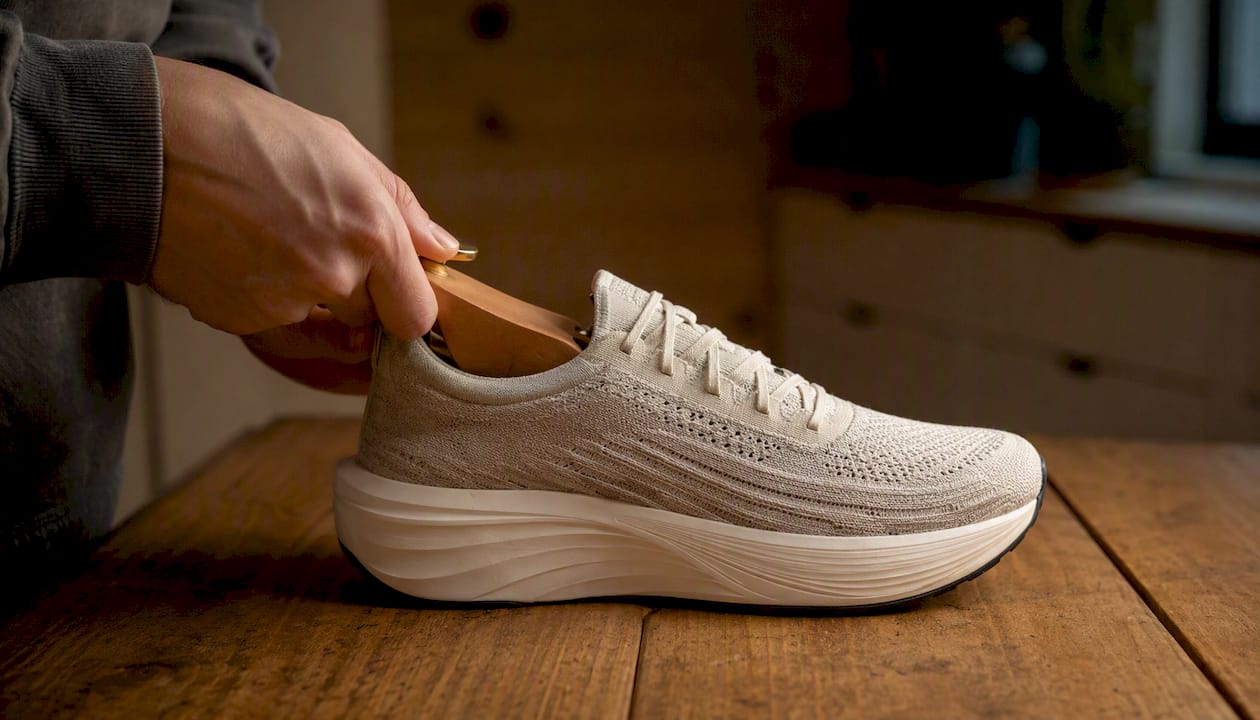
Presentation: Stuff shoes with tissue or use shoe trees to show their natural shape. A collapsed, flat shoe photographs poorly and signals neglect. Ydauk’s shoe care guides cover material-specific presentation in detail, which is particularly useful for technical or performance footwear where construction details matter to buyers.
How to price your shoes: research, fees and a simple formula
Start with sold listings, not asking prices. What sellers want and what buyers pay are often very different numbers.
Step-by-step research method
Search your platform for the exact brand, model, size, and condition. Filter by “sold” listings — on eBay this is under Advanced Search; on Vinted you can sort by recently sold. Take the median of the last five to ten sales rather than the highest, which is usually an outlier. Research sold listings for exact brand and condition matches, then use the median of recent sales to set your price.
The pricing formula
Minimum acceptable price = desired net + platform fees + postage cost
Then add your negotiation buffer on top.
eBay UK fee example (2026)
eBay’s February 2026 update changed the per-order fee threshold and added an explicit 0.35% regulatory operating fee. Fees apply to the total buyer payment, meaning item price plus postage combined.
For most clothing, shoes, and accessories on eBay UK, the final value fee sits around 12.8%, plus the per-order charge. An eBay Store subscription only becomes cost-effective at consistent higher sales volumes, so casual sellers are better off without one.
That fee gap is why Vinted is often the most profitable route for casual UK sellers of shoes and clothing.
Pro Tip: Price to psychological thresholds (£14.99, £24.99, £49.99) rather than round numbers — they convert better on fashion platforms. If you are including free postage, build the full postage cost into the item price before applying the threshold.
Which platform should you use to sell used shoes in the UK?
Choose by goal first, then by audience. A pair of worn everyday trainers and a deadstock Nike Air Max need completely different platforms.
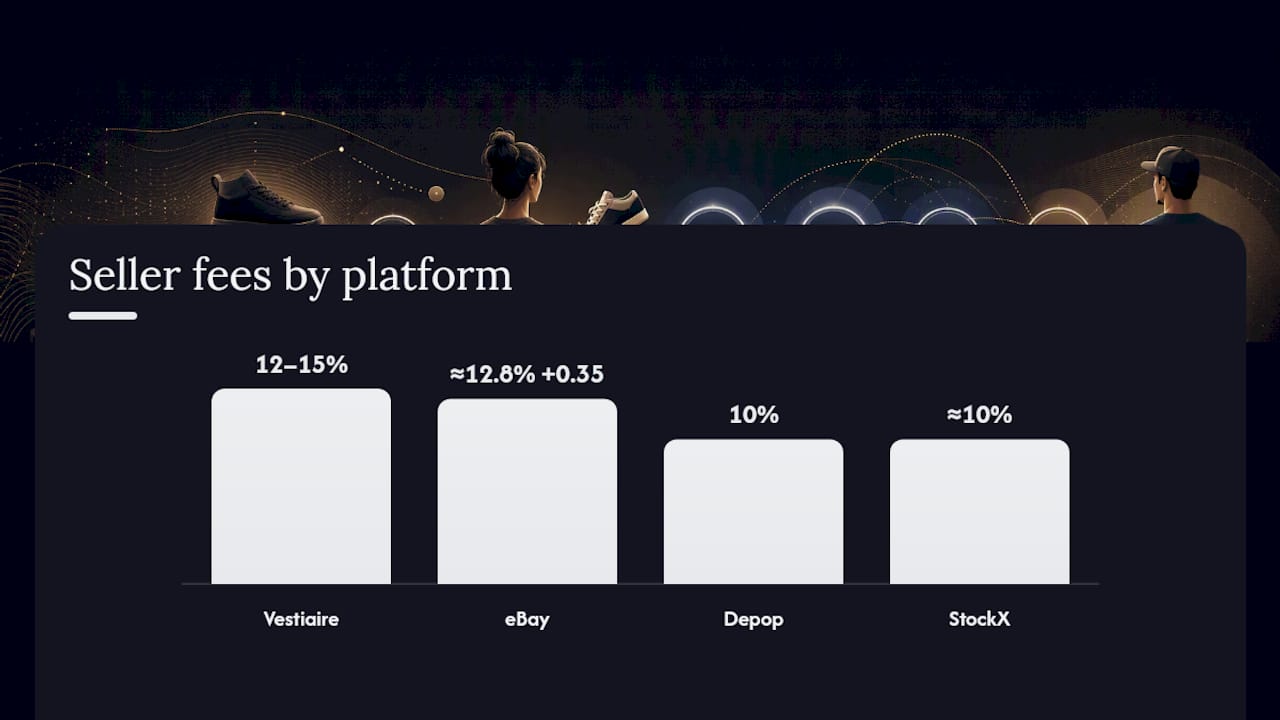
| Platform | Best for | Fees (seller) | Authentication | Audience | Payout speed |
|---|---|---|---|---|---|
| Vinted | Fast fashion sales, everyday branded shoes | Zero seller fees (buyer pays 3–8%) | None | Fashion buyers, bargain hunters | Within days of delivery |
| eBay | Broad reach, auction format, mixed condition | ~12.8% + — per order + 0.35% regulatory fee | None built-in | General buyers, collectors | After delivery confirmation |
| Depop | Streetwear, vintage, aesthetic pieces | 10% Depop fee + payment processing | None | Under-35s, trend buyers | After sale completes |
| Facebook Marketplace | Local collection, quick cash sales | None | None | Local buyers | Cash on collection |
| Gumtree | Local classified, cash or collection | None (basic listings) | None | Local buyers | Cash on collection |
| StockX | High-value trainers, collectible sneakers | Approximately 10% seller fee plus shipping | Yes, mandatory | Sneakerheads, resellers | After authentication |
| Vestiaire Collective | Designer and luxury shoes | ~12–15% commission | Yes, optional/mandatory for high value | Designer buyers, fashion collectors | After authentication |
Vinted suits everyday branded shoes and low-to-mid-price pairs. Zero seller fees mean your margin stays intact, and the fashion-focused buyer base moves stock quickly. Listings with five or more photos sell significantly faster, and Vinted generates prepaid shipping labels through Evri and Royal Mail, removing the postage admin.
eBay gives you the widest buyer reach in the UK and works particularly well for auction-format listings on collectible or unusual pairs. The fee structure is more complex, but the audience depth means niche sizes and older models find buyers that fashion-only platforms miss.
Depop is mobile-first and aesthetic-driven. If your shoes have a story — vintage, rare colourway, cult brand — Depop’s under-35 audience will pay for it. Listings that look good in a square crop perform best.
Facebook Marketplace and Gumtree are the right call when you want cash in hand today and no postage hassle. Both are free to list, and local buyers can collect the same day. The trade-off is a smaller pool of buyers and no platform payment protection.
StockX operates an authentication-first model for trainers and streetwear. Every pair is verified before the buyer receives it, which supports higher final prices on sought-after models. The workflow is straightforward: list, sell, ship to StockX for verification, then payment releases.
Vestiaire Collective serves the designer and luxury end. Authentication is available (and mandatory above certain price points), and the curated buyer base expects it. Commission runs higher than general marketplaces, but the audience will pay prices that eBay buyers typically will not.
Cross-listing tip: Listing the same pair on Vinted and eBay simultaneously is common and allowed. Remove both listings the moment one sells — a double-sale is a fast route to negative feedback and a platform warning.
Shipping, packaging and returns for UK sellers
Use tracked postage for anything above £10 in value. Below that, the cost of tracking can exceed the risk, but for shoes it rarely makes sense to go untracked given their size and weight.
Packaging checklist:
- Wrap shoes individually in tissue or bubble wrap to prevent scuffing in transit.
- Place in the original box if available, then inside a poly mailer or outer box.
- Seal all edges with parcel tape — a split seam in transit is your problem, not the carrier’s.
- Avoid over-boxing: a bulky parcel pushes you into a higher postage band unnecessarily.
- For items over £50, add postal insurance or use a service that includes it by default.
Carrier options:
Royal Mail’s Tracked 48 service covers most standard shoe parcels up to 2 kg and offers a reasonable balance of cost and reliability. For heavier parcels or next-day requirements, Evri and Hermes are cheaper but have a patchier delivery reputation. Vinted generates its own prepaid labels through Evri and Royal Mail automatically, which removes the decision entirely for Vinted sellers.
For high-value items (above £100), use a service with signature-on-delivery and declared value cover. Royal Mail Special Delivery Guaranteed covers up to £750 by default and is the safest option for expensive trainers.
Returns policy for used shoes:
Write your returns policy plainly in the listing description. “Sold as described — no returns unless item significantly differs from listing” is a reasonable position for second-hand goods. Photograph every flaw before posting and keep those images. If a buyer raises a dispute, platform resolution teams look at listing photos first.
Avoiding scams and staying safe when selling shoes online
Use platform-managed payments wherever possible and never move a transaction off-platform at a buyer’s request.
The most common scams targeting UK shoe sellers follow a predictable pattern. An “overpayment” scam involves a buyer sending a cheque or bank transfer for more than the asking price and asking you to refund the difference — the original payment bounces days later. A “shipping agent” scam asks you to use a specific courier the buyer will arrange, which never materialises. Requests to pay via PayPal Friends and Family, bank transfer, or cryptocurrency remove all buyer and seller protection and should be declined immediately.
On eBay, all payments go through managed payments — funds are held and released after delivery confirmation, which protects both sides. Vinted’s buyer protection scheme holds payment until the buyer confirms receipt. Depop uses Depop Payments. Never accept a direct bank transfer from a stranger for a posted item.
For local sales (Facebook Marketplace, Gumtree):
- Meet in a public place during daylight hours — a supermarket car park or a busy high street.
- Accept cash and count it before handing over the shoes.
- Bring a friend if the item is high value.
- Check the buyer’s profile age and review history before agreeing to meet.
For posted items worth more than £50, always use tracked postage and keep the proof of postage receipt until the transaction is fully closed.
Selling high-value trainers: why authentication matters
For any trainer or designer shoe above roughly £100, buyers expect proof of authenticity. Without it, you are competing on price alone against sellers who do provide it — and losing.
Authentication materially raises buyer trust for high-value trainers and reduces dispute rates, making verification fees justifiable on expensive items. A buyer who knows a pair has passed independent verification will pay more and is far less likely to raise a return dispute afterwards.
When to use an authenticated platform:
StockX is the clearest choice for sought-after trainers — Nike, Jordan, Adidas Yeezy, New Balance limited editions. Every sale goes through their authentication centre before the buyer receives the shoes. Vestiaire Collective applies the same logic to designer footwear: Gucci, Balenciaga, Bottega Veneta. The commission is higher than a general marketplace, but the buyer pool accepts it because the verification is built in.
When detailed photos and provenance work instead:
For shoes in the £50–£100 range, a full photo set with the original box, receipt, and close-ups of tags, stitching, and serial numbers can satisfy most buyers without a formal verification service. Include the purchase receipt in a photo if you have it.
Practical steps to gather proof:
- Photograph the original box with barcode, the size label inside the shoe, and any unique identifiers (serial numbers, date codes).
- Include a photo of the receipt or order confirmation if the shoes were bought new.
- Show stitching, logo placement, and sole markings in close-up — these are the details counterfeit checkers look for.
- Keep all original packaging until the sale is fully resolved.
Instant-sale and alternative routes: when online is not the right answer
Selling online takes time. If you need cash today or the shoes are not worth the effort of listing, these routes trade margin for speed.
Drop-off is straightforward, but you wait for a sale and receive less. Condition standards are strict — consignment buyers usually require clean, undamaged shoes with original laces.
Buy-for-cash shops: CEX and similar second-hand electronics and media shops occasionally buy footwear, but specialist trainer resellers (local or online instant-buy services) offer more.
Charity shops: Oxfam, Scope, and similar charities accept good-condition shoes. You receive nothing financially, but Gift Aid means the charity receives more than the sale price if you are a UK taxpayer.
Car-boot sales: Low effort, cash in hand, and you set the price on the day. Footwear sells well at car boots, particularly children’s shoes and branded trainers. The downside is early starts and unpredictable weather.
Instant-buy apps: Some platforms offer a direct-buy or “sell now” feature where the platform or a partner buyer purchases the item at a fixed price. Margins are lower than a marketplace sale, but the transaction is immediate and requires no listing effort.
Do you need to declare your earnings? UK tax basics for casual sellers
Selling your own personal possessions casually is generally tax-free in the UK. HMRC does not treat the occasional sale of used shoes as trading income, provided you are selling items you bought for personal use and not buying stock specifically to resell.
The HMRC Trading Allowance gives individuals up to £1,000 per tax year in trading or miscellaneous income before any tax is due. If your total selling income from all platforms stays below £1,000 in a tax year, you have no reporting obligation. Above that threshold, you may need to register for Self Assessment and declare the income.
The distinction HMRC draws is between selling personal items (not taxable) and trading (taxable). Buying shoes at a discount specifically to resell them for profit is trading, regardless of the platform or volume.
Recordkeeping even below the threshold:
Keep a simple spreadsheet of what you sold, the platform, the sale price, and the date. If HMRC ever queries your activity, a clear record of personal-use items is your best defence.
Platform reporting rules:
From January 2024, UK digital platforms are required to report seller data to HMRC when sellers exceed 30 transactions or €2,000 (approximately £1,700) in gross sales in a calendar year. This does not create a new tax liability — it just means HMRC receives the data automatically. If you are below the Trading Allowance, you owe nothing; if you are above it, you should already be declaring.
Pro Tip: If you are unsure whether your selling activity counts as trading, HMRC’s Check Employment Status for Tax (CEST) tool and the GOV.UK self-employment guidance are the right starting points — not forum advice.
A footwear writer’s honest view on selling shoes online
The advice most guides skip is this: the platform matters far less than the listing quality. Sellers who photograph carefully, describe honestly, and price from sold data consistently outperform sellers who pick the “right” platform but list badly.
The authentication question is where I see the most money left on the table. Sellers of genuinely rare or high-value trainers often list on eBay out of habit, skip the authentication step, and price below what StockX buyers would pay — because they have not done the comparison. A pair that sells for £80 on eBay with no verification might clear £110 on StockX after fees, simply because the buyer trusts the process.
Presentation is the other underrated variable. Shoes photographed on a plain background with a shoe tree inside, good light, and six angles sell faster and attract fewer “what condition is the sole?” messages. That is not a styling preference — it is a conversion rate. Ydauk’s footwear buying checklist applies the same logic from the buyer’s side, and reading it from a seller’s perspective is genuinely useful.
What Ydauk offers sellers of high-performance footwear
There are other routes to selling shoes online — eBay, Vinted, Depop, StockX, and the rest covered above. But if you are selling technical or health-focused footwear and want to present it at its best, Ydauk offers something those platforms do not: detailed, material-specific guidance on cleaning, presenting, and describing performance footwear so buyers understand exactly what they are getting.
Ydauk’s YDA shoe technology pages explain the construction and health benefits behind performance footwear in plain language — the kind of detail that turns a listing from “used shoes, good condition” into a description a buyer trusts and pays more for. If you are selling shoes with genuine technical features, that context belongs in your listing.
Visit Ydauk to explore the technology guides and cleaning resources before you publish your next listing.
Sources
These are the primary references used in this article. Check each platform’s own seller help centre before listing, as fees and policies update regularly.
- How to Make Money on Vinted UK in 2026 | The Second Income UK
- How to Price Shoes on Vinted | Pricing Guide | ListingGenie
- How to Sell on Vinted UK: Complete Guide | FlipperHelper
Check each platform’s seller help centre directly for current fee schedules, postage label options, and returns policies before publishing your listing.