
5 Quick Ways to Restore Leg and Foot Circulation, Practitioner Approved
The fastest way to help sluggish circulation in your legs and feet is to move: hourly ankle pumps and short walks switch on your calf muscle pump, which does most of the work pushing blood back to your heart. Elevate your legs above hip height when resting, wear correctly fitted compression stockings if a clinician has recommended it, and stay hydrated. Lifestyle habits fix most cases, but sudden pain, swelling, or a wound that won’t heal needs urgent medical review, not another home remedy.
TL;DR:
- Moving regularly by doing ankle pumps and short walks activates the calf muscle pump, which is essential for improving venous blood return.
- Elevating legs above hip level and staying hydrated help support circulation, but should be tailored if you have heart failure or other conditions.
- Consistent exercise like brisk walking and calf raises strengthens the calf muscles, enhancing long-term blood flow and vessel health.
- Proper footwear with supportive soles and a roomy toe box prevents restriction of foot and ankle movement, supporting circulation during daily activities.
- Getting medical evaluation for sudden severe symptoms, such as swelling or leg redness, is critical, as these may indicate serious conditions like DVT or advanced arterial disease.
Table of Contents
- What does poor circulation in your legs and feet feel like?
- What quick actions get blood moving today?
- Which exercises improve leg and foot circulation long term?
- What foods and drinks help with poor circulation?
- Do compression stockings and footwear actually help?
- When should you see a clinician about circulation problems?
- A practitioner’s view on footwear and everyday circulation habits
- Footwear that works with your circulation routine, not against it
- Sources
- FAQ
What does poor circulation in your legs and feet feel like?
Cold feet that never quite warm up, numbness, or that pins-and-needles tingle after sitting too long are the classic early signs. Cramping in the calves, ankle swelling by the end of the day, and cuts or blisters that take weeks to heal instead of days all point the same way.
The causes behind these symptoms vary considerably, and the right fix depends on which one applies to you:
- Peripheral arterial disease (PAD), where narrowed arteries restrict blood flow to the legs, often causing pain when walking that eases with rest
- Deep vein thrombosis (DVT), a clot usually in the calf or thigh that can cause sudden one-sided swelling, warmth, and pain
- Chronic venous insufficiency (CVI), where leaky leg vein valves let blood pool instead of returning upward
- Diabetes, which damages both nerves and small blood vessels in the feet over time
- Smoking and obesity, both of which accelerate artery narrowing and add strain to the venous system
Some symptoms are not something to sit on. Sudden severe leg pain or swelling, a leg that turns hot, red, or noticeably larger than the other, or a foot ulcer that shows no sign of healing after a couple of weeks all warrant a same-day GP call or urgent care visit. These can signal DVT, a serious infection, or advanced PAD, and delaying treatment raises the risk of complications.
What quick actions get blood moving today?
You don’t need special equipment to interrupt poor circulation right now. The habits below take minutes and work because they reactivate the calf muscle, which functions as a second pump pushing venous blood back up toward the heart.
- Do ankle pumps every hour. Flex your foot up towards your shin, then point it down, for about 15 to 20 reps. You can do this seated at a desk, on a plane, or lying in bed if mobility is limited.
- Take a short walk every one to two hours. Even five minutes around the office or house resets circulation after prolonged sitting; simple daily habits like these are enough to activate the leg muscle pump without any special routine.
- Elevate your legs for several minutes at a time. Lie down and prop your feet on pillows so they sit above hip height. Feet above heart level is the gold standard but rarely practical at a desk, so above the hips is a realistic and effective compromise.
- Sip water steadily through the day. Better hydration supports blood volume and viscosity, though if you live with heart failure, stick to whatever fluid limit your BHF or cardiologist has set rather than simply drinking more.
- Break up long sitting stretches deliberately. Set a phone reminder every 45 to 60 minutes if your job or a long journey keeps you seated. It sounds trivial, but consistency is what turns this into an actual habit rather than something you mean to do.
The physiology here is straightforward: muscle contraction in the calf squeezes the deep veins and pushes blood upward against gravity, while movement generally supports the release of nitric oxide that helps blood vessels relax and widen. Neither of those things happens while you’re motionless in a chair.
Pro Tip: Pair ankle pumps with something you already do on autopilot, like waiting for the kettle to boil or sitting through a video call. Habit stacking like this means you don’t need to remember a separate routine.
Which exercises improve leg and foot circulation long term?
Quick fixes handle the moment, but building circulation resilience over weeks and months means adding structured movement. The exercises below target the same calf pump mechanism, just with more repetition and load over time.
- Walk briskly for 20 to 30 minutes most days. A pace that raises your breathing rate slightly is enough; you don’t need to run. Regular walking is one of the most consistently recommended ways to improve blood circulation naturally, largely because it combines calf pump activation with broader cardiovascular benefit.
- Calf raises, 2 to 3 sets of 15, most days. Stand holding a chair or counter, rise onto your toes, lower slowly. This is one of the most direct ways to strengthen the exact muscle doing the pumping work.
- Ankle pumps and foot circles, 10 to 15 reps each side, several times daily. Useful on top of the walking and calf raise work, especially if you’re recovering from injury or have limited mobility.
- Low-impact cardio two to three times a week. Swimming and cycling both move large amounts of blood through the legs without jarring joints, making them a solid substitute or addition when walking is uncomfortable.
- A seated five-minute routine for the office or bedside: ankle pumps for one minute, foot circles for one minute each direction, then marching in place (seated or standing) for the remaining time.
It’s worth being honest about the evidence here rather than overselling it. A Cochrane review looking at exercise for chronic venous insufficiency found the existing trials were small and the certainty of benefit low. That doesn’t mean exercise is pointless. It means the research hasn’t caught up to what clinicians already recommend as safe, low-risk self-care, and there’s no reason to wait for bigger trials before you start walking more.
What foods and drinks help with poor circulation?
Diet won’t reverse arterial narrowing, but certain foods genuinely support the blood vessel dilation and blood volume that circulation depends on, and the evidence for a few specific ones is worth knowing.
- Nitrate-rich vegetables, particularly beetroot and leafy greens like spinach and rocket, convert to nitric oxide in the body, which helps blood vessels widen.
- Oily fish (salmon, mackerel, sardines) supply omega-3 fatty acids linked to healthier blood flow and lower inflammation.
- Berries and pomegranate, rich in polyphenols, appear in several short-term studies to support vascular function.
- Water, consistently through the day, rather than large amounts in one sitting, keeps blood at a healthier viscosity.
Some short-term studies have found that dietary nitrates and fish oil improve blood flow measures such as flow-mediated dilation, though most of this research involves small samples over a few weeks rather than long-term outcomes. Treat beetroot juice or fish oil capsules as a reasonable addition to a varied diet, not a substitute for it, and check with a clinician before starting any supplement if you take blood pressure or blood-thinning medication.
Do compression stockings and footwear actually help?
Compression stockings work by applying graduated pressure that’s tightest at the ankle and looser higher up the leg, which helps push pooled venous blood back upward rather than letting it collect around the ankle. The British Heart Foundation lists compression alongside activity, hydration, diet, and quitting smoking as one of the five practical measures worth trying.
That said, compression is not something to self-prescribe casually.
- Get properly sized. A stocking that’s too tight at the calf and too loose at the ankle can worsen pooling rather than fix it.
- Check for contraindications first. Compression can be harmful in untreated PAD or in some cases of heart failure, so ask a GP or fitter before buying if you have either.
- Watch your skin. Redness, indentation marks that don’t fade, or numbness after wearing them means the fit is wrong.
Footwear matters more than most people assume. Shoes with a supportive sole and a roomy toe box let your foot move through its natural range as you walk, which is exactly the movement the calf pump depends on. Cramped or rigid shoes restrict that motion and can leave feet tired and cold by the end of the day; the features that make a shoe genuinely supportive are worth understanding before your next purchase. Comfortable socks matter too. A breathable pair like Cwear’s sports sneaker socks avoids the tight elastic bands some socks use, which can dig into the ankle and restrict flow exactly where you don’t want it.
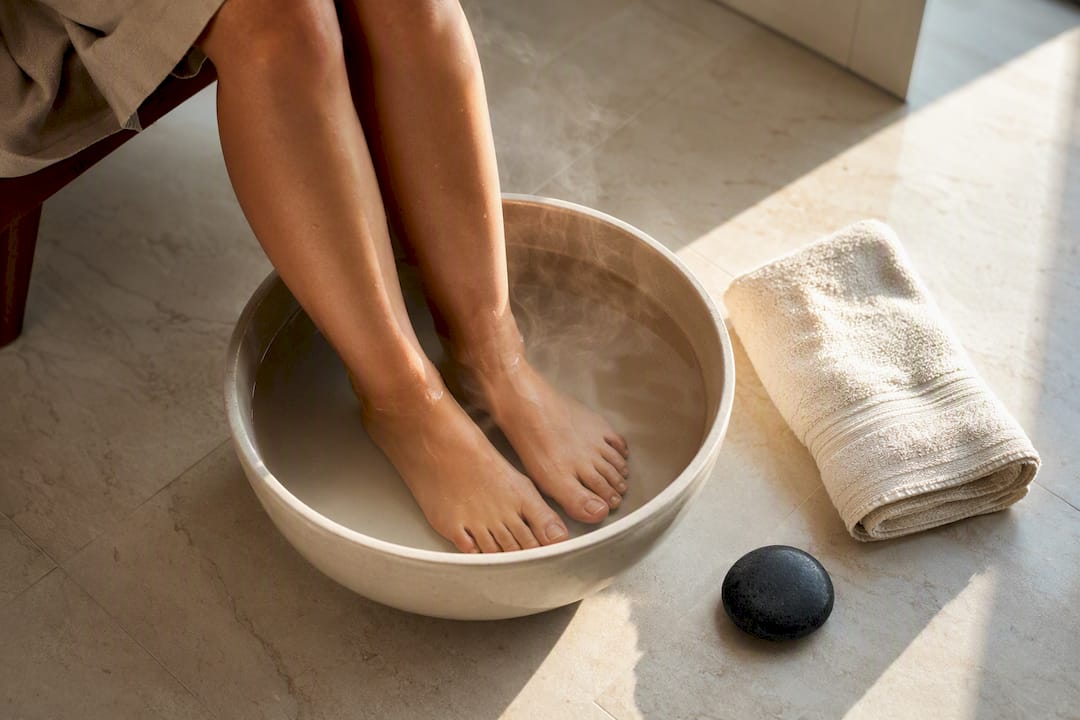
Pro Tip: A warm foot bath or contrast shower (alternating warm and cool water) can feel good and temporarily boost surface blood flow, but skip contrast bathing if you have diagnosed PAD or reduced sensation from diabetes, since you may not feel skin damage from temperature extremes.
When should you see a clinician about circulation problems?
Book an appointment rather than waiting it out if you notice sudden, severe leg pain or swelling, a leg that’s hot, red, or visibly larger than the other, any sign of infection around a wound, or an ulcer that hasn’t started healing within a couple of weeks. These aren’t symptoms lifestyle changes alone will fix.
A GP investigating leg circulation typically starts with:
- Ankle-brachial index (ABI), a simple comparison of blood pressure at the ankle and arm to screen for PAD
- Duplex ultrasound, which images blood flow directly and can detect clots or venous reflux
- Blood tests, checking cholesterol, blood sugar, and clotting factors
Treatment depends entirely on what’s found. Mild cases often start with the same lifestyle measures covered above, alongside medication such as statins or antiplatelet drugs where arterial disease is confirmed. More advanced PAD, DVT, or symptomatic varicose veins may need a referral to a vascular specialist for procedures ranging from clot-dissolving treatment to minimally invasive vein closure. Controlling blood pressure and quitting smoking does more for long-term leg circulation than almost any single habit change, because both directly slow the artery narrowing behind most serious cases.
A practitioner’s view on footwear and everyday circulation habits
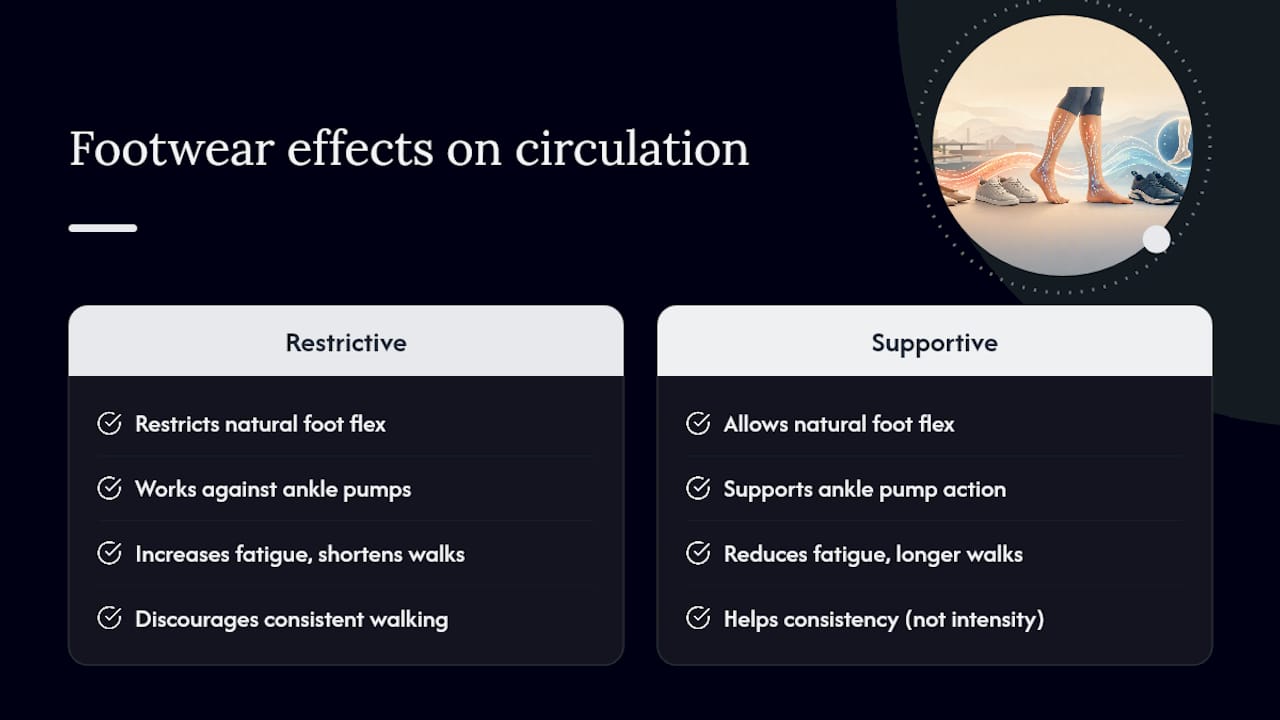
Most circulation advice focuses on what happens when you exercise and ignores the eight or more hours a day your feet spend inside whatever shoes you happened to grab that morning. That’s a gap worth closing. A shoe that restricts natural foot flex quietly works against every ankle pump and walk you’re doing elsewhere in the day.
Supportive footwear doesn’t cure vascular disease, and no shoe should be marketed as though it does. What it can do is reduce the fatigue that makes people cut their walks short, which matters more than it sounds because consistency, not intensity, is what drives circulation habits that stick. If you want the fuller daily routine behind this, our guide on improving circulation in your feet fast covers the movement side in more depth.
— Panagiotis
Footwear that works with your circulation routine, not against it
Footwear designed around foot health matters once you’ve started the movement habits above and need shoes that won’t undo them at the end of the day. A cramped toe box or a stiff sole fights the same calf pump action you’re trying to activate with every walk and ankle pump.
A helpful range focuses on a supportive sole, a roomy toe box, and cushioning designed to reduce fatigue over long periods on your feet, features particularly relevant if you’re on your feet all day or managing a foot condition like diabetes. None of this replaces medical treatment where it’s needed, but it removes one obstacle from your daily routine. Take a look at the Technology of YDA Shoes to see how the design choices connect to comfort and movement, then browse the current range to find a pair suited to your daily routine.
Sources
- Try These Five Practices To Improve Your Blood Circulation — Cleveland Clinic
- Have cold hands and feet? Here are 5 tips to improve circulation — British Heart Foundation
- Can physical exercise improve blood flow in people with chronic venous insufficiency? — Cochrane Review
- How to Improve Circulation with Simple Daily Habits — Banner Health
- How to Improve Circulation in Your Legs — WebMD
FAQ
What can I drink for bad circulation in my legs?
Water is the simplest and most reliable choice, since good hydration supports healthy blood volume and viscosity; beetroot juice has some short-term evidence for supporting blood vessel dilation, though it’s not a substitute for medical treatment.
How do you fix poor circulation in your legs and feet?
Move hourly with ankle pumps and short walks, elevate your legs above hip height when resting, stay hydrated, wear supportive footwear, and use correctly fitted compression stockings only if a clinician has recommended them.
What can I rub on my feet to increase circulation?
A gentle upward massage from toes towards the ankle, or a warm foot bath, can temporarily boost surface blood flow, but skip firm massage or heat if you have diagnosed PAD, reduced sensation, or a wound.
What is the best vitamin for poor leg circulation?
There’s no single vitamin proven to fix circulation, but nitrate-rich vegetables like beetroot and leafy greens, along with omega-3s from oily fish, have the most consistent short-term evidence for supporting blood flow.