
How to improve blood circulation in your foot: a practical daily plan
You can improve circulation in your feet today by moving regularly, working through a few targeted foot and calf exercises, keeping your feet warm, staying hydrated, and watching for red flags that need a doctor rather than a home fix. None of this requires equipment or a gym membership. It requires consistency, and knowing which symptoms are just “cold feet” and which ones mean something more serious.
The NHS, the British Heart Foundation, and the US Department of Veterans Affairs all converge on the same basics: activity, warmth, hydration, and vigilance for warning signs.
- Move every hour, even just standing and marching on the spot.
- Do ankle pumps and toe curls to reactivate the calf muscle pump.
- Keep feet warm with socks, especially overnight.
- Drink water consistently through the day to support hydration.
- Use compression hosiery only where it’s genuinely suited to your situation.
Pro Tip: Set a phone timer for every 50 minutes. When it goes off, do 20 ankle pumps and wiggle your toes for 30 seconds. It takes less time than making a cup of tea, and it keeps blood moving through the small vessels that long sitting shuts down.
Seek urgent medical review if you notice: persistent numbness that doesn’t resolve, a foot or toe turning blue, grey, or noticeably pale, a wound on the foot that isn’t healing after a couple of weeks, or sudden, severe pain. These aren’t “wait and see” symptoms.
Key Takeaways
Improving foot circulation comes down to daily movement, targeted calf and ankle exercises, adequate hydration, sensible footwear, and prompt medical review of red-flag symptoms.
| Point | Details |
|---|---|
| Move hourly | Break up sitting with ankle pumps, toe curls, or a short walk every hour. |
| Exercise consistently | Aim for 10–20 minutes of brisk walking most days, plus daily calf raises. |
| Watch for red flags | Persistent numbness, colour change, or non-healing sores need urgent medical review. |
| Hydrate and eat well | Drink several glasses of water daily and favour a Mediterranean-style diet. |
| Choose supportive footwear | Well-fitted shoes like those from Ydauk reduce pressure points that restrict blood flow. |
Table of Contents
- Signs and causes of poor blood circulation in feet
- What exercises actually boost blood flow in feet?
- Do compression socks and the right shoes really help?
- Foods and home remedies that support foot circulation
- When should you see a doctor about foot circulation?
- A simple daily routine for better foot circulation
- Foot care considerations for people with diabetes
- Precautions before trying self-help circulation techniques
- Footwear built with pressure and comfort in mind
- Sources
Signs and causes of poor blood circulation in feet
Cold feet that never seem to warm up, tingling or numbness, toes that look pale, blue, or mottled, sores that heal slowly, and cramping in the calf when you walk (a pattern doctors call claudication) are the classic signs something’s off with blood flow to your lower limbs.
The causes behind these symptoms vary considerably, and the right response depends on which one applies to you.
- Peripheral arterial disease (PAD): narrowed arteries restrict blood flow, often linked to smoking, high blood pressure, and high cholesterol.
- Diabetes: high blood sugar over time damages both blood vessels and the nerves that feed sensation to your feet.
- Venous insufficiency: weakened vein valves let blood pool in the lower legs instead of returning efficiently to the heart.
- Raynaud’s phenomenon: blood vessels in the extremities overreact to cold or stress, cutting blood flow temporarily.
- Smoking and certain medications: both can constrict blood vessels or thicken the blood.
Persistent coldness, numbness, or discolouration in the feet can point to peripheral arterial disease, and it’s worth having it checked rather than assuming it’s just poor circulation from sitting too much.
The CDC lists smoking, diabetes, and high blood pressure as the three biggest risk factors for PAD specifically. If any of these apply to you and your feet are consistently cold or painful when walking, that combination is worth mentioning to a GP rather than managing alone.
Get assessed promptly if you have: an open sore that won’t close, a foot that’s changed colour and stayed that way, severe unexplained pain, or a sudden loss of feeling. Circulation problems are frequently a symptom of something else, not a standalone issue.
What exercises actually boost blood flow in feet?
Movement works because your calf muscles act as a secondary pump, squeezing veins each time they contract and pushing blood back up towards your heart. Sit still for hours and that pump switches off, which is exactly why office workers and long-haul travellers report cold, achy feet by evening.
Start with these, ideally in short bursts throughout the day rather than one long session:
- Ankle pumps: point your toes, then flex them back towards your shin. Do 15–20 reps, several times a day.
- Ankle circles: rotate each foot slowly in both directions, 10 times per direction.
- Toe curls: scrunch your toes as if grabbing a towel, hold for two seconds, release. Repeat 10–15 times.
- Calf raises: rise onto your toes, hold briefly, lower slowly. Aim for 2–3 sets of 12–15.
- Seated marching: lift your knees alternately while seated, for 1–2 minutes.
- Brisk walking: 10–20 minutes most days makes a measurable difference over time.
Frequency matters more than intensity here. The NHS recommends adults aim for around 150 minutes of moderate activity per week, which breaks down to about twenty minutes a day, a manageable target for most people.
Research summarised in clinical guidance suggests that regular stretching over around 12 weeks can improve arterial function, so treat this as a habit you build rather than a quick fix you abandon after three days.
If mobility is limited, do these seated, or use a light resistance band looped around your foot for gentle assisted ankle work. If you have diabetes or any open wound on your foot, check with a podiatrist before starting new exercises, since friction or pressure in the wrong spot can slow healing.
Pro Tip: Pair calf raises with something you already do daily, brushing your teeth, waiting for the kettle. Habit-stacking like this means you won’t need to remember a separate “exercise time” at all.
Do compression socks and the right shoes really help?
Compression hosiery works by applying graduated pressure up the leg, helping veins push blood back towards the heart instead of letting it pool at the ankle. Footwear plays a quieter but equally real role: shoes that pinch across the toes or dig in at the instep create pressure points that restrict local blood flow, undoing whatever good your exercises are doing.
- Choose socks with a snug but not painful fit; if you’re managing varicose veins, prolonged standing at work, or recovering from a long flight, compression is generally sensible.
- For medical-grade compression (a specific mmHg class), get sized by a clinician rather than guessing off a shelf.
- Check shoes have enough width across the forefoot and no seams pressing on bony areas.
- Avoid anything tight at the ankle or arch that leaves marks after wearing.
Reliable clinical advice consistently lists compression stockings alongside exercise and diet as standard measures for people managing poor circulation. Shoes built with pressure distribution in mind, which is the whole premise behind YDA Technology, can reduce those localised pinch points that ordinary footwear often creates, particularly useful if you’re already managing diabetic foot changes or neuropathy.
Pro Tip: Try compression socks for a few hours first, not all day, and pair them with your ankle pump routine to see how your feet respond before committing to longer wear.
Do compression socks work for everyone? No. They’re not appropriate for people with certain types of severe PAD without clinical guidance, since compression can worsen arterial flow issues in some cases.
Can the wrong shoes cause circulation problems? Yes, tight or narrow shoes create pressure points that restrict blood flow locally, even if your overall circulation is otherwise fine.
Foods and home remedies that support foot circulation
Blood viscosity, how easily blood flows, is affected by hydration, so drinking enough matters more than most people assume. Guidance from the VA suggests roughly six to eight glasses daily, or adjusting towards half your body weight in ounces.
- Favour a Mediterranean-style pattern: oily fish for omega-3s, leafy greens, beetroot, garlic, and citrus.
- Follow the Eatwell Guide principles of more fruit, vegetables, and wholegrains, less processed food and salt.
- Try contrast foot soaks: warm water for three minutes, then cold for 30 seconds, repeated three or four times. The temperature swing acts as a pump, heat dilates vessels, cold constricts them, encouraging fresh blood through the feet.
- Skip contrast soaks entirely if you have diabetes, open wounds, or very poor circulation; reduced sensation means you can burn yourself without realising.
- Be cautious with vitamin C or E supplements. Evidence for circulation benefits is thin, and some interact with medications, so check with a clinician first.
Medical News Today lists massage, warmth, and staying active among sensible home strategies, but stresses that persistent symptoms still need medical input.
When should you see a doctor about foot circulation?
Non-healing ulcers, a foot that’s turned a different colour and stayed that way, pain at rest (not just on walking), a missing pulse in your foot, or symptoms that are rapidly getting worse all warrant prompt medical assessment rather than another week of home remedies.
A GP or vascular specialist will typically start with an ankle-brachial index (ABI) test, comparing blood pressure at your ankle and arm, sometimes followed by a Doppler ultrasound to visualise blood flow directly. Blood tests for diabetes and cholesterol often follow, since both are common underlying drivers.
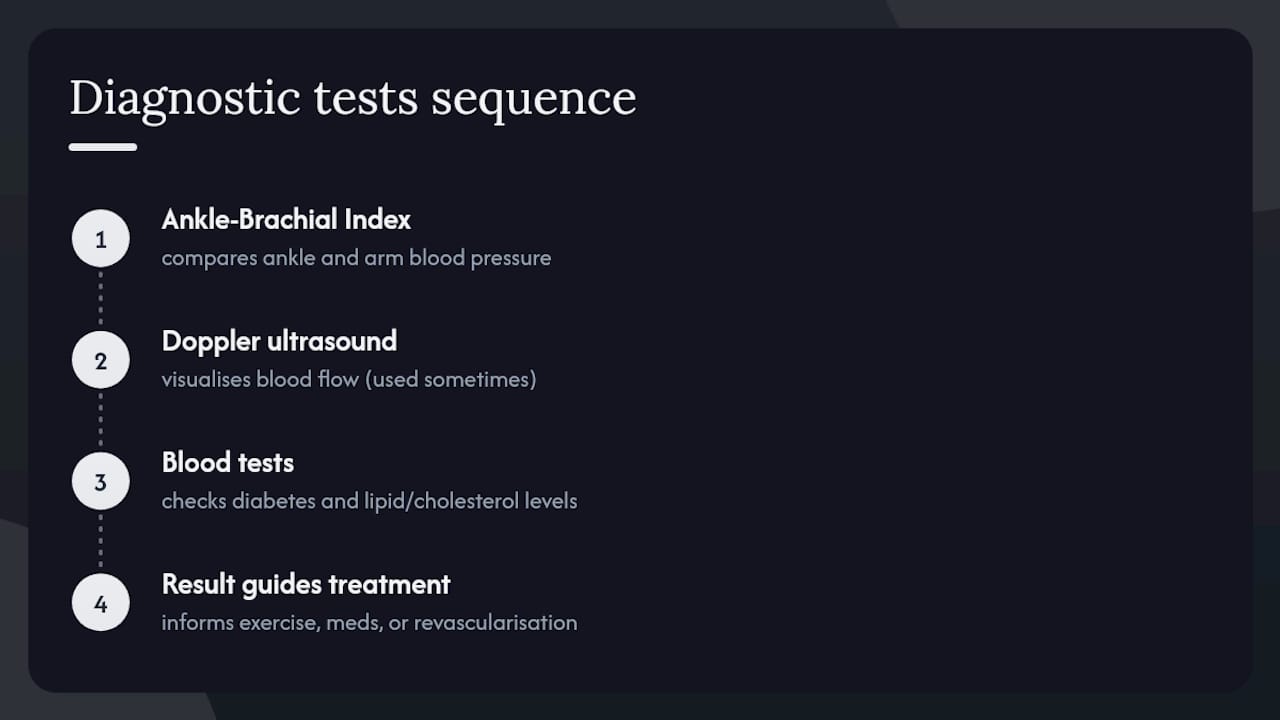
Depending on what’s found, treatment might involve a supervised exercise programme, medication to manage blood pressure or cholesterol, or, for more advanced PAD, angioplasty, stenting, or bypass surgery. Diabetic foot ulcers need dedicated wound care, often through a podiatry team.
Pro Tip: Before your appointment, jot down when symptoms started, what makes them worse, your current footwear, and any medications. It saves time and helps the clinician spot patterns you might miss.
How is poor circulation in the feet diagnosed? Usually through an ABI test and sometimes a Doppler ultrasound, alongside blood tests checking for diabetes and lipid levels.
Can poor foot circulation be reversed? Often it can be significantly improved with exercise, diet, and quitting smoking, though circulation problems tied to conditions like advanced PAD or long-standing diabetes usually need ongoing clinical management alongside lifestyle changes.
A simple daily routine for better foot circulation
Consistency beats intensity here. A workable daily checklist looks like this:
- Move every hour, even a two-minute walk or a set of ankle pumps.
- Walk briskly for 10–20 minutes.
- Do two or three short exercise sets (calf raises, toe curls, ankle circles).
- Hit your hydration target across the day.
- Wear warm socks at night if your feet get cold in bed.
- Check your feet each evening for any new redness, cuts, or sores.
- Within a week: many people notice feet feel less cold and slightly less stiff.
- Four to eight weeks: consistent walking and stretching often bring noticeable improvement in comfort and reduced cramping.
- Longer term: circulation problems tied to diabetes, PAD, or venous disease need ongoing clinical management alongside these habits, not instead of them.
Track simple markers: foot temperature, colour, whether walking triggers pain, and how quickly any cuts heal. If those markers stall or worsen, that’s your cue to escalate to a GP.
Foot care considerations for people with diabetes
Diabetes changes the calculus on foot care considerably, because nerve damage (neuropathy) often means you won’t feel the warning pain that would normally alert you to a blister, a rub, or a small cut. Combined with reduced blood flow, minor injuries can turn into serious wounds surprisingly fast.
Check your feet every single day, not just when something feels wrong, since reduced sensation means problems can develop silently. Look between toes, under the arch, and around the heel for redness, blisters, cracked skin, or anything that looks different from yesterday.
Never soak diabetic feet in very hot water, and skip contrast soaks altogether unless a podiatrist has specifically cleared them for you. Reduced sensation means you can’t reliably judge water temperature, and burns in this population heal slowly and can become serious.
Trim toenails straight across rather than curved, to avoid ingrown nails that can become infected. Moisturise the skin but avoid the spaces between toes, where excess moisture encourages fungal infection.
Footwear needs particular attention. Shoes should have a wide, deep toe box, no internal seams pressing on the foot, and enough room to accommodate any swelling that develops through the day. Podiatry guidance consistently points to properly fitted footwear and regular professional foot checks as core parts of diabetic foot management, alongside blood sugar control itself. If you’ve noticed changes in sensation or foot shape, a podiatrist assessment is worth scheduling rather than guessing at shoe fit yourself.
Precautions before trying self-help circulation techniques
Not every technique in this guide suits every foot, and getting this wrong can genuinely cause harm rather than help.
Skip contrast foot soaks if you have diabetes, any open wound, severe PAD, or significantly reduced sensation. The temperature swings that help a healthy foot can burn or damage tissue you can’t properly feel.
Be cautious with vigorous massage over varicose veins or any area with a suspected blood clot; pressure there can dislodge material that causes serious complications elsewhere in the body. If a calf is suddenly swollen, red, and painful (possible signs of deep vein thrombosis), skip exercise and massage entirely and get seen urgently instead.
Compression socks aren’t universally safe. Certain forms of severe arterial disease can be worsened by compression, so anyone with diagnosed PAD should get clinical guidance before wearing medical-grade hosiery.
Ease into new exercise routines, particularly if you’ve been sedentary for a while or have joint issues alongside circulation concerns. Sudden, intense activity can cause more harm than gradual, consistent movement. Stop any exercise that triggers sharp pain, rather than pushing through it.
Finally, home remedies are a genuine complement to medical care, not a substitute for it. If symptoms persist despite consistent effort with movement, hydration, and warmth, that’s a signal to get assessed rather than to try harder at self-care.
A footnote on where this advice comes from
My focus is foot health and footwear technology, and everything here leans towards caution: try the safe steps first, and get checked when symptoms don’t budge.
Footwear built with pressure and comfort in mind
Supportive, properly fitted shoes do quiet, unglamorous work for circulation: enough room across the toes, no seams pressing where they shouldn’t, and cushioning that spreads pressure evenly rather than concentrating it under the ball of the foot or heel.

That’s the thinking behind YDA Technology, footwear engineered to reduce localised pressure points while keeping you comfortable enough to actually stick with daily walking and standing, the two things this whole guide keeps coming back to. If you’re managing diabetic foot changes, neuropathy, or vascular concerns, check sizing carefully and confirm suitability with your GP or podiatrist before switching footwear. Browse the range and see which fit works for your feet.
Sources
- Cold hands and feet? 5 tips to improve circulation
- Poor circulation: Symptoms, causes and treatment
- Drink water: the most fundamental and heart-healthy beverage