
Why Foot Size Changes – Impact On Comfort And Health
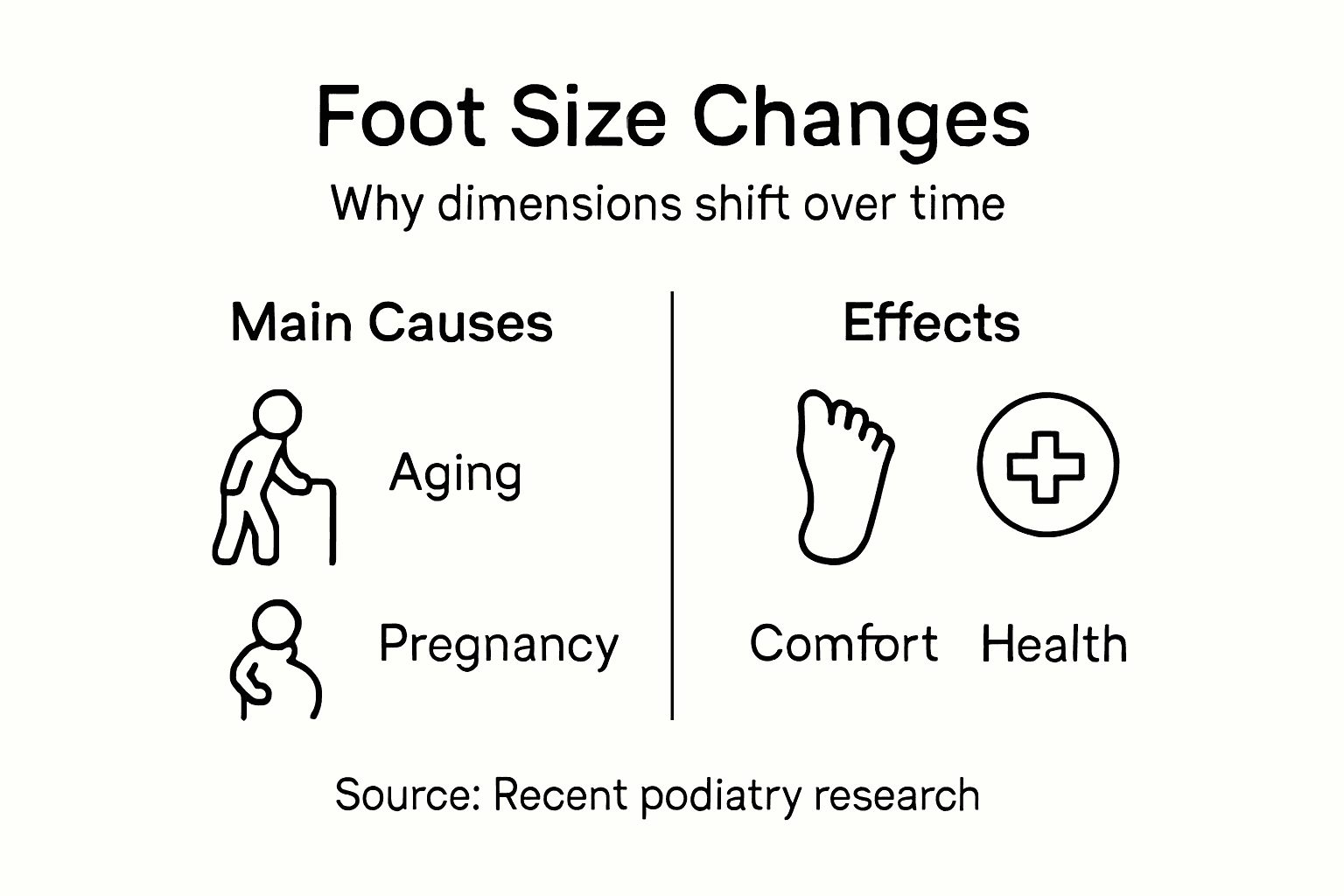
Finding shoes that truly fit can feel impossible when your feet seem to change shape as you move through adulthood. These shifts are much more than cosmetic, with factors such as age, weight, and health influencing comfort and support. Scientific research shows that foot size is not a fixed trait but a complex biological characteristic responding to lifestyle and physiological changes. Discover practical insights into what drives foot size changes and learn how to choose the most stylish and supportive footwear to safeguard your foot health.
Table of Contents
- What Is Foot Size Change? Key Concepts
- Common Causes Of Changing Foot Size
- How Ageing And Health Affect Your Feet
- Pregnancy, Weight, And Foot Structure Shifts
- Choosing The Right Footwear For Changing Feet
Key Takeaways
| Point | Details |
|---|---|
| Understanding Foot Size Changes | Foot size variations are influenced by biological, environmental, and lifestyle factors, affecting mobility and comfort throughout life stages. |
| Impacts of Ageing and Health | Age-related changes in foot structure require proactive management to prevent issues such as pain and injury while ensuring comfort. |
| Significance of Footwear Selection | Choosing appropriate footwear is essential for accommodating foot size changes and maintaining optimal foot health, especially during significant life transitions. |
| Importance of Regular Monitoring | Annual foot measurements and consultations with specialists aid in managing foot health and adapting to changes effectively. |
What Is Foot Size Change? Key Concepts
Foot size changes represent a complex biological process involving intricate physiological transformations that significantly impact human mobility and comfort. Human feet undergo dynamic variations influenced by multiple interconnected factors that extend far beyond simple linear growth.
Understanding foot size changes requires examining several fundamental biological mechanisms. These transformations are not uniform but involve nuanced adaptations across different anatomical structures:
- Skeletal modifications affecting bone length and width
- Soft tissue elasticity changes in ligaments and muscles
- Muscular development impacting foot arch and overall structure
- Weight distribution alterations with age and lifestyle
Scientific research reveals that foot size modifications are deeply rooted in both genetic predispositions and environmental influences. Population-level foot size variations demonstrate complex interactions between lifestyle, nutrition, and physiological adaptation.
These changes are not merely cosmetic but have profound implications for foot health, footwear selection, and overall biomechanical functioning. Individuals may experience subtle yet significant foot size transformations throughout different life stages, ranging from childhood growth to age-related structural modifications.
Key Influencing Factors for Foot Size Changes:
- Hormonal shifts during puberty and pregnancy
- Weight fluctuations
- Cumulative physical activity patterns
- Genetic inheritance
- Age-related tissue elasticity changes
Pro tip: Monitor your foot measurements annually, as size variations can impact comfort and prevent potential foot-related health issues.
Common Causes Of Changing Foot Size
Foot size changes represent a complex physiological phenomenon influenced by numerous biological and environmental factors. Multiple intricate mechanisms drive foot morphology variations throughout an individual’s lifetime, affecting overall mobility and comfort.
The primary causes of foot size changes can be categorised into several key domains:
- Biological Aging: Progressive reduction in fat padding and tissue elasticity
- Body Weight Fluctuations: Significant mass changes impacting foot structure
- Hormonal Shifts: Pregnancy and puberty causing structural modifications
- Medical Conditions: Specific health issues altering foot morphology
- Physical Activity Levels: Cumulative stress and adaptation of foot tissues
Developmental and physiological factors significantly influence foot dimension transformations, with variations occurring across different life stages. Children experience rapid morphological changes during growth periods, while adults encounter more subtle yet persistent modifications.

Weight-related changes emerge as a particularly prominent factor. Increased body mass can cause ligament stretching, arch collapse, and permanent foot structure alterations. Conversely, significant weight loss might result in reduced foot volume and potential size reduction.
Key Mechanisms of Foot Size Transformation:
- Ligament elasticity changes
- Bone density modifications
- Muscular structure adaptations
- Soft tissue volume fluctuations
- Gravitational impact on foot architecture
Foot size is not static but a dynamic biological characteristic continuously responding to physiological demands.
Pro tip: Regularly measure your foot dimensions and invest in adjustable footwear to accommodate potential size variations.
How Ageing And Health Affect Your Feet
Biomechanical changes in aging feet represent a complex interplay of physiological transformations that significantly impact mobility and overall foot health. As individuals progress through different life stages, their feet undergo remarkable structural and functional modifications that require careful understanding and proactive management.
The primary age-related foot changes include:
- Soft Tissue Modifications: Increased stiffness and reduced elasticity
- Muscular Strength Reduction: Decreased muscle tone and support
- Joint Mobility Constraints: Limited range of movement
- Postural Changes: More pronated foot positioning
- Balance Mechanism Alterations: Increased fall risk
Footwear selection becomes critically important in mitigating age-related foot challenges, with well-fitted shoes playing a crucial role in preventing common deformities. Chronic conditions such as arthritis can compound these biomechanical changes, further emphasising the need for specialised foot care strategies.
Weight distribution, muscle strength, and tissue elasticity undergo significant transformations with aging. These changes can lead to increased susceptibility to foot-related issues, including:
The following table summarises how different life stages affect foot structure and comfort:
| Life Stage | Typical Foot Changes | Comfort Considerations |
|---|---|---|
| Childhood & Growth | Rapid bone and tissue changes | Regular shoe resizing needed |
| Adulthood | Subtle tissue and muscle shifts | Consistent support and cushioning vital |
| Pregnancy | Arch flattening, size increase | Extra width and flexibility important |
| Ageing | Loss of elasticity, fat padding | Cushioning and stability become crucial |
- Bunion development
- Callus formation
- Reduced shock absorption
- Increased foot pain
- Higher risk of injury
Proactive foot care is not a luxury but a necessity for maintaining mobility and quality of life in later years.
Pro tip: Consult a podiatrist annually for comprehensive foot health assessments and personalised footwear recommendations.
Pregnancy, Weight, And Foot Structure Shifts
Pregnancy significantly transforms foot biomechanics through complex physiological processes involving hormonal changes, weight gain, and altered movement patterns. These transformations extend far beyond temporary discomfort, creating lasting impacts on foot structure and overall musculoskeletal health.
The primary pregnancy-related foot changes include:
- Hormonal Influences: Increased relaxin hormone causing ligament laxity
- Weight Distribution: Altered balance and centre of gravity
- Foot Volume Expansion: Increased length and width
- Arch Height Modification: Progressive flattening
- Gait Mechanism Changes: Adjusted walking patterns
Lasting foot structural alterations emerge from pregnancy experiences, with research demonstrating that these modifications can persist well beyond the postpartum period. Body mass gain directly correlates with foot length changes, potentially creating permanent biomechanical adaptations.
Weight fluctuations play a critical role in foot structure evolution. Significant mass changes can trigger substantial biomechanical shifts, including:
- Increased pressure on foot arches
- Enhanced risk of developing foot deformities
- Potential long-term mobility challenges
- Greater susceptibility to musculoskeletal disorders
- Compromised shock absorption capabilities
Foot health during pregnancy requires proactive monitoring and adaptive strategies.
Pro tip: Invest in professionally fitted, supportive footwear during pregnancy and consult a podiatrist for personalised foot health guidance.
Choosing The Right Footwear For Changing Feet
Footwear selection becomes crucial when managing changing foot structures, requiring nuanced understanding of individual biomechanical requirements. Adapting shoe choices to evolving foot dimensions ensures continued comfort, prevents potential injuries, and supports overall musculoskeletal health.
Critical considerations for selecting appropriate footwear include:
- Width Accommodation: Allow space for foot expansion
- Arch Support: Match changing foot arch characteristics
- Cushioning Levels: Provide adequate shock absorption
- Adjustable Features: Enable flexibility during transitions
- Material Adaptability: Select breathable, stretching fabrics
Footwear comfort depends on multiple intricate factors, extending beyond simple size measurements. Personal anatomy, movement patterns, and specific physiological changes dramatically influence appropriate shoe selection.
The dynamic nature of foot structure requires a strategic approach to footwear selection, particularly during periods of significant bodily transformation such as pregnancy, weight fluctuations, or aging. Key evaluation criteria should encompass:
Here is a comparison of recommended footwear features based on common causes of foot size changes:
| Cause of Change | Footwear Feature Needed | Benefit to User |
|---|---|---|
| Weight Fluctuations | Adjustable fastenings | Adapts to swelling or reduction |
| Hormonal Changes | Flexible fabrics | Accommodates temporary size shift |
| Ageing | Enhanced arch support | Improves balance and comfort |
| High Activity Level | Shock-absorbing soles | Reduces injury and fatigue risk |
- Precise measurement techniques
- Understanding individual foot morphology
- Recognising biomechanical adaptation signals
- Prioritising comfort over aesthetic preferences
- Regular professional foot assessments
Footwear is not merely an accessory but a critical health investment.
Pro tip: Schedule annual professional foot measurements and consult specialists when experiencing significant bodily changes.
Embrace Comfort with Footwear That Adapts to Your Changing Feet
The article highlights how foot size changes impact comfort and health through factors like hormonal shifts, ageing, weight fluctuations, and pregnancy. These challenges often lead to discomfort, poor support, and foot-related issues if ordinary footwear is worn. At YDA UK, we understand the importance of adapting to your evolving foot structure by offering high-performance shoes designed with cutting-edge foot health technology. Our footwear provides adjustable fits, optimal arch support, and cushioning to accommodate your unique needs throughout life’s changes.

Take control of your foot health today by exploring our range of stylish, comfortable shoes at YDA UK. Discover how our innovative designs help maintain comfort and prevent common problems caused by foot size variations. Don’t wait until discomfort interrupts your daily life. Visit our landing page now and experience footwear tailored for your feet’s dynamic needs.
Frequently Asked Questions
What causes changes in foot size?
Foot size changes can be caused by several factors including biological aging, hormonal shifts during puberty and pregnancy, body weight fluctuations, medical conditions, and physical activity levels.
How does aging affect foot size and health?
Aging leads to reduced elasticity in soft tissues, decreased muscle support, limited joint mobility, and changes in foot posture, all of which can affect comfort and increase the risk of foot-related issues.
Why is it important to choose the right footwear as foot size changes?
Selecting appropriate footwear helps accommodate changing foot dimensions, ensures comfort, provides necessary support, and prevents injuries. Well-fitted shoes are crucial for maintaining foot health during transitions such as weight changes or ageing.
How can I monitor my foot size over time?
Regularly measuring your foot dimensions at least annually is recommended. This practice helps you stay aware of any changes and allows you to select the most comfortable and supportive footwear according to your evolving foot size.
Recommended
- Role of Footwear in Daily Comfort: Complete Guide – YDA UK
- Why Invest in Foot Support – Comfort and Health Benefits – YDA UK
- 7 Key Benefits of Comfort Footwear for Healthy Living – YDA UK
- 7 Key Benefits of Foot Health Shoes for Everyday Comfort – YDA UK
- 10 Σημαντικές Συμβουλές: Checklist για Αγορά Ρούχων