
Why Choose Non-Binding Shoes for Everyday Comfort
Choosing comfortable shoes can be a daily struggle if you have diabetes or sensitive feet. Ill-fitting footwear leads to pressure points, restricted circulation, and ongoing discomfort, making each step a worry. Non-binding shoes offer a refreshing solution by combining soft, flexible materials and gentle design features that protect against blisters, swelling, and irritation. You will discover how these shoes support healthy feet while keeping your style in mind, so your comfort and confidence never have to compromise.
Table of Contents
- What Are Non-Binding Shoes? Key Concepts
- Types of Non-Binding Footwear Explained
- Crucial Design Features Supporting Foot Health
- Who Benefits: Diabetics, Sensitive Feet, and More
- How Non-Binding Shoes Compare to Traditional Styles
Key Takeaways
| Point | Details |
|---|---|
| Comfort Focus | Non-binding shoes prioritise foot comfort through flexible materials and unrestricted fit, reducing pressure points. |
| Health Benefits | Ideal for individuals with conditions like diabetes or arthritis, these shoes help prevent ulcers and support foot health. |
| Design Variety | Therapeutic, casual, slip-on, and sandal styles cater to different comfort and health needs, ensuring there’s a suitable option for everyone. |
| Informed Choice | Selecting the right non-binding footwear can alleviate discomfort and improve quality of life, especially for those with sensitive or swollen feet. |
What Are Non-Binding Shoes? Key Concepts
Non-binding shoes represent a fundamental shift in how we approach everyday footwear design. Unlike traditional shoes that rely on tight straps, elastic bands, or rigid fastenings, non-binding shoes prioritise comfort through unrestricted fit and flexible materials.
The core concept centres on removing pressure points that cause discomfort and health complications. Traditional shoes often feature elastic or velcro closures that dig into skin, restrict blood circulation, and create tension around the foot and ankle. Non-binding shoes eliminate this problem by distributing pressure evenly across the entire foot.
Design Principles Behind Non-Binding Shoes
Non-binding footwear uses a thoughtful construction approach:
- Stretchy, flexible materials that adapt to your foot’s natural shape rather than forcing your foot to adapt to the shoe
- Smooth, seamless closures or soft elastication that distributes tightness evenly instead of creating pressure points
- Soft fabric linings that prevent rubbing and irritation against sensitive skin
- Reinforced arch support without rigid constraints that limit movement
Elastic bands that dig into skin pose significant risks, particularly for those with diabetes or circulatory concerns. Non-binding shoes address this by replacing traditional constriction with gentle, distributed pressure.
The design philosophy works especially well for individuals with sensitive feet, swelling issues, or circulation concerns. Instead of fighting against your body’s natural response to pressure, non-binding shoes work with it.
Key Differences from Traditional Footwear
Traditional shoes create problems non-binding designs solve:
- Tight elastics create pressure points that cause blisters and sores
- Rigid closures restrict blood flow to feet and lower legs
- Fixed sizing demands force uncomfortable compromises
- Seams and hard edges dig into skin during wear
Non-binding alternatives eliminate these issues through thoughtful material selection and construction methods. Non-binding socks use cotton/nylon/spandex blends that evenly distribute tightness around the leg, avoiding the constriction typical of traditional elastic designs.
Non-binding shoes prioritise your foot’s natural comfort over forcing compression—they adapt to you, not the reverse.
These shoes work brilliantly for individuals managing diabetes, arthritis, or any condition affecting foot sensitivity. They’re equally valuable for anyone experiencing foot swelling, poor circulation, or simply wanting to wear shoes without constant discomfort throughout the day.
Pro tip: Look for shoes with soft, elastic closures and test them by pressing your finger into the material—quality non-binding shoes should feel gentle and give way easily without leaving marks on your skin.
Types of Non-Binding Footwear Explained
Non-binding footwear comes in several distinct varieties, each designed to address specific comfort and health needs. Understanding the differences helps you choose the right option for your lifestyle and foot condition.
Therapeutic Non-Binding Shoes
Therapeutic non-binding shoes represent the most structured category of comfort footwear. These are designed for medical contexts such as diabetic footwear, helping individuals manage foot health complications.
Key features include:
- Extra depth and width to accommodate swelling and orthotics
- Cushioned insoles that reduce pressure on sensitive areas
- Seamless interiors that prevent blisters and irritation
- Breathable materials that promote air circulation
These shoes work brilliantly if you have diabetes, arthritis, or neuropathy. They balance support with comfort, avoiding the restrictive feeling of traditional medical footwear.
Casual Non-Binding Sneakers
Casual non-binding sneakers blend everyday style with comfort technology. They feature stretchy uppers and soft closures instead of rigid lacing systems.
They’re ideal for:
- Daily errands and casual outings
- Individuals with mild foot sensitivity
- Anyone preferring easy on-and-off footwear
- Those wanting stylish comfort without compromise
Unlike therapeutic shoes, casual sneakers prioritise aesthetics while maintaining pressure-free fit. They work wonderfully for people who want comfort without looking like they’re wearing medical footwear.
Slip-On Non-Binding Shoes
Slip-on designs eliminate closures entirely, relying on elastic panels and stretchy materials for fit. Non-binding socks and shoes emphasise reducing pressure and irritation by avoiding elastic bands that constrict the foot or leg.
Benefits include:
- Quick, one-handed fastening
- No pressure from straps or buckles
- Flexible fit that adjusts throughout the day
- Perfect for people with limited dexterity
Slip-ons work particularly well for older adults or anyone with arthritis affecting hand strength.
Sandals and Open-Toe Options
Non-binding sandals provide maximum airflow and minimal constriction. They’re excellent during warmer months or for people needing maximum toe freedom.
Different non-binding types serve different needs—choose based on your activity level, climate, and specific foot health requirements.
Open designs allow air circulation whilst maintaining supportive cushioning. They’re perfect for individuals with severe swelling or those recovering from foot surgery.
Comparing Your Options
| Type | Best For | Key Feature |
|---|---|---|
| Therapeutic | Medical conditions | Extra depth, cushioning |
| Casual Sneakers | Daily comfort | Stretchy, stylish |
| Slip-On | Easy fastening | No closures needed |
| Sandals | Warm weather | Maximum airflow |
Pro tip: Start by identifying your primary need—whether it’s managing a medical condition, preventing daily discomfort, or simply wanting easier footwear—then select the type that best addresses that concern.
Crucial Design Features Supporting Foot Health
The best non-binding shoes share specific design elements that actively support your feet rather than merely housing them. These features work together to prevent pain, reduce injury risk, and promote long-term foot health.
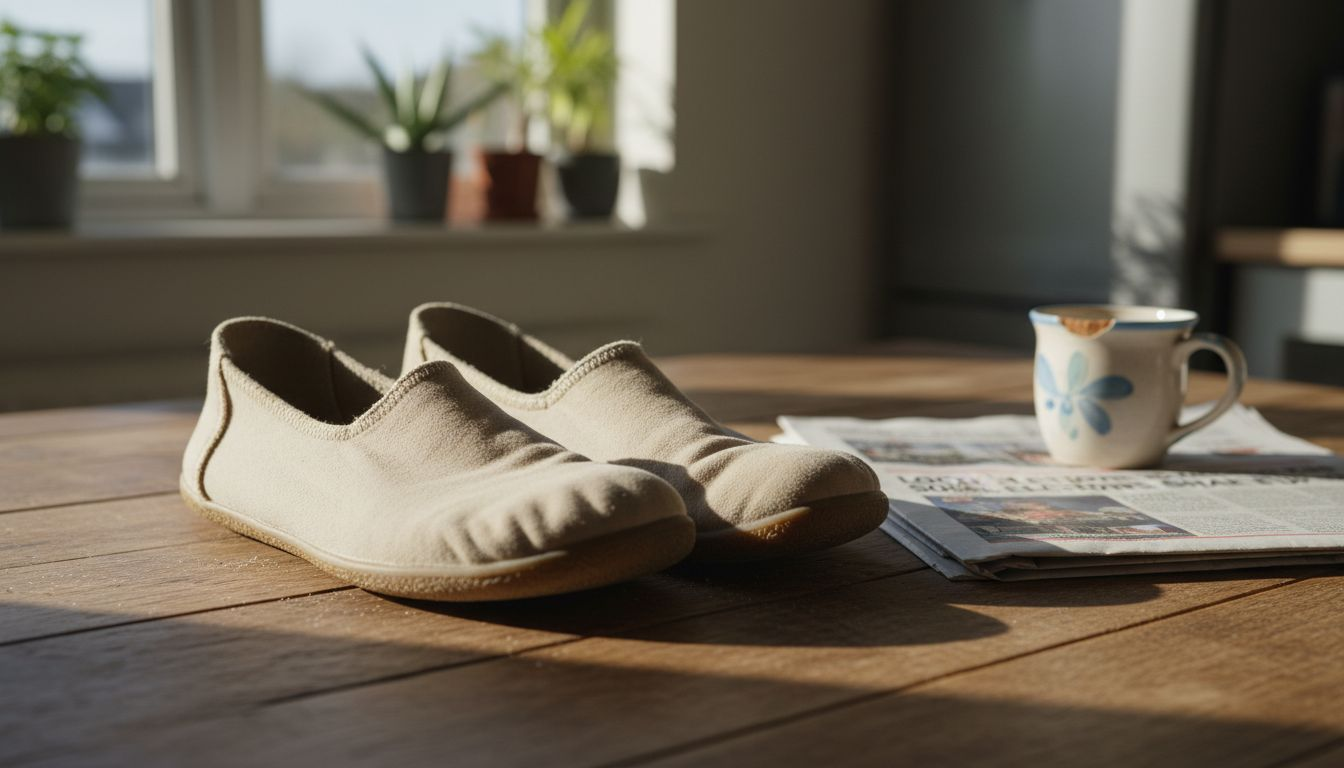
The Roomy Toe Box
A roomy toe box prevents your toes from crowding together, which causes bunions, hammertoes, and nail problems. Your toes should move freely without touching the shoe’s sides or top.
Why this matters:
- Reduces pressure on sensitive toe joints
- Allows natural toe splay during walking
- Prevents blisters and calluses from friction
- Accommodates foot swelling throughout the day
Many people underestimate this feature. A slightly loose fit around the toes actually prevents more problems than a snug fit ever could.
Cushioned, Supportive Insoles
Proper insoles absorb impact and reduce stress on your bones and joints. Adequate arch support and shock absorption are important to reduce stress on bones and joints, especially for people standing or walking throughout the day.
Quality cushioning:
- Reduces pressure on the heel and ball of the foot
- Supports your arch without feeling rigid
- Distributes weight evenly across the sole
- Prevents fatigue during extended wear
Look for cushioning that yields slightly when you press it—not rock-hard or overly soft.
Soft, Flexible Uppers
The upper material of non-binding shoes should bend and stretch without restriction. Soft, breathable materials prevent irritation whilst allowing movement.
Benefits include:
- Reduced chafing and pressure points
- Better air circulation to prevent moisture buildup
- Natural flexibility that adapts to foot shape
- Comfort during swelling or inflammation
Breathable Materials
Soft, breathable materials prevent irritation and keep your feet dry. Moisture trapped inside shoes creates environments where fungal infections thrive.
Choose shoes with:
- Mesh or textile uppers
- Moisture-wicking linings
- Ventilation openings
- Natural fibre content when possible
Pressure-Point Prevention
Non-binding construction eliminates seams, ridges, and hard edges that dig into sensitive skin. Design considers anatomical foot shape and conditions like diabetes or neuropathy to ensure footwear promotes circulation and prevents injury.
Quality non-binding shoes feel like a gentle embrace—supporting without squeezing, protecting without restricting.
Inspect the interior for smooth seams and padding in high-pressure areas like the heel and ankle.
To clarify what makes non-binding footwear distinctive, here’s a feature-impact table:
| Design Feature | Function | Impact on Foot Health |
|---|---|---|
| Roomy toe box | Allows natural toe splay | Prevents bunions and hammertoes |
| Soft uppers | Bend and stretch easily | Reduces chafing and blisters |
| Cushioned insoles | Absorbs impact | Less joint and bone stress |
| Breathable materials | Promotes airflow | Prevents fungal infections |
| Seamless interior | No rough edges inside | Minimises injury risk |
Stability Without Constriction
Your shoes should stabilise your foot during movement without tight straps or rigid structures. Proper fit combined with flexible support achieves this balance naturally.
Pro tip: Press your finger into the shoe’s sides and top—quality non-binding shoes should feel soft and yielding, not rigid or tight, and your finger should leave no lasting marks on the material.
Who Benefits: Diabetics, Sensitive Feet, and More
Non-binding shoes aren’t just comfortable—they’re medically beneficial for specific groups facing real foot health challenges. Understanding who benefits most helps you recognise whether this footwear type addresses your particular needs.
People with Diabetes
Diabetic individuals experience foot complications that make ordinary shoes genuinely dangerous. Neuropathy (nerve damage) means you might not feel pressure, blisters, or minor injuries developing into serious infections.
Diabetic individuals with foot complications like neuropathy or prior ulcers benefit significantly from non-binding shoes that reduce foot pressure and protect against injuries. Non-binding construction decreases skin breakdown risks by eliminating the constriction that causes sores.
Key concerns addressed:
- Prevents reulceration (recurring foot ulcers)
- Eliminates pressure points that create ulcers
- Reduces circulation restriction that slows healing
- Minimises infection risk from pressure sores
For diabetic individuals, the right shoes aren’t a luxury—they’re preventive healthcare.
Those with Sensitive or Swollen Feet
Foot swelling and skin sensitivity make regular shoes unbearable. Oedema (fluid retention) causes feet to expand throughout the day, making fixed-size shoes progressively more uncomfortable.
Non-binding shoes accommodate this natural swelling without creating new pressure points. Non-binding shoes reduce blood flow constriction and irritation, helping prevent sores and infections whilst maximising comfort for those with swelling or sensitive feet.
This group experiences relief from:
- Afternoon and evening foot swelling
- Skin irritation from tight elastic or seams
- Pressure-related pain and discomfort
- Difficulty finding shoes that fit without pain
Individuals with Circulation Issues
Poor circulation creates a dangerous combination: your feet receive less oxygen and nutrients whilst becoming more vulnerable to pressure damage. Tight shoes accelerate this problem.
Non-binding footwear maintains healthy blood flow by eliminating constriction. Elastic bands and tight closures literally cut off circulation; non-binding shoes allow your arteries to function properly.
Older Adults and Those with Limited Dexterity
Arthritis, Parkinson’s disease, and general ageing make fastening traditional shoes difficult. Slip-on non-binding shoes eliminate this frustration entirely.
Benefits include:
- One-handed or hands-free wearing
- No struggling with laces or velcro
- Reduced joint stress when putting shoes on
- Greater independence in daily routines
People Recovering from Foot Surgery
Post-operative feet need protection without pressure. Swelling, sensitivity, and vulnerability make non-binding shoes ideal during recovery.
Non-binding shoes serve multiple populations because they address the same fundamental principle: comfort through unrestricted fit, not forced compression.
They accommodate bandages, provide gentle support, and prevent complications during the critical healing period.
Here’s a summary of how different groups benefit from non-binding shoes:
| Group | Unique Needs | Main Benefit of Non-Binding Shoes |
|---|---|---|
| Diabetics | Neuropathy, ulcer risks | Reduces skin breakdown, improves healing |
| Sensitive/Swollen Feet | Oedema, skin sensitivity | Accommodates swelling, prevents irritation |
| Poor Circulation | Reduced blood flow | Maintains circulation, avoids constriction |
| Older Adults | Limited dexterity | Easy to fasten, increases independence |
| Post-Surgery Patients | Swelling, bandages | Gentle support, prevents further injury |
Pro tip: If you experience any foot pain, swelling, poor healing, or numbness, consult your GP before selecting footwear—non-binding shoes often help, but proper diagnosis ensures you’re choosing the right type for your specific condition.
How Non-Binding Shoes Compare to Traditional Styles
The differences between non-binding and traditional shoes run deeper than aesthetics. Understanding these distinctions helps you appreciate why non-binding designs deliver superior comfort and foot health outcomes.
Toe Box Design
Traditional shoes often feature narrow toe boxes that squeeze toes together, causing bunions, hammertoes, and nail problems. Fashion-focused designs prioritise sleek appearance over foot function.
Non-binding shoes offer generous toe space. Your toes can spread naturally and move freely without touching shoe sides. This seemingly small difference prevents years of foot complications.
Material Flexibility
Conventional shoes frequently use stiff uppers that fight against your foot’s natural movement. They require a break-in period where your feet suffer to fit the shoe.
Non-binding designs use soft, flexible materials that adapt to your foot shape rather than forcing your foot to conform. They feel comfortable immediately because they work with your anatomy, not against it.
Closure Systems
Traditional fasteners create problems non-binding shoes eliminate:
- Tight laces cut off circulation
- Velcro straps dig into skin and leave marks
- Rigid buckles pinch tender areas
- Elastic bands constrict during the day
Non-binding closures use soft elastication or slip-on designs that never constrict blood flow.
Overall Fit Philosophy
Traditional shoes prioritise structure and support through rigidity. Traditional shoes often have narrow toe boxes or stiff materials that can cause foot pathologies like bunions and hammertoes, whereas non-binding shoes promote overall foot health through flexibility and comfort.
This fundamental difference explains why non-binding shoes work better for people with foot complications. Structure achieved through rigidity causes problems; structure achieved through intelligent design prevents them.
Pressure Distribution
Traditional shoes concentrate pressure on specific points—your heel, ball of the foot, and toe tips. This focused pressure causes pain and eventual tissue damage.
Non-binding shoes distribute weight evenly across the entire foot, eliminating pressure hotspots entirely.
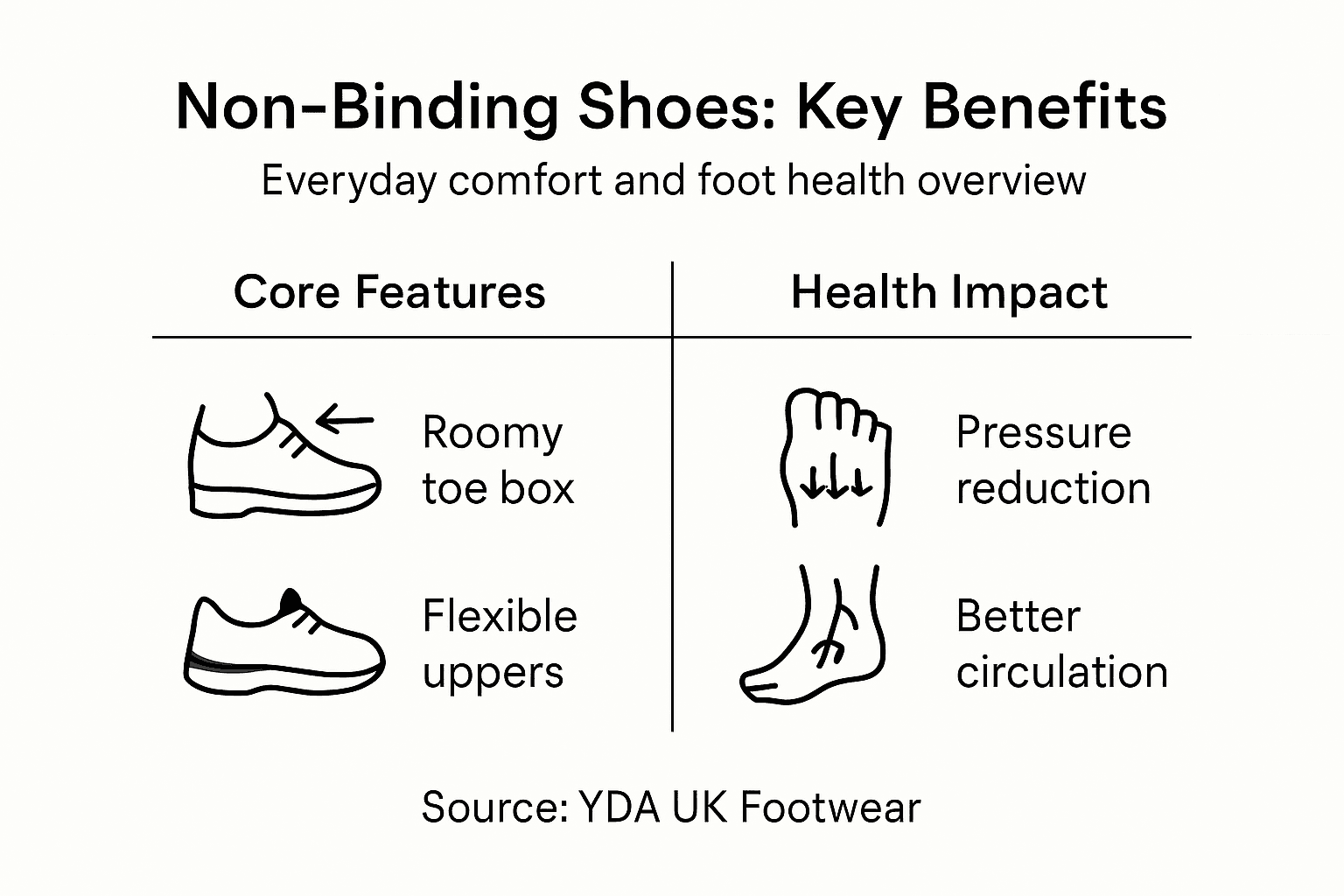
Quick Comparison
| Feature | Traditional | Non-Binding |
|---|---|---|
| Toe box | Narrow | Roomy |
| Materials | Stiff, rigid | Soft, flexible |
| Closures | Tight bands | Soft elastication |
| Break-in period | Weeks of pain | Comfortable immediately |
| Circulation | Often restricted | Always maintained |
| Daily comfort | Decreases | Consistent all day |
Traditional shoes prioritise how they look; non-binding shoes prioritise how your feet feel—and that makes all the difference.
The choice isn’t about fashion. It’s about choosing footwear designed for your foot’s health rather than despite your foot’s needs.
Pro tip: When trying traditional versus non-binding shoes, wear the traditional pair for five minutes, then switch to non-binding shoes—the immediate comfort difference will convince you of the benefits.
Experience All-Day Comfort with Non-Binding Shoes from YDA UK
If you struggle with foot discomfort caused by tight fits or constrictive fastenings you are not alone. The article highlights how non-binding shoes can transform your daily comfort by eliminating pressure points and promoting natural movement. At YDA UK, you can discover a curated collection of shoes designed with advanced foot health technology to provide flexible fits, breathable materials, and gentle support that adapt perfectly to your feet.
Explore our extensive range in the Shoes – YDA UK category to find stylish non-binding footwear that addresses swelling, circulation concerns and sensitive feet. Act now and invest in shoes that offer innovative comfort for every step you take. Visit https://ydauk.com to shop our latest stock and experience footwear that truly cares for your foot health.
Frequently Asked Questions
What are non-binding shoes?
Non-binding shoes are designed to provide comfort by eliminating tight straps and rigid fastenings, prioritising an unrestricted fit and flexible materials.
Who can benefit from wearing non-binding shoes?
Individuals with diabetes, arthritis, or sensitive feet will benefit the most, as these shoes reduce pressure points, improve circulation, and accommodate swelling.
How do non-binding shoes differ from traditional footwear?
Non-binding shoes feature a roomy toe box, soft and flexible materials, and gentle closures, while traditional shoes often have narrow designs, stiff uppers, and tight fasteners that can cause discomfort and restrict circulation.
What key features should I look for in non-binding shoes?
Look for a roomy toe box, cushioned insoles, breathable materials, and soft, flexible uppers that reduce irritation and promote overall foot health.