
What is Good Feet Store? A buyer's honest guide
TL;DR:
- The Good Feet Store provides in-store fitted, prefabricated arch supports aimed at relieving mild foot discomfort quickly and accessibly. However, their products are not custom-moulded or clinically prescribed, and costs can reach several hundred pounds, often exceeding OTC alternatives. Customer feedback is mixed, with relief generally seen in mild cases, but persistent or diagnosed conditions should be evaluated by a podiatrist first.
The Good Feet Store is a specialist retail chain that provides personalised, in-store fitted arch supports designed to relieve foot pain and improve posture without a prescription or medical referral. Unlike a podiatrist’s clinic, it operates as a walk-in retail environment where trained staff assess your foot shape and fit you with prefabricated arch supports on the same day. The store’s core proposition is speed and accessibility: you arrive with foot discomfort, and you leave with a support system already in your shoes. Understanding what this retailer actually offers, and where its limitations begin, is the most useful thing you can do before spending several hundred pounds on insoles.
What is Good Feet Store and how does its fitting system work?
The Good Feet Store is a retail specialist in arch support products, not a medical provider. Its fitting process centres on a foot imprint and arch measurement carried out by an in-store specialist, with no appointment required. The same-day fitting process takes roughly 20 to 30 minutes, after which you walk out with supports already fitted to your footwear. This immediacy is the store’s clearest differentiator from podiatry clinics or orthotics labs, where waiting times can stretch to several weeks.
The product at the centre of the experience is the 3-Step System, which comprises three distinct arch support types:
- Strengthener: worn during active movement and exercise to provide maximum arch reinforcement
- Maintainer: the everyday support worn for general daily use
- Relaxer: a lighter support used during rest periods or low-activity hours
Each support is made from a proprietary medical-grade polymer blend engineered for extended daily wear. This is not the foam or gel found in supermarket insoles. The material is designed to hold its shape under prolonged pressure, which is the primary justification for the higher price point.
The store also backs its products with a lifetime limited warranty, though the terms require careful reading. Coverage applies to material defects rather than general wear, and consumers must meet specific maintenance conditions to remain eligible for replacement. Read the small print before you commit.
Pro Tip: Ask the in-store specialist to walk you through the warranty terms in detail before purchasing. Confirm exactly what constitutes a covered defect versus normal wear, as this distinction determines whether a replacement is free or chargeable.
How do Good Feet supports compare with custom orthotics?
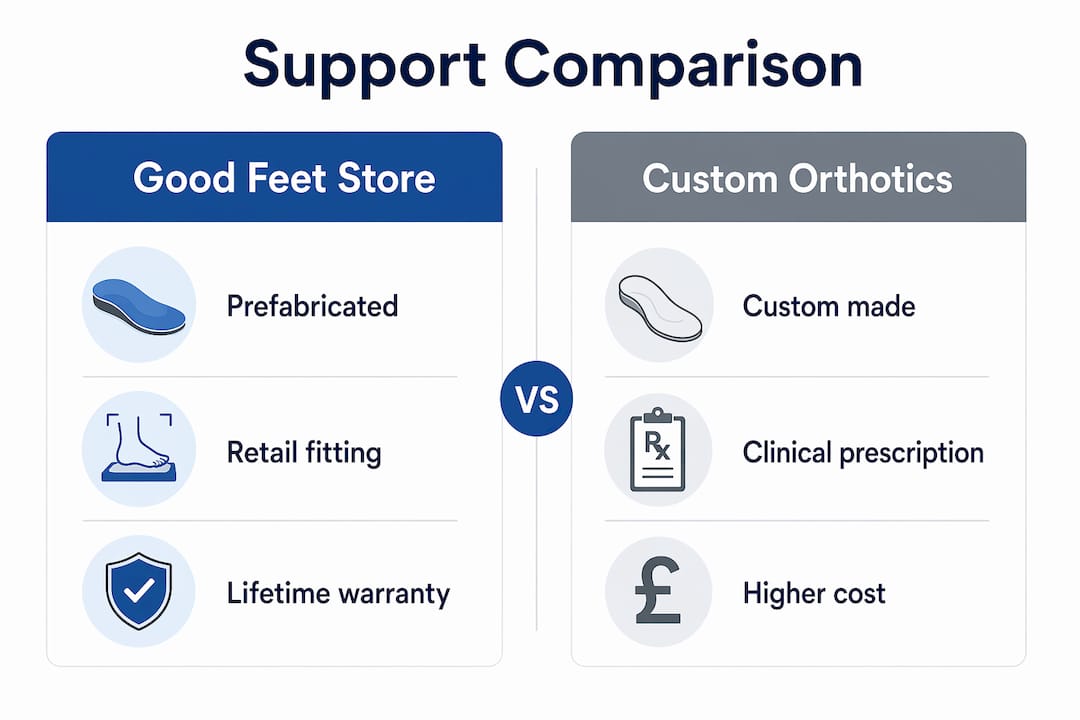
The most important distinction any buyer needs to understand is that Good Feet arch supports are prefabricated, not custom-moulded. The fitting process is personalised in the sense that a specialist selects the most appropriate support from an existing range based on your foot measurements. However, the product itself is not manufactured to the specific contours of your foot. Custom orthotics require a clinical diagnosis, a physical cast or 3D scan of your foot, and a laboratory fabrication process that can take two to four weeks.
The cost difference is substantial and worth examining directly.
| Feature | Good Feet Store | Custom orthotics (podiatrist) | OTC insoles |
|---|---|---|---|
| Fitting method | In-store measurement | Clinical diagnosis and casting | Self-selected |
| Product type | Prefabricated, fitted | Custom-moulded to your foot | Generic, off-the-shelf |
| Typical cost | £300 to £500+ per pair | £300 to £600+ via NHS or private | £20 to £70 |
| Waiting time | Same day | Two to four weeks | Immediate |
| Clinical follow-up | None | Included | None |
| Warranty | Lifetime limited | Varies by provider | Usually none |
Good Feet pricing can reach £400 to £600 per pair, with some customers reporting total spend of over £1,000 when purchasing the full 3-Step System. By comparison, well-regarded over-the-counter options from brands such as PowerStep or Superfeet cost between £30 and £70. The gap is significant, and it is not always justified by clinical outcomes.
Podiatrists note that the retail model lacks clinical examination and tailored prescription, which limits efficacy for conditions requiring biomechanical correction. If you have plantar fasciitis, flat feet, or a structural gait issue, a podiatrist’s assessment provides a diagnosis and a treatment plan. Good Feet provides a product. These are different things, and conflating them leads to disappointment.
Pro Tip: If your foot pain is persistent or worsening, see a podiatrist before visiting any retail arch support store. A clinical diagnosis tells you whether you need a prefabricated support, a custom orthotic, or something else entirely, such as physiotherapy or footwear modification.
Understanding arch support and foot health more broadly helps you ask better questions at any retail fitting, whether at Good Feet or elsewhere.
What do customer reviews say about Good Feet Store?
Good Feet Store customer feedback is genuinely mixed, and the pattern of complaints is consistent enough to be informative. Trustpilot reviews show a significant proportion of dissatisfied customers, with recurring themes across negative submissions. Understanding these patterns helps you set realistic expectations before you visit.
Common complaints include:
- Pricing transparency: many customers report feeling surprised by the total cost only after the fitting, with the full 3-Step System costing considerably more than the initial price quoted for a single pair
- Refund policy: the store’s return policy is restrictive, and several reviewers describe difficulty obtaining refunds after finding the products ineffective
- Unmet expectations: customers who expected a custom or medically tailored product frequently express disappointment upon realising the supports are prefabricated
- No clinical follow-up: the absence of any treatment escalation pathway means that if the supports do not help, the store has no mechanism to address the underlying cause
Positive reviews do exist and tend to share a specific profile. Customers who report genuine relief are typically those with mild to moderate arch discomfort rather than diagnosed structural conditions. The personalised fitting, even if the product is prefabricated, does appear to produce better outcomes than self-selecting an insole from a pharmacy shelf. The in-person attention and the quality of the polymer material are the two most consistently praised aspects of the Good Feet Store experience.
The honest read on Good Feet Store reviews is this: the product works for some people, particularly those with general foot fatigue or mild arch strain. For anyone with a diagnosed condition or a limited budget, the value proposition is harder to defend.
Where to find Good Feet Store locations and what to consider
Finding a Good Feet Store is straightforward. The brand operates primarily across the United States, with a growing number of locations in Australia, Canada, and selected European markets. To locate your nearest branch, follow these steps:
- Visit the official Good Feet website and navigate to the store locator page, which allows you to search by city, postcode, or region
- Review the listed store hours before visiting, as opening times vary by location and some stores operate reduced weekend hours
- Check whether your local store offers the full 3-Step System fitting or a simplified product range, as not all locations stock the complete catalogue
- Consider calling ahead to confirm availability and ask about any current Good Feet Store discounts or promotional fitting offers
If no Good Feet Store is accessible in your area, several alternatives are worth considering. Podiatry clinics offer clinical assessment and custom orthotics. Specialist footwear retailers such as Foot Locker’s comfort divisions or independent running shops often carry well-fitted prefabricated insoles at a fraction of the cost. Online retailers provide access to brands like Superfeet, Spenco, and Sole, all of which offer arch-specific designs with detailed sizing guides.
The choice between retail and clinical provision depends on your situation. For general comfort improvement, a well-selected prefabricated insole from a reputable brand is often sufficient. For persistent or diagnosed foot conditions, clinical care is the appropriate starting point. Good footbed design principles apply regardless of where you source your support.
Key takeaways
The Good Feet Store offers genuine value for mild foot discomfort but is not a substitute for clinical care when a diagnosed condition is present.
| Point | Details |
|---|---|
| Retail, not medical | Good Feet Store is a specialist retailer, not a clinical provider, and offers no diagnosis or treatment plan. |
| Prefabricated, not custom | Supports are fitted in-store but remain prefabricated; they are not moulded to your individual foot anatomy. |
| Cost is significant | The full 3-Step System can cost several hundred pounds, far exceeding quality OTC alternatives. |
| Warranty requires scrutiny | The lifetime limited warranty covers material defects only; wear and improper use are typically excluded. |
| Reviews are mixed | Positive outcomes cluster around mild arch fatigue; persistent or structural conditions warrant podiatry first. |
Why I think most people approach arch support shopping the wrong way
Most consumers walk into a store like Good Feet having already decided they need arch supports. They have foot pain, they have heard the brand name, and they want a solution today. That urgency is understandable, but it skips the most useful question: what is actually causing the discomfort?
I have seen this pattern repeatedly. Someone spends £400 on a fitted support system, gets modest relief for a few weeks, and then finds the pain returns because the underlying issue was a tight calf, a worn-out shoe, or a gait pattern that no insole can correct. The Good Feet Store is not responsible for that outcome. The consumer is, for not getting a diagnosis first.
That said, I do not think Good Feet is without merit. The polymer material is genuinely better than most pharmacy insoles. The fitting process, even without clinical depth, produces a more considered selection than grabbing a generic insole off a shelf. And for someone with mild arch fatigue from long working hours on hard floors, the Maintainer support alone can make a real difference.
The problem is the price and the expectation gap. If Good Feet sold a single well-fitted support for £80, the value case would be straightforward. Selling a three-part system for £400 to £600 to people who may only need one component, and who may not need any of them if they saw a podiatrist first, is where the model becomes difficult to defend.
My advice: get a podiatrist’s opinion first if your pain is persistent. If it is general fatigue, try a quality OTC insole before committing to a retail fitting. And if you do visit Good Feet, go in knowing exactly what the product is and what it is not. Knowing how to identify quality footwear before you shop makes every conversation with a sales specialist more productive.
— Panagiotis
Explore foot health technology built into the shoe itself
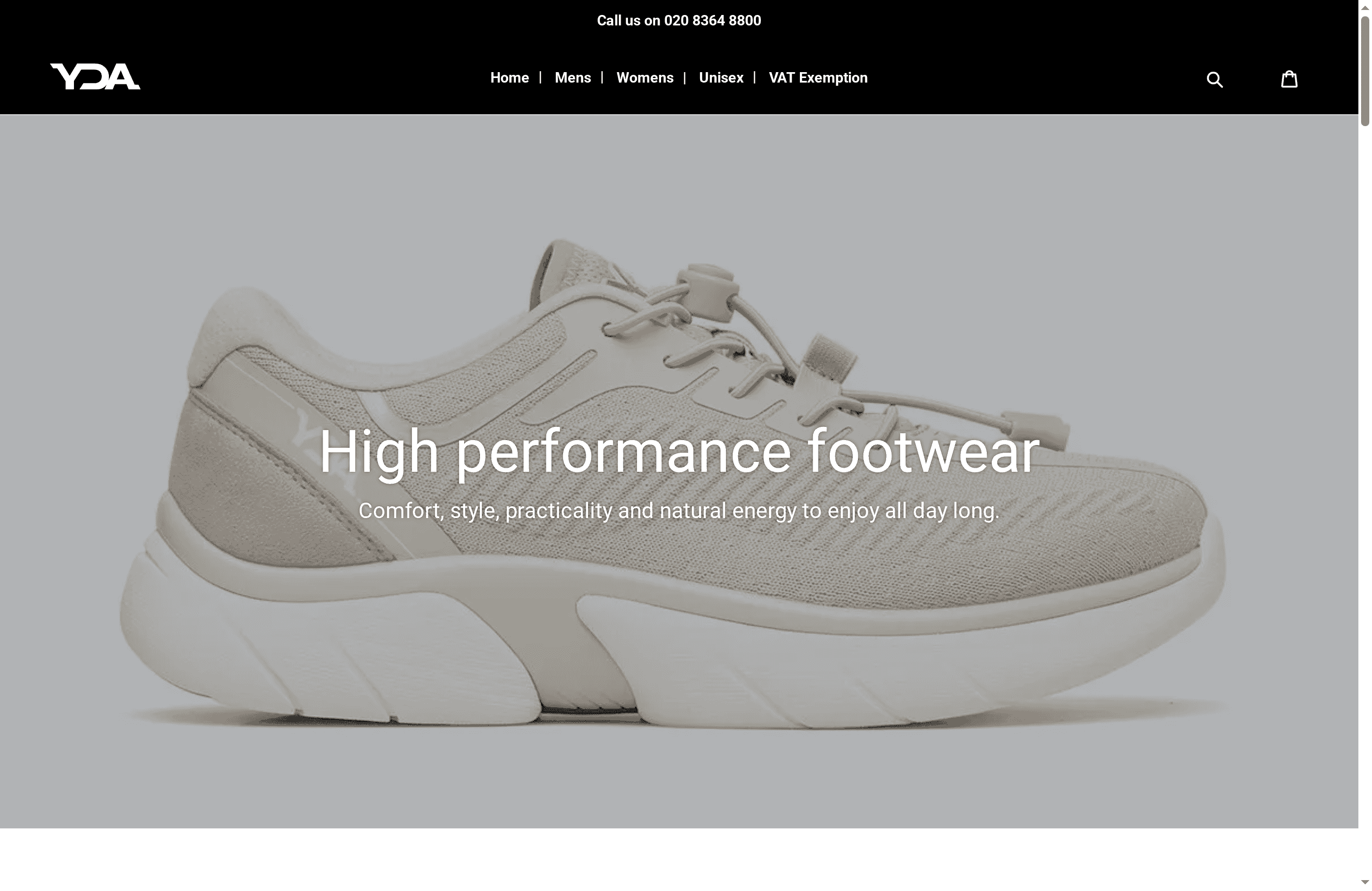
At Ydauk, the approach to foot health starts before you ever reach for an insole. The YDA shoe technology is engineered directly into the footwear structure, addressing arch support, energy return, and biomechanical alignment as part of the shoe’s design rather than as an afterthought. For consumers who want foot health benefits without the complexity of a separate fitting system or the cost of a multi-component support programme, Ydauk’s technology-led footwear offers a compelling alternative. If you are researching your options before committing to any arch support solution, the YDA technology page is worth reviewing as part of your decision.
FAQ
What does Good Feet Store actually sell?
Good Feet Store sells prefabricated arch supports fitted in-store by trained specialists using foot imprint and arch measurements. The products are not custom orthotics and are not prescribed by a medical professional.
Does Good Feet Store help with plantar fasciitis?
Some customers report relief from plantar fasciitis symptoms, but podiatrists note that the retail model lacks clinical diagnosis and follow-up, which limits its effectiveness for diagnosed structural conditions. A podiatrist assessment is the recommended first step for plantar fasciitis.
How much does Good Feet Store cost?
Individual pairs typically range from £300 to £500, with the full 3-Step System costing considerably more. This is significantly higher than quality over-the-counter alternatives, which typically cost between £30 and £70.
Is the Good Feet Store lifetime warranty reliable?
The lifetime limited warranty covers material defects but excludes normal wear and improper use. Consumers should review the specific terms before purchasing to understand what maintenance obligations apply.
Are there Good Feet Store alternatives worth considering?
Yes. Podiatry clinics offer clinically prescribed custom orthotics, while brands such as Superfeet, Spenco, and Sole provide well-designed prefabricated insoles at a fraction of the cost. Specialist running shops also offer fitting services without the premium pricing of dedicated arch support retailers.