
Complete Guide to Why Choose Lightweight Footwear
Most british runners and walkers have noticed how shoe choices can affect their comfort and performance. With over 60 percent of adults experiencing foot discomfort at some point, picking the right footwear matters more than ever. Lightweight footwear challenges old ideas by offering flexibility and support without extra weight. Discover how modern materials and smart design can make every step feel easier, while addressing myths that still surround these innovative shoes.
Table of Contents
- Defining Lightweight Footwear and Common Myths
- Key Benefits for Comfort and Mobility
- Innovations in Lightweight Shoe Technology
- Foot Health and Medical Considerations
- Comparing Lightweight to Traditional Footwear
Key Takeaways
| Point | Details |
|---|---|
| Lightweight Footwear Characteristics | Lightweight footwear prioritises minimal weight, flexibility, and natural foot movement, typically weighing under 300 grams per shoe. |
| Benefits for Comfort and Mobility | These shoes enhance natural foot mechanics, reduce muscular fatigue, and improve overall walking efficiency while minimising strain. |
| Technological Innovations | Advanced engineering in lightweight footwear includes tailored midsole density for improved cushioning and an adaptive fit based on foot morphology. |
| Foot Health Advantages | Lightweight shoes support foot health by minimising energy expenditure and reducing stress on joints, which is beneficial for individuals with mobility challenges. |
Defining Lightweight Footwear and Common Myths
Lightweight footwear represents a revolutionary approach to shoe design that prioritises minimal weight, maximum flexibility, and enhanced natural foot movement. These shoes are engineered to provide comfort and performance without unnecessary bulk, challenging traditional footwear paradigms. Minimalist shoes are characterised by their high flexibility, low heel-to-toe drop, and remarkably reduced weight compared to conventional footwear.
Contrary to widespread misconceptions, lightweight shoes are not synonymous with weak or inadequate protection. Modern lightweight footwear is designed with sophisticated materials and technologies that offer substantial support while maintaining minimal mass. Researchers have demonstrated that minimalist shoes with textured insoles can positively influence stability and mobility, particularly for older adults who might traditionally avoid such footwear.
Key characteristics of lightweight footwear include:
- Extremely low overall weight (typically under 300 grams per shoe)
- High flexibility that mimics natural foot mechanics
- Minimal heel-to-toe elevation
- Breathable and adaptive materials
- Enhanced ground sensation and proprioception
The most persistent myth surrounding lightweight footwear is that reduced weight equates to reduced protection. In reality, advanced engineering allows these shoes to provide remarkable durability and support while eliminating unnecessary bulk. Whether for athletic performance, everyday comfort, or specialised mobility needs, lightweight footwear represents a sophisticated solution for individuals seeking an optimised walking and running experience.
Key Benefits for Comfort and Mobility
Lightweight footwear delivers exceptional benefits for comfort and mobility, transforming how individuals experience daily movement and physical activity. These innovative shoes are meticulously designed to enhance natural foot mechanics, providing unparalleled freedom of movement while minimising strain and fatigue. Footwear technologies have evolved to create solutions that adapt seamlessly to individual walking and movement patterns.
The primary advantages of lightweight footwear extend far beyond mere weight reduction. These shoes offer profound improvements in biomechanical efficiency, enabling wearers to move with greater ease and reduced energy expenditure. Enhanced flexibility allows natural foot articulation, promoting better proprioception and reducing the risk of muscular compensation that can lead to discomfort or potential injury.
Key mobility and comfort benefits include:
- Reduced muscular fatigue during extended walking or standing
- Improved natural foot movement and flexibility
- Enhanced sensory feedback from ground contact
- Decreased stress on joints and lower limb structures
- Improved overall walking and running efficiency
Understanding these benefits demonstrates how lightweight footwear represents more than a fashion choice—it’s a sophisticated approach to personal mobility and comfort. By prioritising natural movement and minimising unnecessary structural constraints, these shoes support individuals across diverse activity levels, from casual walkers to professional athletes seeking optimal performance and comfort.
Innovations in Lightweight Shoe Technology
Recent technological advancements have revolutionised lightweight footwear design, pushing the boundaries of comfort, performance, and biomechanical efficiency. Footwear technology now incorporates sophisticated engineering techniques that transform how shoes interact with human movement. Cutting-edge research explores innovative approaches to material science and structural design, enabling unprecedented levels of customisation and performance.

One groundbreaking development involves advanced midsole density gradation, where researchers have discovered methods to optimise cushioning performance through strategic material placement. By tailoring midsole density, designers can now enhance shock absorption and stability, dramatically improving comfort while preventing potential foot and ankle injuries. This approach represents a quantum leap in understanding how microscopic structural variations can significantly impact overall shoe performance.
Key technological innovations in lightweight footwear include:
- Precision-engineered density gradients in midsole materials
- Advanced 4D foot scanning for personalised fit
- Adaptive materials responding to movement and temperature
- Biomechanically optimised structural designs
- Ultralightweight composite materials
The future of lightweight shoe technology lies in its ability to create increasingly personalised, responsive footwear. By capturing intricate foot morphology through sophisticated statistical models, designers can now develop shoes that adapt more precisely to individual biomechanical needs, promising a new era of comfort, performance, and injury prevention.
Foot Health and Medical Considerations
Lightweight footwear plays a critical role in supporting overall foot health and addressing various medical considerations for individuals with diverse mobility challenges. Foot health strategies increasingly recognise the importance of shoe design in managing potential medical conditions and promoting natural movement patterns.
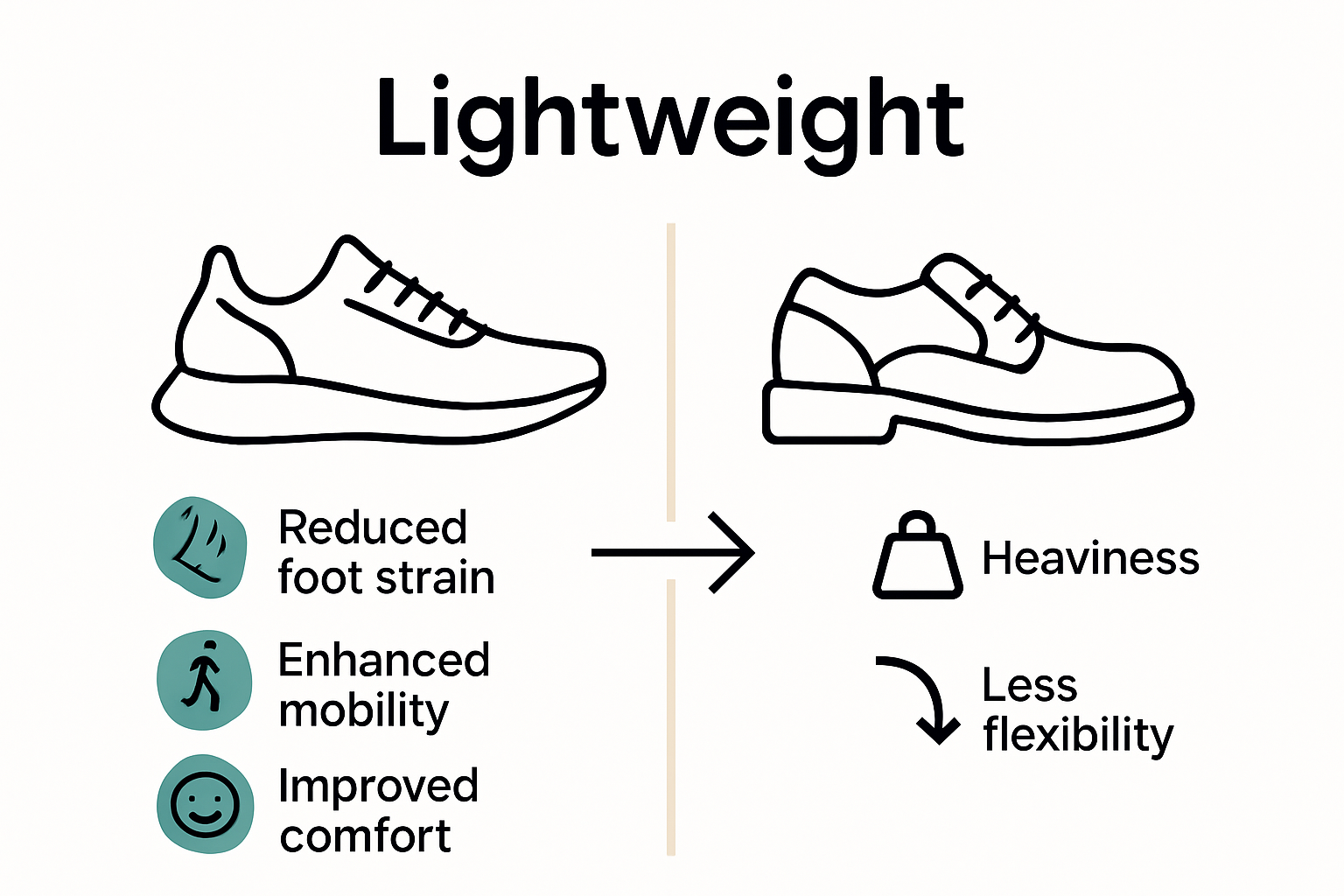
Research demonstrates that lightweight shoes provide significant medical benefits by reducing energy expenditure during movement. These shoes minimise leg and foot fatigue, particularly for individuals who spend extended periods walking or standing. The reduced biomechanical strain can be especially beneficial for people managing conditions that affect mobility, such as nerve-related balance issues or chronic pain syndromes.
Key medical considerations for lightweight footwear include:
- Improved proprioception and balance
- Reduced muscular and joint stress
- Enhanced sensory feedback from foot contact
- Minimised energy expenditure during movement
- Support for individuals with neurological conditions
Additionally, minimalist footwear offers remarkable benefits for individuals with specific medical challenges, particularly those managing conditions like neuropathy, diabetes, or arthritis. By stimulating specialised sensors within the feet, these shoes can improve balance, enhance sensory perception, and potentially reduce the risk of falls. The lightweight design allows for more natural foot movement, supporting rehabilitation and ongoing management of various medical conditions.
Comparing Lightweight to Traditional Footwear
The evolution of footwear technology has created a significant divide between lightweight and traditional shoe designs, with each approach offering distinct advantages and considerations. Footwear technology guides highlight the fundamental differences that set these two categories apart, emphasising the transformative potential of modern lightweight shoe engineering.
Traditional footwear typically features dense, rigid construction with substantial cushioning and structural support, often weighing significantly more than their lightweight counterparts. In contrast, lightweight shoes prioritise minimalism, flexibility, and natural foot mechanics. These modern designs reduce unnecessary material, focusing on biomechanical efficiency and sensory connection between the foot and ground surface.
Key differences between lightweight and traditional footwear include:
- Weight distribution and overall mass
- Flexibility and range of motion
- Biomechanical impact on foot and leg muscles
- Sensory feedback and proprioception
- Material composition and technological integration
Ultimately, the choice between lightweight and traditional footwear depends on individual needs, activity levels, and personal comfort preferences. While traditional shoes offer robust protection and structured support, lightweight alternatives provide enhanced mobility, reduced fatigue, and a more natural walking experience. The ongoing technological advancements continue to blur the lines between these categories, creating increasingly sophisticated footwear solutions that cater to diverse individual requirements.
Discover Comfort and Performance with Advanced Lightweight Footwear
Choosing the right shoes should never mean settling for bulky, uncomfortable designs that hinder your natural movement. The Complete Guide to Why Choose Lightweight Footwear highlights how modern innovation prioritises low weight, flexibility and enhanced foot health to reduce fatigue and support mobility. If you want to experience shoes engineered for natural foot mechanics and improved energy efficiency browse the Shoes – YDA UK collection today.

Step into the future of footwear technology at https://ydauk.com where each pair offers precision-engineered comfort tailored to your needs. Don’t wait to reduce joint stress and enjoy every step with shoes designed for health and performance. Explore styles that combine advanced materials with expert craftsmanship now and see why lightweight footwear is the perfect choice for your active lifestyle.
Frequently Asked Questions
What is lightweight footwear?
Lightweight footwear is designed to prioritise minimal weight, maximum flexibility, and enhanced natural foot movement. These shoes typically weigh under 300 grams per shoe and mimic the mechanics of natural foot movement.
How does lightweight footwear benefit foot health?
Lightweight shoes provide significant medical benefits, such as reducing energy expenditure during movement, minimising muscular and joint stress, and improving proprioception and balance, which can be particularly advantageous for individuals with mobility challenges.
What are the key differences between lightweight and traditional footwear?
The primary differences include weight distribution, flexibility, biomechanical impact, sensory feedback, and material composition. Traditional footwear tends to be heavier and more rigid, while lightweight footwear focuses on minimalism, flexibility, and natural foot mechanics.
Can lightweight footwear help with running efficiency?
Yes, lightweight footwear enhances running efficiency by reducing muscular fatigue, improving natural foot movement, and providing enhanced sensory feedback, promoting better overall biomechanics during running activities.
Recommended
- Why Choose Lightweight Shoes: Complete Guide – YDA UK
- Why Lightweight Shoes Are Beneficial: Complete Guide – YDA UK
- What Is Energy Efficient Footwear? Complete Guide – YDA UK
- Role of Footwear in Daily Comfort: Complete Guide – YDA UK
- 7 Essential Tips for Packing Light Camping Gear – Hazli Collection